Restoring Our Identity: Lessons from Nehemiah 7:29
“The men of Kirjath-jearim, Chephirah, and Beeroth, seven hundred forty and three.” — Nehemiah 7:29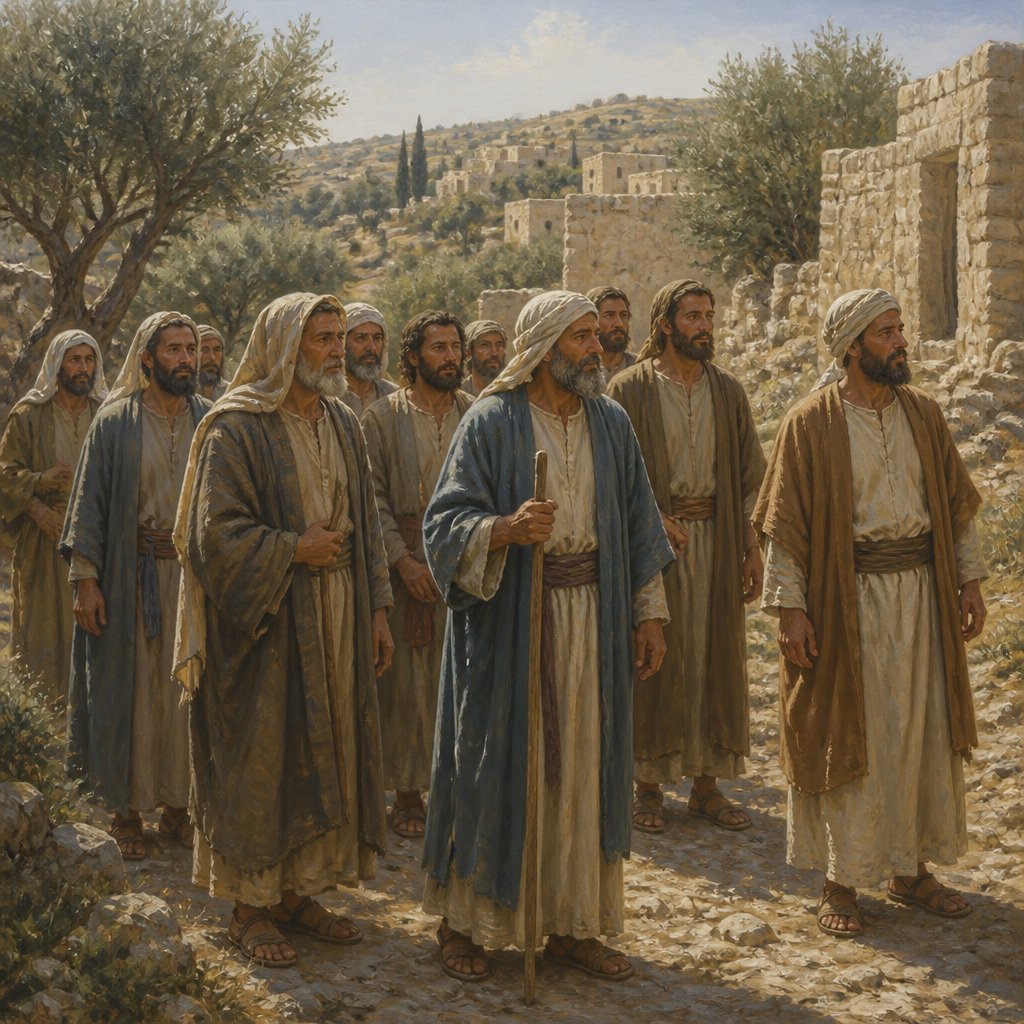
In the book of Nehemiah, we witness a powerful narrative of restoration, reconciliation, and community rebirth. Within the historical account of Nehemiah’s leadership as he guides the Israelites back to Jerusalem, we come upon Nehemiah 7:29, which simply states, "The men of Kirjath-jearim, Chephirah, and Beeroth, seven hundred forty and three." At first glance, this verse may seem to be just a mechanical recounting of numbers and names, laced with genealogical significance, yet it holds profound lessons for us today.
To fully appreciate this verse, we must first understand the context in which Nehemiah and the returned exiles were living. They had returned from Babylonian captivity, steeped in a history of loss and dislocation. Among the priorities for Nehemiah was the physical and spiritual restoration of the Jerusalem community. The counting of men from specific towns alludes to an important reality: the act of gathering and recognizing the people is fundamental to rebuilding a community's identity and faith.
The towns mentioned—Kirjath-jearim, Chephirah, and Beeroth—are not just geographical markers; they represent the heritage and roots of the Israelites. Each town has its significance, and collectively, they echo the power of remembrance. When Nehemiah lists these names, he intentionally reminds the people of their past, their identity, and the promise of their future. In our spiritual journeys, we too must recognize and reflect on our roots. What has shaped our faith? What stories and struggles have contributed to the present?
In Psalm 78:4, it says, "We will not hide it from their children, shewing to the generation to come the praises of the Lord, and his strength, and his wonderful works that he hath done." Here, we are reminded of the importance of storytelling and community legacy. The names of those who returned were more than just numbers; they were fathers, brothers, and husbands who understood the sacrifice involved in returning to a sacred home. Similarly, we are called to remember our spiritual heritage, the church’s stories, and the faithful men and women who have come before us, leading us toward the cross.
Furthermore, notice the importance of numbers in Nehemiah’s account. The specific number "seven hundred forty and three" indicates not only existence but participation. Each of those individuals represented hope and a commitment to a renewed purpose in Jerusalem. Their reunion was a testament to God’s faithfulness. When we gather as believers, we too declare the legacy of faith that binds us together. Each participant in the community of believers plays a vital role, irrespective of how significant or insignificant their contributions may seem. As Paul reminds us in 1 Corinthians 12:12, "For as the body is one, and hath many members, and all the members of that one body, being many, are one body: so also is Christ."
Additionally, returning to Jerusalem was not merely a physical journey. It was also a spiritual pilgrimage back to identity, hope, and purpose—central themes that resonate deeply in our Christian walk. Today, we, too, are called to examine the "towns" from which we have come. What aspects of our lives need restoration? In what areas does God want to rebuild our faith? How can we be the catalysts for growth and development in our own communities?
As we meditate on Nehemiah 7:29, let us remind ourselves that each name and number in God’s book are irreplaceable in His kingdom. Adopt the mindset of a restorer—doing the work to gather what was lost, recognizing the past, and setting the foundation for a robust future filled with hope. In this restoration process, we acknowledge not only our historical identity but our divine identity in Christ, who calls us as His own.
Let us embrace our communities, share our stories, and honor our legacies. Just as Nehemiah did, we can actively participate in the great work of revival wherever God places us, serving together to build a kingdom that reflects His glory and grace.
Get our apps


Artwork for Nehemiah 7:29

Nehemiah 7:29 - "The men of Kirjath-jearim, Chephirah, and Beeroth, seven hundred forty and three."

"The men of Kirjath-jearim, Chephirah, and Beeroth, seven hundred forty and three." - Nehemiah 7:29

Nehemiah 11:29 - "And at En-rimmon, and at Zareah, and at Jarmuth,"

"And at En-rimmon, and at Zareah, and at Jarmuth," - Nehemiah 11:29

Nehemiah 7:7 - "Who came with Zerubbabel, Jeshua, Nehemiah, Azariah, Raamiah, Nahamani, Mordecai, Bilshan, Mispereth, Bigvai, Nehum, Baanah. The number, I say, of the men of the people of Israel was this;"

Nehemiah 13:29 - "Remember them, O my God, because they have defiled the priesthood, and the covenant of the priesthood, and of the Levites."

Nehemiah 10:7 - "Meshullam, Abijah, Mijamin,"

Nehemiah 7:42 - "The children of Harim, a thousand and seventeen."

Nehemiah 7:24 - "The children of Hariph, an hundred and twelve."

Nehemiah 7:56 - "The children of Neziah, the children of Hatipha."

Nehemiah 7:25 - "The children of Gibeon, ninety and five."

Nehemiah 7:40 - "The children of Immer, a thousand fifty and two."

Nehemiah 7:31 - "The men of Michmas, an hundred and twenty and two."

Nehemiah 7:33 - "The men of the other Nebo, fifty and two."

Nehemiah 7:21 - "The children of Ater of Hezekiah, ninety and eight."

Nehemiah 7:28 - "The men of Beth-azmaveth, forty and two."

Nehemiah 7:14 - "The children of Zaccai, seven hundred and threescore."

Nehemiah 7:27 - "The men of Anathoth, an hundred twenty and eight."

Nehemiah 7:35 - "The children of Harim, three hundred and twenty."

Nehemiah 12:29 - "Also from the house of Gilgal, and out of the fields of Geba and Azmaveth: for the singers had builded them villages round about Jerusalem."

Nehemiah 7:16 - "The children of Bebai, six hundred twenty and eight."

Nehemiah 7:58 - "The children of Jaala, the children of Darkon, the children of Giddel,"

Nehemiah 7:9 - "The children of Shephatiah, three hundred seventy and two."

Nehemiah 7:48 - "The children of Lebana, the children of Hagaba, the children of Shalmai,"

Nehemiah 7:19 - "The children of Bigvai, two thousand threescore and seven."

Nehemiah 7:15 - "The children of Binnui, six hundred forty and eight."

Nehemiah 7:44 - "¶ The singers: the children of Asaph, an hundred forty and eight."

Nehemiah 7:18 - "The children of Adonikam, six hundred threescore and seven."

Nehemiah 7:13 - "The children of Zattu, eight hundred forty and five."

Nehemiah 7:49 - "The children of Hanan, the children of Giddel, the children of Gahar,"