Standing in His Presence: The Importance of Confession and Worship
“And they stood up in their place, and read in the book of the law of the LORD their God one fourth part of the day; and another fourth part they confessed, and worshipped the LORD their God.” — Nehemiah 9:3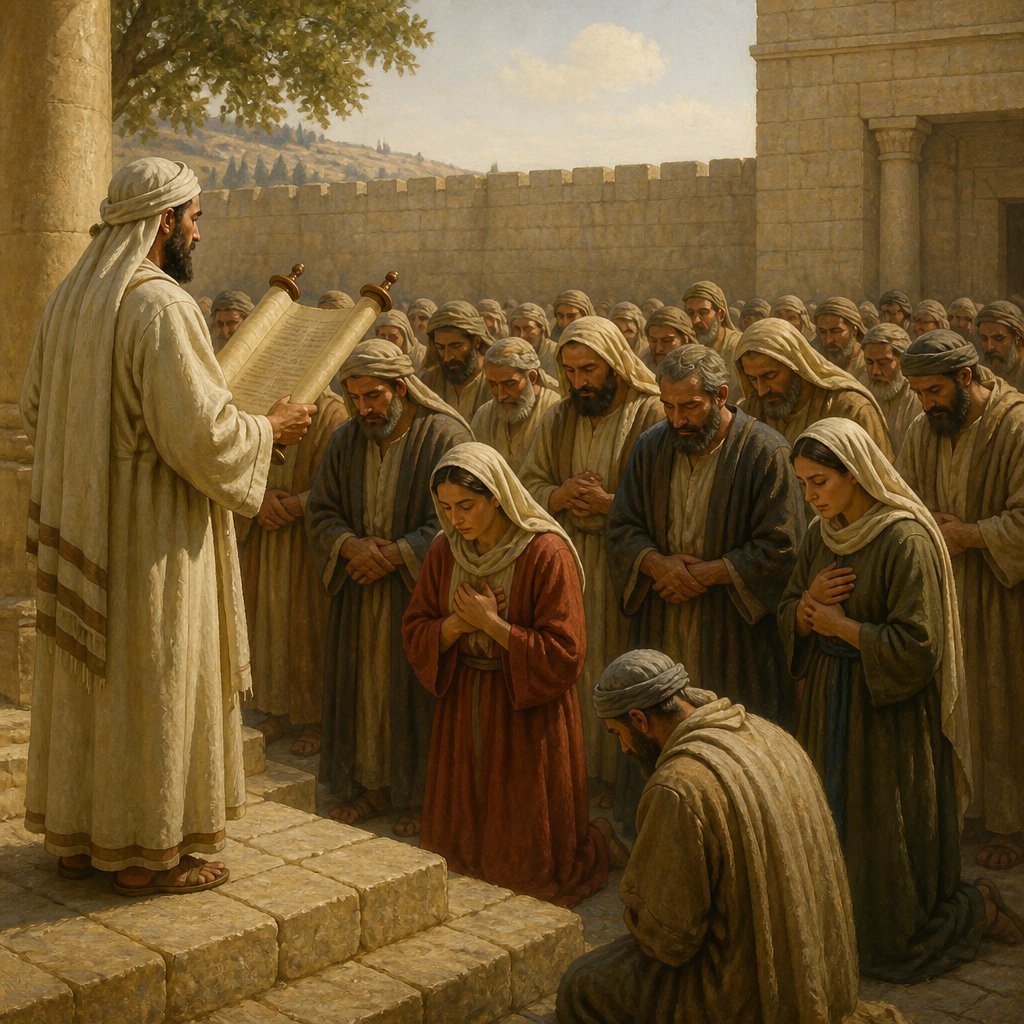
### Standing in His Presence: The Importance of Confession and Worship
In Nehemiah 9:3, we find a profound moment in the history of Israel, where the people of God gathered in humility and reverence before the Lord. The verse states, "And they stood up in their place, and read in the book of the law of the LORD their God one fourth part of the day; and another fourth part they confessed, and worshipped the LORD their God" (KJV). This passage not only describes an event but also serves as a model for our spiritual practices today—reading, confessing, and worshipping.
The first half of the verse speaks to the act of standing and reading the Scriptures. It is important to understand that standing in reverence before God signifies respect and acknowledgment of His sovereignty and authority. The people knew that the Law given to them was not merely a set of rules but the very words of God, filled with wisdom, guidance, and truth. In dedicating a quarter of the day to the reading of the Law, they demonstrated their earnest desire to comprehend and internalize God’s commands.
Today, as readers of the Bible, we are encouraged to approach God's Word with the same reverence. Are we taking time to read and meditate on the Scriptures? Do we dedicate our hearts to understanding the messages found within? Just as the Israelites stood for hours to listen to the readings of the Law, we must prioritize our time with God and His Word. This can mean setting aside distractions and making a concerted effort to engage with the Bible.
Following the reading, the second half of the verse introduces an equally critical aspect of the Israelites' worship: confession. In their acknowledgment of their failings and shortcomings, the people exhibited a deep sense of humility. They understood that confession was not merely about stating faults, but about recognizing their need for God’s grace and forgiveness. Confession requires us to be vulnerable and honest before the Lord, reflecting on our sins and the ways we have strayed from His path.
Confessing our sins isn’t solely about expressing regret; it is an act of surrender and a necessary step toward restoration. The book of 1 John 1:9 assures us, “If we confess our sins, he is faithful and just to forgive us our sins, and to cleanse us from all unrighteousness” (KJV). The Israelites’ communal confession illustrates that we are not alone in our struggles; as a community of believers, it can be powerful to confess and seek forgiveness together.
Next, the worship of the Lord complements both reading and confession. Worship, in this context, is more than just singing hymns or attending church services; it is an act of honoring God for who He is and what He has done. It reveals our love and gratitude for His salvation, mercy, and faithfulness. The Israelites worshipped because they recognized their relationship with God and responded to His holiness with reverence.
In our daily lives, how do we engage in worship? Is it reserved for Sundays, or is it woven throughout our daily routine? Worship can take many forms: prayer, songs of praise, acts of kindness, and living out His commandments. Each act is a reflection of our love for God and recognition of His place in our lives.
As we reflect on Nehemiah 9:3, let us commit to standing in our place, both physically and spiritually, acknowledging the authority of God’s Word in our lives. Let’s dedicate time to read, confess, and worship with sincerity and passion. In doing so, we invite the presence of the Lord into our lives, aligning our hearts with His will and purpose. May our time of reading, confession, and worship transform us from the inside out, as it did for the Israelites, empowering us to live as faithful witnesses of His grace.
Get our apps


Artwork for Nehemiah 9:3

Nehemiah 9:3 - "And they stood up in their place, and read in the book of the law of the LORD their God one fourth part of the day; and another fourth part they confessed, and worshipped the LORD their God."
"And they stood up in their place, and read in the book of the law of the LORD their God one fourth part of the day; and another fourth part they confessed, and worshipped the LORD their God." - Nehemiah 9:3

Nehemiah 3:9 - "And next unto them repaired Rephaiah the son of Hur, the ruler of the half part of Jerusalem."
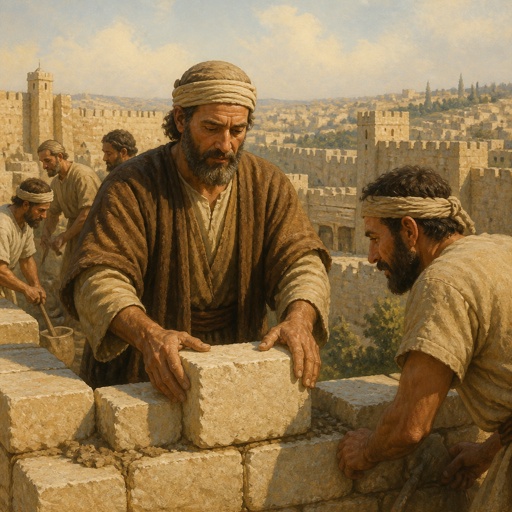
"And next unto them repaired Rephaiah the son of Hur, the ruler of the half part of Jerusalem." - Nehemiah 3:9

Nehemiah 6:9

Nehemiah 9:9 - "And didst see the affliction of our fathers in Egypt, and heardest their cry by the Red sea;"

Nehemiah 12:3 - "Shechaniah, Rehum, Meremoth,"

Nehemiah 10:3 - "Pashur, Amariah, Malchijah,"

Nehemiah 7:9 - "The children of Shephatiah, three hundred seventy and two."

Nehemiah 9:16 - "But they and our fathers dealt proudly, and hardened their necks, and hearkened not to thy commandments,"

Nehemiah 3:22 - "And after him repaired the priests, the men of the plain."

Nehemiah 12:9 - "Also Bakbukiah and Unni, their brethren, were over against them in the watches."

Nehemiah 10:9 - "And the Levites: both Jeshua the son of Azaniah, Binnui of the sons of Henadad, Kadmiel;"

Nehemiah 3:16 - "After him repaired Nehemiah the son of Azbuk, the ruler of the half part of Beth-zur, unto the place over against the sepulchres of David, and to the pool that was made, and unto the house of the mighty."

Nehemiah 11:9 - "And Joel the son of Zichri was their overseer: and Judah the son of Senuah was second over the city."

"Pashur, Amariah, Malchijah," - Nehemiah 10:3

"Shechaniah, Rehum, Meremoth," - Nehemiah 12:3

Nehemiah 9:2 - "And the seed of Israel separated themselves from all strangers, and stood and confessed their sins, and the iniquities of their fathers."

Nehemiah 8:9 - "¶ And Nehemiah, which is the Tirshatha, and Ezra the priest the scribe, and the Levites that taught the people, said unto all the people, This day is holy unto the LORD your God; mourn not, nor weep. For all the people wept, when they heard the words of the law."

Nehemiah 3:32 - "And between the going up of the corner unto the sheep gate repaired the goldsmiths and the merchants."

Nehemiah 3:5 - "And next unto them the Tekoites repaired; but their nobles put not their necks to the work of their Lord."

Nehemiah 9:38 - "And because of all this we make a sure covenant, and write it; and our princes, Levites, and priests, seal unto it."

"And didst see the affliction of our fathers in Egypt, and heardest their cry by the Red sea;" - Nehemiah 9:9

Nehemiah 13:9 - "Then I commanded, and they cleansed the chambers: and thither brought I again the vessels of the house of God, with the meat offering and the frankincense."

"The children of Shephatiah, three hundred seventy and two." - Nehemiah 7:9

Nehemiah 3:3 - "But the fish gate did the sons of Hassenaah build, who also laid the beams thereof, and set up the doors thereof, the locks thereof, and the bars thereof."

Nehemiah 3:18 - "After him repaired their brethren, Bavai the son of Henadad, the ruler of the half part of Keilah."

Nehemiah 9:1 - "Now in the twenty and fourth day of this month the children of Israel were assembled with fasting, and with sackclothes, and earth upon them."

Nehemiah 3:11 - "Malchijah the son of Harim, and Hashub the son of Pahath-moab, repaired the other piece, and the tower of the furnaces."

Nehemiah 3:2 - "And next unto him builded the men of Jericho. And next to them builded Zaccur the son of Imri."