The Power of Prophecy: Embracing God’s Voice in Our Midst
“And there ran a young man, and told Moses, and said, Eldad and Medad do prophesy in the camp.” — Numbers 11:27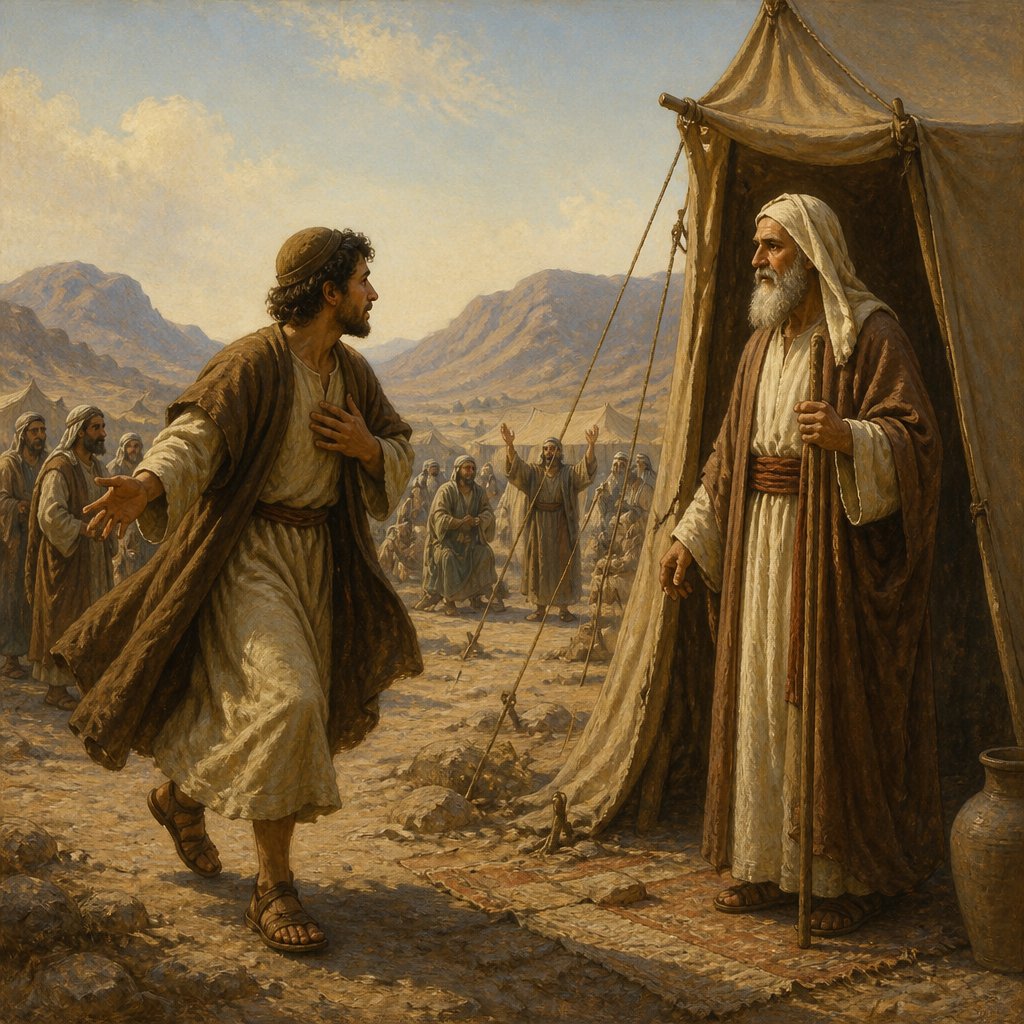
In Numbers 11:27, we encounter a seemingly small but profound moment in the narrative of Israel's wilderness journey. The verse states, "And there ran a young man, and told Moses, and said, Eldad and Medad do prophesy in the camp." This single verse opens a window into the powerful dynamics of prophetic ministry and the unfolding of God's intentions among the people of Israel.
To understand the significance of this moment, we need to recall the context in which it arises. Moses, burdened by the leadership load of millions—a people often filled with complaints and rebellion—has just experienced a divine impartation of the Spirit, as God appoints seventy elders to assist him in leading Israel (Numbers 11:16-17). Among these elders, Eldad and Medad remained in the camp, yet they still received the Spirit of God, demonstrating that divine call and empowerment do not necessitate conventional structures or locations. This serves as an early reminder that God’s Spirit can and does operate in unexpected ways and places.
The young man's hurried report to Moses suggests a misunderstanding of divine authority and a sense of human jealousy or concern about the legitimacy of Eldad and Medad’s prophetic activity. It reflects a natural instinct of humanity: to categorize and control the flow of God's work within a defined set of parameters. Yet, in doing so, we must ask ourselves: Are we willing to recognize and celebrate the unexpected ways in which God speaks? How often do we dampen the Spirit's voice because we are more comfortable with the predictable?
Moses' response to the young man is pivotal. While the young man might have expected Moses to reprimand or silence Eldad and Medad, instead, Moses exclaims, "Would God that all the LORD's people were prophets, and that the LORD would put his spirit upon them!" (Numbers 11:29). This response reveals more than Moses' deep longing for God’s voice to be heard among His people—it encapsulates the essence of prophetic ministry itself.
Prophecy is often misunderstood as merely predicting the future or providing insights into heavenly events. Yet, at its core, prophecy is about delivering God’s message to His people, calling their hearts back to Him, and facilitating a spirit of worship and obedience. Eldad and Medad's inclination to prophesy outside the established leadership structures illustrates a crucial truth: God desires to communicate directly with His people, especially when they are in the wilderness, both literally and figuratively. This discourse isn’t about human credentials but about divine authority.
As we reflect on this narrative, we must consider our own willingness to embrace God’s voice in our lives. Are we attentive to His whispers in our everyday encounters? Just as Eldad and Medad were empowered in the camp, God's presence dwells among us today through the Holy Spirit. How can we cultivate an environment in which we are receptive to God’s messages, even when they come from those we might least expect? Perhaps within our congregations or our spiritual circles, we need to listen more attentively to those voices we might overlook in our tendency to elevate certain types of leadership.
Moreover, this call to embrace God's voice is inseparable from the call to unity within the body of Christ. Moses’ desire that all God’s people would prophesy underscores a longing for community and shared spiritual experience. Prophetic voices should not incite competition but rather inspire a communal journey toward understanding and fulfilling God’s will together.
Finally, as we meditate on this passage, let us not forget our own role as both receivers and conveyers of God’s message. Each of us has a sphere of influence where God’s voice can be proclaimed. When we encounter moments where God is clearly speaking through individuals or circumstances, let us celebrate that work rather than fear it. Let us rejoice in the many ways He chooses to engage His people, regardless of our preconceived notions of how and where prophecy should manifest.
In closing, let this be a prayerful reminder that the Spirit of the Lord is not confined and that we, like Eldad and Medad, are called to be vessels of His message. May we embrace the beauty of God's communication in our lives and communities, ever eager to hear and obediently respond to the call of His Spirit today.
Get our apps


Artwork for Numbers 11:27

Numbers 11:27 - "And there ran a young man, and told Moses, and said, Eldad and Medad do prophesy in the camp."
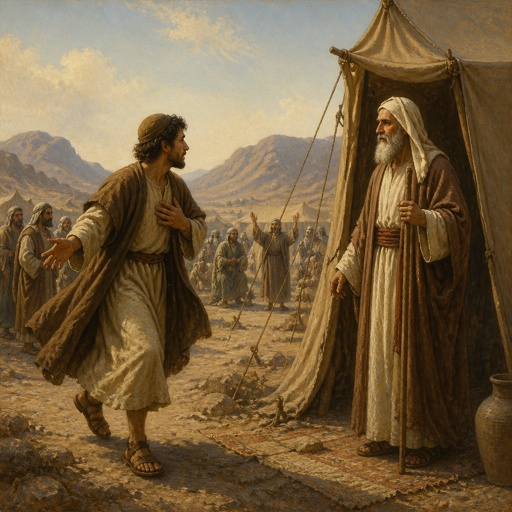
"And there ran a young man, and told Moses, and said, Eldad and Medad do prophesy in the camp." - Numbers 11:27

Numbers 11. 4 to 6
Numbers 27:11 - "And if his father have no brethren, then ye shall give his inheritance unto his kinsman that is next to him of his family, and he shall possess it: and it shall be unto the children of Israel a statute of judgment, as the LORD commanded Moses."

Numbers 27 1

NUMBERS 27:2

Numbers 27:5 - "And Moses brought their cause before the LORD."

Numbers 27:15 - "¶ And Moses spake unto the LORD, saying,"

Numbers 27:6 - "¶ And the LORD spake unto Moses, saying,"

Numbers 33:27 - "And they departed from Tahath, and pitched at Tarah."
Numbers 11

Numbers 34:27 - "And the prince of the tribe of the children of Asher, Ahihud the son of Shelomi."

Inheritance issue with The daughters of Zelophehad in Numbers 27

Numbers 26:27 - "These are the families of the Zebulunites according to those that were numbered of them, threescore thousand and five hundred."

Numbers 10:27 - "And over the host of the tribe of the children of Naphtali was Ahira the son of Enan."

Numbers 29:27 - "And their meat offering and their drink offerings for the bullocks, for the rams, and for the lambs, shall be according to their number, after the manner:"

Numbers 11:17

Numbers 11 quail

Numbers 11:15

Numbers 11:5

Numbers 6:27 - "And they shall put my name upon the children of Israel; and I will bless them."

Numbers 1:27 - "Those that were numbered of them, even of the tribe of Judah, were threescore and fourteen thousand and six hundred."

Numbers 27:16 - "Let the LORD, the God of the spirits of all flesh, set a man over the congregation,"

Numbers 27:9 - "And if he have no daughter, then ye shall give his inheritance unto his brethren."

Numbers 3:27 - "¶ And of Kohath was the family of the Amramites, and the family of the Izeharites, and the family of the Hebronites, and the family of the Uzzielites: these are the families of the Kohathites."

Numbers 7:27 - "One young bullock, one ram, one lamb of the first year, for a burnt offering:"

Numbers 21:27 - "Wherefore they that speak in proverbs say, Come into Heshbon, let the city of Sihon be built and prepared:"

Numbers 20:27 - "And Moses did as the LORD commanded: and they went up into mount Hor in the sight of all the congregation."

Numbers 11:16-26

Numbers 27:10 - "And if he have no brethren, then ye shall give his inheritance unto his father's brethren."