Divine Criticism: The Dangers of Misplaced Focus
“And Miriam and Aaron spake against Moses because of the Ethiopian woman whom he had married: for he had married an Ethiopian woman.” — Numbers 12:1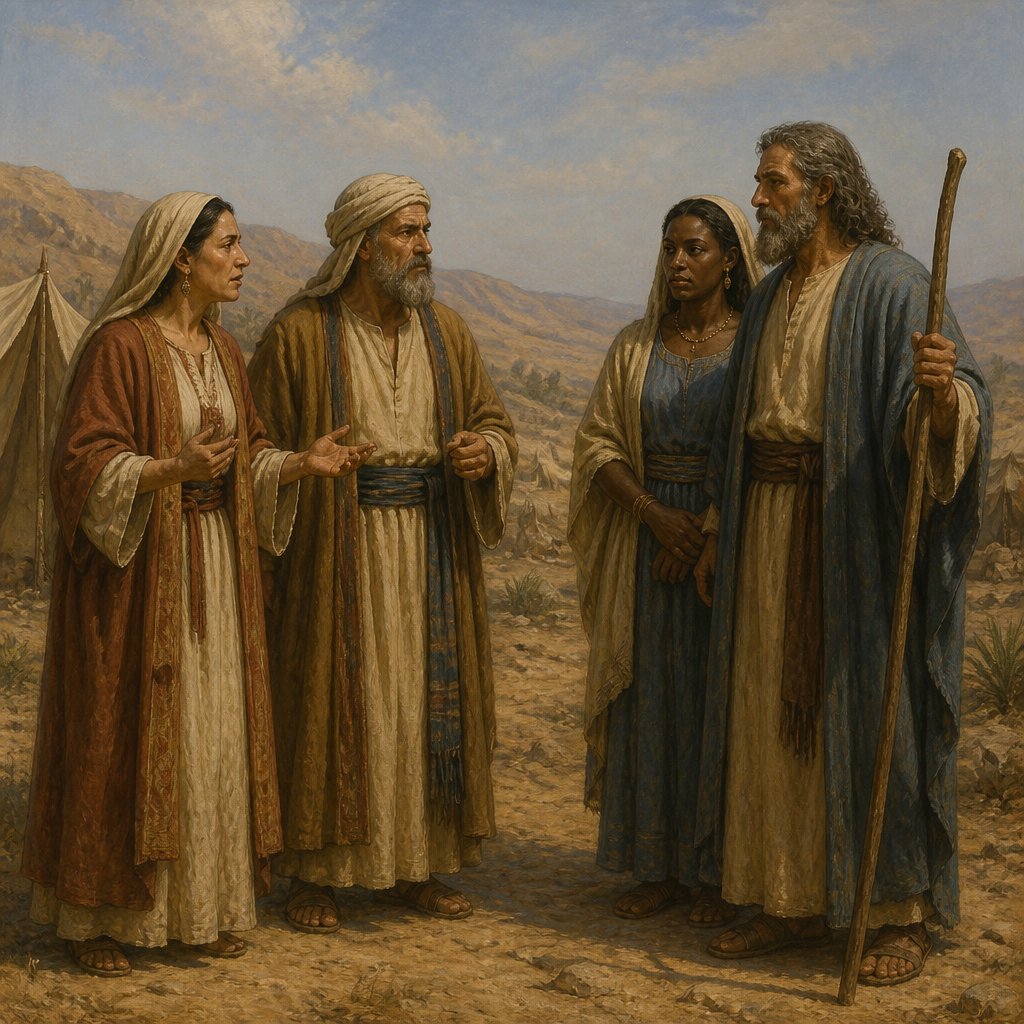
The Book of Numbers 12:1 states: "And Miriam and Aaron spake against Moses because of the Ethiopian woman whom he had married: for he had married an Ethiopian woman." This verse may seem simple on the surface, but it carries profound implications regarding relationships, gossip, and the human tendency to judge others.
### The Context of the Criticism
To truly understand the significance of Miriam and Aaron's criticism, we must first consider the context. Moses was the chosen leader of the Israelites, tasked with guiding them out of slavery in Egypt and toward the Promised Land. His marriage to an Ethiopian woman—a person from a different culture and presumably different faith—provoked discontent among his own siblings. Miriam, his sister, and Aaron, his brother, found it necessary to voice their complaints, suggesting that Moses was somehow unworthy or flawed in his choice.
Criticism often arises from a place of jealousy or insecurity. Miriam and Aaron were undoubtedly aware of Moses' unique relationship with God; they not only lived under his leadership but also experienced the divine presence in their camp. Regardless, their focus shifted from support and unity to division borne out of judgment regarding personal choice—specifically, Moses' marital selection.
### The Root of the Discontent
Their grievances reveal their hearts. They were not merely concerned about the woman's ethnicity but perhaps the implications of her foreignness—cultural differences that could complicate the Israelites' journey and, more importantly, Moses' calling. This raises an important question: why do we often find ourselves speaking against someone else, especially those in positions of leadership or authority?
Underlying the surface of criticism often lies envy. As many leaders experience, the weight of leadership can foster resentment among peers. What seems to provoke discontent in others can be analyzed through a prism of personal struggles: insecurity, fear of inadequacy, and the fear of being overshadowed. For Miriam and Aaron, Moses’ marriage could signify a perceived loss of status and authority in their relationship with him.
### The Danger of Criticism
Miriam and Aaron’s decision to speak out against Moses was not just a private conversation; it set the stage for public dissension. Negative speech can easily lead to division among the people of God. It creates an environment of mistrust and alienation. Jesus warns us in Matthew 12:36, "But I say unto you, That every idle word that men shall speak, they shall give account thereof in the day of judgment." Our words have immense power; they can either build up or tear down.
Moreover, the act of gossiping often blinds us to our own shortcomings. As outlined in Matthew 7:3, we need to consider the beam in our eye before judging the speck in another's. In Miriam and Aaron’s case, their focus on Moses' marriage to a foreign woman distracted them from their shared mission—to lead God’s chosen people towards their promised future.
### A Lesson in Humility
God responds to Miriam and Aaron’s criticism in verse 12:2, asserting Moses' unique role as prophet and leader, distinguishing him from others. Their mistake wasn't about the marriage; it was about the misguided criticism of an anointed leader. God’s reaction is a compelling reminder of the importance of maintaining an attitude of respect and humility toward those He places in authority over us.
### Conclusion: Embracing Unity
In today’s world, we must be vigilant against the temptation to criticize and tear down. Instead, as children of God, we are called to lift one another, promote unity, and celebrate diversity. Our faith community should reflect the beauty of differing backgrounds and experiences, uniting under one purpose: the calling Christ has on each of our lives. Let’s strive to speak words of encouragement and understanding, ensuring our discussions enhance rather than hinder our spiritual journey.
As we meditate on Numbers 12:1, let us ask ourselves: Are we contributing to division, or are we fostering unity in our communities? This passage bids us to reconsider our perspectives, regenerate our love for leaders, and remind ourselves of the importance of maintaining peace and understanding in our collective faith walk.
Get our apps


Artwork for Numbers 12:1

Numbers 12:1 - "And Miriam and Aaron spake against Moses because of the Ethiopian woman whom he had married: for he had married an Ethiopian woman."
"And Miriam and Aaron spake against Moses because of the Ethiopian woman whom he had married: for he had married an Ethiopian woman." - Numbers 12:1

Numbers 12:1-10 - "And Miriam and Aaron spake against Moses because of the Ethiopian woman whom he had married: for he had married an Ethiopian woman. And they said, Hath the LORD indeed spoken only by Moses? hath he not spoken also by us? And the LORD heard it. (Now the man Moses was very meek, above all the men which were upon the face of the earth.) And the LORD spake suddenly unto Moses, and unto Aaron, and unto Miriam, Come out ye three unto the tabernacle of the congregation. And they three came out. And the LORD came down in the pillar of the cloud, and stood in the door of the tabernacle, and called Aaron and Miriam: and they both came forth. And he said, Hear now my words: If there be a prophet among you, I the LORD will make myself known unto him in a vision, and will speak unto him in a dream. My servant Moses is not so, who is faithful in all mine house. With him will I speak mouth to mouth, even apparently, and not in dark speeches; and the similitude of the LORD shall he behold: wherefore then were ye not afraid to speak against my servant Moses? And the anger of the LORD was kindled against them; and he departed. And the cloud departed from off the tabernacle; and, behold, Miriam became leprous, white as snow: and Aaron looked upon Miriam, and, behold, she was leprous."
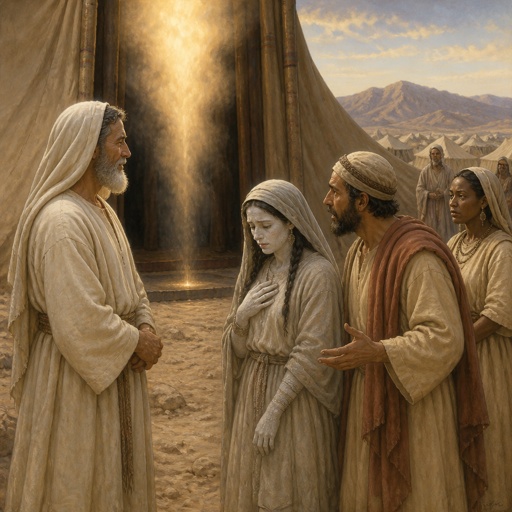
"And Miriam and Aaron spake against Moses because of the Ethiopian woman whom he had married: for he had married an Ethiopian woman. And they said, Hath the LORD indeed spoken only by Moses? hath he not spoken also by us? And the LORD heard it. (Now the man Moses was very meek, above all the men which were upon the face of the earth.) And the LORD spake suddenly unto Moses, and unto Aaron, and unto Miriam, Come out ye three unto the tabernacle of the congregation. And they three came out. And the LORD came down in the pillar of the cloud, and stood in the door of the tabernacle, and called Aaron and Miriam: and they both came forth. And he said, Hear now my words: If there be a prophet among you, I the LORD will make myself known unto him in a vision, and will speak unto him in a dream. My servant Moses is not so, who is faithful in all mine house. With him will I speak mouth to mouth, even apparently, and not in dark speeches; and the similitude of the LORD shall he behold: wherefore then were ye not afraid to speak against my servant Moses? And the anger of the LORD was kindled against them; and he departed. And the cloud departed from off the tabernacle; and, behold, Miriam became leprous, white as snow: and Aaron looked upon Miriam, and, behold, she was leprous." - Numbers 12:1-10

"Create a detailed and artistic mosaic image that depicts various scenes from the biblical book of Numbers (Bamidbar) chapters 8:1 to 12:1. The image should be divided into sections, each representing different events within these chapters, in a style that reflects traditional Jewish art and avoids Christian or Catholic imagery. Numbers 8:1-4: Show the lighting of the Menorah in the Tabernacle (Mishkan). Aaron, the High Priest, should be lighting the Menorah. Ensure that the seven-branched Menorah is prominently displayed. Numbers 8:5-26: Depict the consecration of the Levites (Leviím). Show the Levites being presented before the Tent of Meeting, having their heads shaved and being sprinkled with purifying water. Include elements such as offerings and the elders of Israel laying their hands on the Levites. Numbers 9:1-14: Illustrate the Israelites observing the Passover (Pesach) in the wilderness. Show families gathered around the Passover meal, with symbols of matzah and lamb. Also, include the people who were impure because of contact with a dead body and how they are consulting Moses about observing the Passover later. Numbers 9:15-23: Display the cloud covering the Tabernacle by day and the appearance of fire by night. Show the Israelites encamped around the Tabernacle, with their tents in the background, and the divine cloud and fire above. Numbers 10:1-10: Illustrate the making and use of the silver trumpets (chatzotzrot). Show the priests blowing the trumpets to signal the Israelites' movements and gather the assembly. Numbers 10:11-36: Depict the Israelites setting out from the wilderness of Sinai, following the cloud of the Lord. Show the ark of the covenant being carried by the Levites, leading the people. Numbers 11:1-35: Portray the incidents of the people's complaints and God's provision of quail. Include scenes of the people gathering quail and a representation of the fire that consumed some of the camp due to their complaints. Show Moses speaking to God, but ensure Moses' face is not visible. Numbers 12:1: Show the scene where Miriam and Aaron speak against Moses because of the Cushite woman he had married. Depict Miriam and Aaron in discussion, but do not show Moses' face. The entire mosaic should be harmonious and cohesive, with no individual faces of Moses visible and no words or numbers in the artwork. The style should reflect traditional Jewish artistic sensibilities and avoid any Christian or Catholic symbols."

"Create a detailed and artistic mosaic image that depicts various scenes from the biblical book of Numbers (Bamidbar) chapters 8:1 to 12:1. The image should be divided into sections, each representing different events within these chapters, in a style that reflects traditional Jewish art and avoids Christian or Catholic imagery. Numbers 8:1-4: Show the lighting of the Menorah in the Tabernacle (Mishkan). Aaron, the High Priest, should be lighting the Menorah. Ensure that the seven-branched Menorah is prominently displayed. Numbers 8:5-26: Depict the consecration of the Levites (Leviím). Show the Levites being presented before the Tent of Meeting, having their heads shaved and being sprinkled with purifying water. Include elements such as offerings and the elders of Israel laying their hands on the Levites. Numbers 9:1-14: Illustrate the Israelites observing the Passover (Pesach) in the wilderness. Show families gathered around the Passover meal, with symbols of matzah and lamb. Also, include the people who were impure because of contact with a dead body and how they are consulting Moses about observing the Passover later. Numbers 9:15-23: Display the cloud covering the Tabernacle by day and the appearance of fire by night. Show the Israelites encamped around the Tabernacle, with their tents in the background, and the divine cloud and fire above. Numbers 10:1-10: Illustrate the making and use of the silver trumpets (chatzotzrot). Show the priests blowing the trumpets to signal the Israelites' movements and gather the assembly. Numbers 10:11-36: Depict the Israelites setting out from the wilderness of Sinai, following the cloud of the Lord. Show the ark of the covenant being carried by the Levites, leading the people. Numbers 11:1-35: Portray the incidents of the people's complaints and God's provision of quail. Include scenes of the people gathering quail and a representation of the fire that consumed some of the camp due to their complaints. Show Moses speaking to God, but ensure Moses' face is not visible. Numbers 12:1: Show the scene where Miriam and Aaron speak against Moses because of the Cushite woman he had married. Depict Miriam and Aaron in discussion, but do not show Moses' face. The entire mosaic should be harmonious and cohesive, with no individual faces of Moses visible and no words or numbers in the artwork. The style should reflect traditional Jewish artistic sensibilities and avoid any Christian or Catholic symbols."

Numbers 12 15

Numbers 1:12 - "Of Dan; Ahiezer the son of Ammishaddai."

"Of Dan; Ahiezer the son of Ammishaddai." - Numbers 1:12

create a mosaic that depicts numbers 8:1 to 12:16 do not show words

1 Chronicles 12:23 - "¶ And these are the numbers of the bands that were ready armed to the war, and came to David to Hebron, to turn the kingdom of Saul to him, according to the word of the LORD."

"Johanan the eighth, Elzabad the ninth," - 1 Chronicles 12:12

"Then said the LORD unto me, Thou hast well seen: for I will hasten my word to perform it." - Jeremiah 1:12

In Numbers 12, Miriam and Aaron

Numbers 13:12 - "Of the tribe of Dan, Ammiel the son of Gemalli."

Numbers 12:12 - "Let her not be as one dead, of whom the flesh is half consumed when he cometh out of his mother's womb."

Numbers 21:12 - "¶ From thence they removed, and pitched in the valley of Zared."

Numbers 12:9 - "And the anger of the LORD was kindled against them; and he departed."

Numbers 33:12 - "And they took their journey out of the wilderness of Sin, and encamped in Dophkah."

Numbers 12:16 - "And afterward the people removed from Hazeroth, and pitched in the wilderness of Paran."

Numbers 15:12 - "According to the number that ye shall prepare, so shall ye do to every one according to their number."

Numbers 12:7 - "My servant Moses is not so, who is faithful in all mine house."

Numbers 12. Aaron and Miriam spoke against Moses

Numbers 25:12 - "Wherefore say, Behold, I give unto him my covenant of peace:"

"Mishmannah the fourth, Jeremiah the fifth," - 1 Chronicles 12:10

Numbers 7:12 - "¶ And he that offered his offering the first day was Nahshon the son of Amminadab, of the tribe of Judah:"

Numbers 10:12 - "And the children of Israel took their journeys out of the wilderness of Sinai; and the cloud rested in the wilderness of Paran."

Numbers 14:12 - "I will smite them with the pestilence, and disinherit them, and will make of thee a greater nation and mightier than they."

Numbers 16:12 - "¶ And Moses sent to call Dathan and Abiram, the sons of Eliab: which said, We will not come up:"

"Of the tribe of Dan, Ammiel the son of Gemalli." - Numbers 13:12