Sacrifice, Obedience, and Divine Process
“And ye shall give her unto Eleazar the priest, that he may bring her forth without the camp, and one shall slay her before his face:” — Numbers 19:3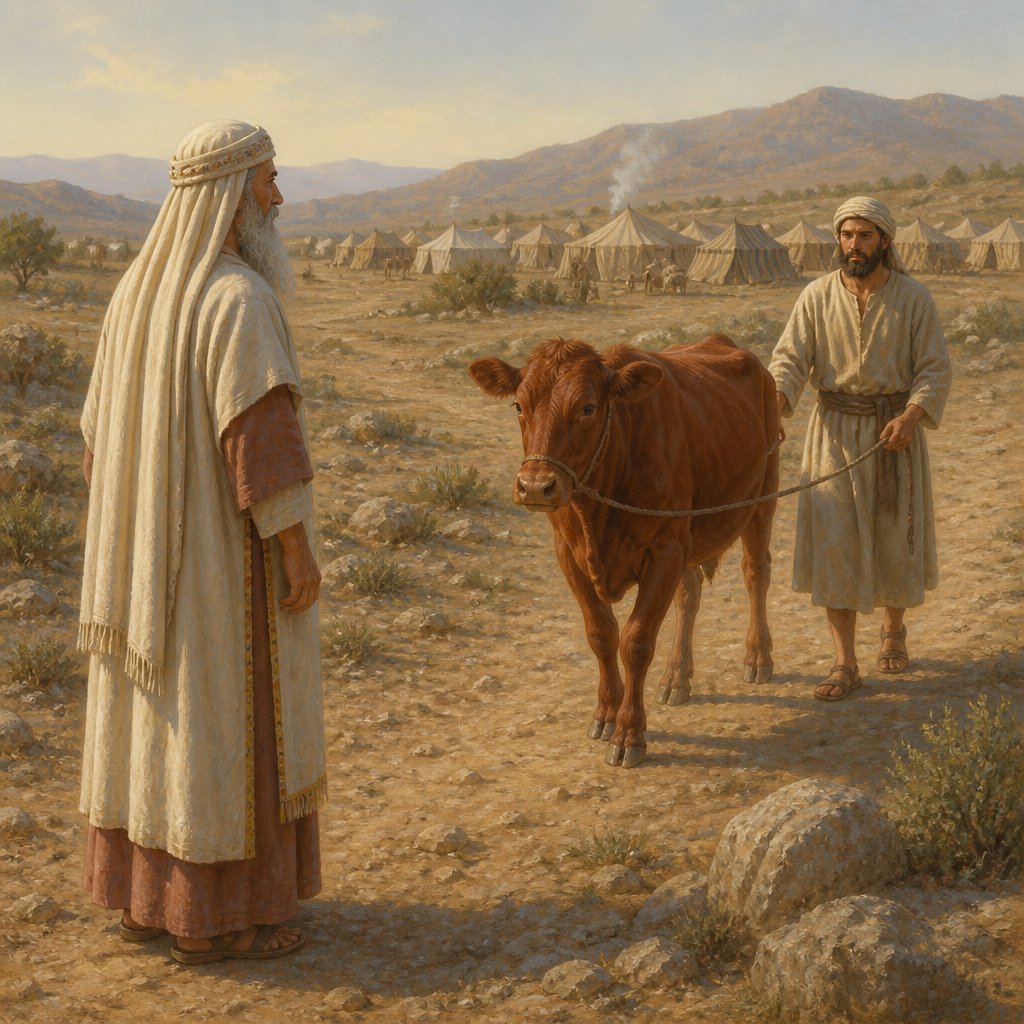
In the passage from Numbers 19:3 (KJV) which states, "And ye shall give her unto Eleazar the priest, that he may bring her forth without the camp, and one shall slay her before his face," we encounter a directive that is deeply rooted in the themes of sacrifice, obedience, and the intricate processes of purification in the biblical context. Although the contemporary reader might initially grapple with the starkness of the verse, it serves as a profound illustration of God's holiness, the seriousness of sin, and the necessary steps to restore communion with Him.
**Understanding the Context**
To fully appreciate this verse, one must understand its place within the larger narrative of Israel’s journey through the wilderness. Numbers 19 deals with the ritual of the red heifer, which was used in the purification of those who had become ceremonially unclean. The act of sacrificing a heifer, particularly one that is red, without blemish, and upon which no yoke had come, underscores the perfection and purity required by God. The instruction to take the heifer outside of the camp signifies the removal of impurity and sin from the community.
In the Old Testament, holiness and impurity are serious matters. God’s dwelling, first in the tabernacle and then in the temple, was always in direct relationship to His holiness. The presence of sin was something that could not be tolerated. Hence, the rigorous processes laid out for sacrifices and purification rites were not mere traditions but divine instructions illustrating the gravity of sin and the pathway to cleanness and communion with God.
**The Role of the Priest**
In this passage, Eleazar, as the priest, plays a crucial role. He is the mediator between God and the people, embodying the divine authority granted to him. By bringing the heifer "without the camp" for sacrifice, it not only symbolizes the act of separation from sin but also shows us that something must be dealt with before God can accept His people. As we reflect on our lives, we understand that there may be things that need to be brought before God, things that we must confront and relinquish in order to maintain the relationship that He desires with us.
**The Call to Obedience**
The instruction for the people to follow is also a call to obedience. God’s commandments, no matter how challenging, reveal His desire for His people to live in alignment with His holiness. The Israelites were required to submit to the sacrificial process, reminding them that their relationship with God is not conditional on their own righteousness but on their willingness to obey His commands. The act of slaying the heifer serves as a grave reminder that sin incurs a cost. It speaks volumes to us; anything that stands between us and God must be brought to His altar. The sacrifice was not only for the sake of ritual but for a deeper understanding of grace and redemption.
**Drawing Practical Applications**
As Christians, we find our ultimate sacrifice in Christ—a perfect Lamb without blemish, whose atoning death fulfills the sacrificial system presented in the Old Testament. Christ’s sacrifice made it possible for us to approach the throne of grace boldly, and yet we are reminded that this access came at a price. As we navigate our spiritual journeys, we must also be mindful of what God calls us to bring before Him. Are there attitudes, actions, or sins we need to purge from our lives?
In our daily walk, we can take the principles found in Numbers 19:3 and apply them by allowing the Holy Spirit to reveal areas that require our attention. Sacrificing our own comforts, desires, or sinfulness is an act not merely of duty but a profound expression of love and worship to God. When we yield to God's design for our lives, we align ourselves with His divine purpose and embrace the abundant life He promises.
**In Prayerful Reflection**
Let us pray now, asking the Lord to reveal any areas of our lives that require the cleansing that only He can provide. May our willingness to be obedient lead us to a deeper understanding of His grace, and may we live each day in the light of His holiness.
Ultimately, Numbers 19:3 beckons us to acknowledge the divine process established by God for restoration, calling us to embrace sacrifice—and in it, we find the true heart of worship.
Get our apps


Artwork for Numbers 19:3
"And ye shall give her unto Eleazar the priest, that he may bring her forth without the camp, and one shall slay her before his face:" - Numbers 19:3

Numbers 3:19 - "And the sons of Kohath by their families; Amram, and Izehar, Hebron, and Uzziel."
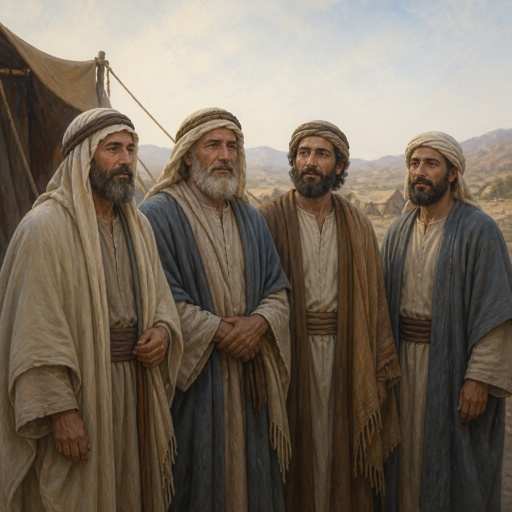
"And the sons of Kohath by their families; Amram, and Izehar, Hebron, and Uzziel." - Numbers 3:19

Numbers 19:14-19 Touching a dead is unclean

Numbers 1:19 - "As the LORD commanded Moses, so he numbered them in the wilderness of Sinai."

Numbers 21:19 - "And from Mattanah to Nahaliel: and from Nahaliel to Bamoth:"

Numbers 33:19 - "And they departed from Rithmah, and pitched at Rimmon-parez."

Numbers 34:19 - "And the names of the men are these: Of the tribe of Judah, Caleb the son of Jephunneh."

Numbers 19:1 - "And the LORD spake unto Moses and unto Aaron, saying,"

Numbers 2:19 - "And his host, and those that were numbered of them, were forty thousand and five hundred."

Numbers 10:19 - "And over the host of the tribe of the children of Simeon was Shelumiel the son of Zurishaddai."

Numbers 3:41

Numbers 19:15 - "And every open vessel, which hath no covering bound upon it, is unclean."

Numbers 19:11 - "¶ He that toucheth the dead body of any man shall be unclean seven days."

Numbers 26:19 - "¶ The sons of Judah were Er and Onan: and Er and Onan died in the land of Canaan."

Numbers 19:6 - "And the priest shall take cedar wood, and hyssop, and scarlet, and cast it into the midst of the burning of the heifer."

Numbers 3:16 - "And Moses numbered them according to the word of the LORD, as he was commanded."

Numbers 3:3 - "These are the names of the sons of Aaron, the priests which were anointed, whom he consecrated to minister in the priest's office."

Numbers 19:22 - "And whatsoever the unclean person toucheth shall be unclean; and the soul that toucheth it shall be unclean until even."

Numbers 27:19 - "And set him before Eleazar the priest, and before all the congregation; and give him a charge in their sight."

Numbers 3:5 - "¶ And the LORD spake unto Moses, saying,"

Numbers 3:44 - "¶ And the LORD spake unto Moses, saying,"

Numbers 3:11 - "And the LORD spake unto Moses, saying,"
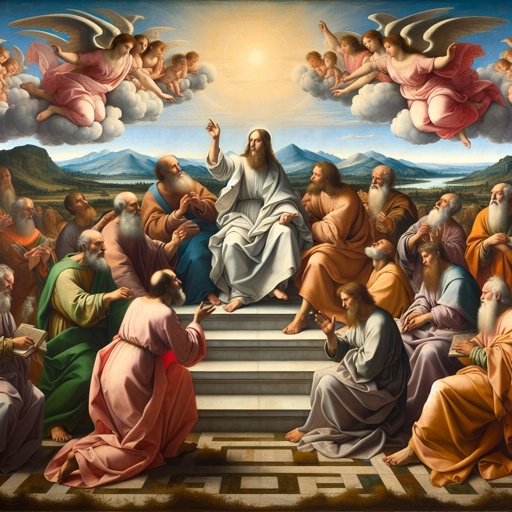
Genesis 19-3

Psalm 19:3

Numbers 19:19 - "And the clean person shall sprinkle upon the unclean on the third day, and on the seventh day: and on the seventh day he shall purify himself, and wash his clothes, and bathe himself in water, and shall be clean at even."

Picture of Numbers 21:1-3

Levites selected as priests in numbers 3

Numbers 24:19 - "Out of Jacob shall come he that shall have dominion, and shall destroy him that remaineth of the city."

Numbers 13:19 - "And what the land is that they dwell in, whether it be good or bad; and what cities they be that they dwell in, whether in tents, or in strong holds;"