Sanctification in Struggle: Lessons from Meribah
“This the water of Meribah; because the children of Israel strove with the LORD, and he was sanctified in them.” — Numbers 20:13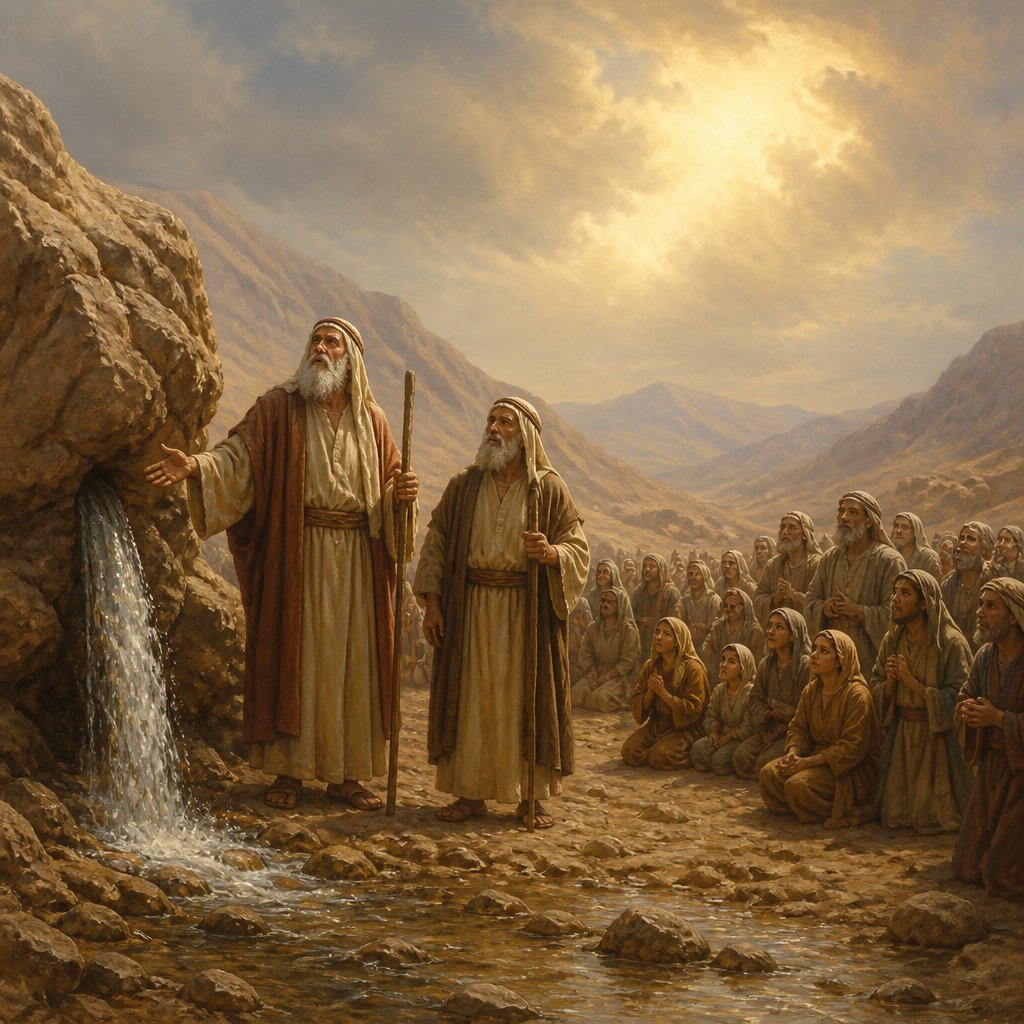
The account of Meribah is a poignant reminder of the complexities of the human experience in relationship to God. Numbers 20:13 states, "This is the water of Meribah; because the children of Israel strove with the LORD, and he was sanctified in them" (KJV). This verse encapsulates a moment of turmoil and challenge for the children of Israel, revealing profound truths about God's holiness and our struggles.
To truly grasp the weight of this account, we must consider the context. The Israelites had been wandering in the desert for many years, a journey filled with trials, complaints, and moments of divine intervention. They had witnessed God’s miraculous provisions, yet their faith continually wavered. When they arrived at Meribah, they were parched and desperate for water, leading them once again to grumble and complain against Moses and Aaron, as recorded earlier in this chapter.
The incident at Meribah is significant not just for what it reveals about the Israelites but also about God Himself. The strife of the people brought them into conflict with the sovereign God who had led them thus far. Their actions suggest a failure to understand His power and faithfulness. Despite their grievances, God chose to respond in a way that revealed His character. He instructed Moses to speak to the rock to bring forth water, which symbolized His provision and grace. However, in a moment of frustration, Moses struck the rock instead of speaking to it as commanded. While water flowed abundantly, the consequences for Moses were severe—he was denied entry into the Promised Land due to this act of disobedience.
The essence of Numbers 20:13 highlights two critical elements: the strife of the Israelites and God's sanctification among them. The word "sanctified" means to set apart or to make holy. Despite their rebellion and lack of faith, God's holiness remained constant amidst their struggles. When they strove with the Lord, it was as if they were trying to grapple with the Almighty, not realizing that the very nature of their strife brought forth a revelation of who God is.
In our lives, we can identify with the children of Israel. How often do we find ourselves in a desert of our own making—a place of dryness, struggle, and discontent? When we face trials and tribulations, it is human nature to direct our frustration towards God, questioning His faithfulness, presence, and provision. Yet, the Lord uses these moments not to cast us away but to sanctify His name in us. This brings us to an important lesson regarding the sanctification of God in our lives: He is glorified through our struggles.
The process of sanctification is not merely about our actions but how those actions reveal the character of God. Even in our failure, when our faith falters, He can turn those moments into testimonies of His grace. When strife arises in our lives, we often fail to see that God is still working, still holy, and still worthy of our trust. He calls us to submit our grievances, turn our complaints into prayers, and be open to His way of responding—much like He responded through Moses and the rock.
The water at Meribah signifies more than just physical sustenance; it symbolizes the sustenance of God’s presence and character. As we confront our own Meribah experiences, may we remember that God's holiness is not diminished by our struggles. Instead, through every hardship, He invites us to experience His sanctification. In acknowledging God’s glory through our strife, we find comfort and strength, realizing that our difficulties serve as stepping stones to deeper faith.
In conclusion, let us not forget the profound truth of Numbers 20:13. Our struggles, though challenging, are opportunities for God to reveal His glory. Just as the waters of Meribah flowed freely amidst the strife, may we drink deeply from the well of God's grace, knowing that He is always sanctified even in our lowest moments.
Get our apps


Artwork for Numbers 20:13

Numbers 20:13 - "This is the water of Meribah; because the children of Israel strove with the LORD, and he was sanctified in them."
"This is the water of Meribah; because the children of Israel strove with the LORD, and he was sanctified in them." - Numbers 20:13

Numbers 13:20 - "And what the land is, whether it be fat or lean, whether there be wood therein, or not. And be ye of good courage, and bring of the fruit of the land. Now the time was the time of the firstripe grapes."

Numbers 13:13 - "Of the tribe of Asher, Sethur the son of Michael."

Numbers 20:20 - "And he said, Thou shalt not go through. And Edom came out against him with much people, and with a strong hand."

Numbers 20:7 - "¶ And the LORD spake unto Moses, saying,"

Numbers 34:20 - "And of the tribe of the children of Simeon, Shemuel the son of Ammihud."

Luke 13:20-21

Luke 13:20-21

Numbers 33:20 - "And they departed from Rimmon-parez, and pitched in Libnah."

Luke 13:20-21

Luke 13:20-21
Luke 13:20-21

Numbers 23:1-13

"Of the tribe of Asher, Sethur the son of Michael." - Numbers 13:13
Numbers 1:13 - "Of Asher; Pagiel the son of Ocran."

Numbers 16:20 - "And the LORD spake unto Moses and unto Aaron, saying,"

Numbers 7:20 - "One spoon of gold of ten shekels, full of incense:"

hebrew 13:20

Genesis 20-13

Numbers 13:6 - "Of the tribe of Judah, Caleb the son of Jephunneh."

Numbers 13:10 - "Of the tribe of Zebulun, Gaddiel the son of Sodi."

Numbers 33:13 - "And they departed from Dophkah, and encamped in Alush."

Numbers 13:8 - "Of the tribe of Ephraim, Oshea the son of Nun."

Numbers 13:9 - "Of the tribe of Benjamin, Palti the son of Raphu."

Numbers 13:5 - "Of the tribe of Simeon, Shaphat the son of Hori."

Numbers 13:1 - "And the LORD spake unto Moses, saying,"

Numbers 13:15 - "Of the tribe of Gad, Geuel the son of Machi."

Numbers 13:12 - "Of the tribe of Dan, Ammiel the son of Gemalli."

Numbers 13:7 - "Of the tribe of Issachar, Igal the son of Joseph."