What does Numbers 20:13 mean?
“This the water of Meribah; because the children of Israel strove with the LORD, and he was sanctified in them.” — Numbers 20:13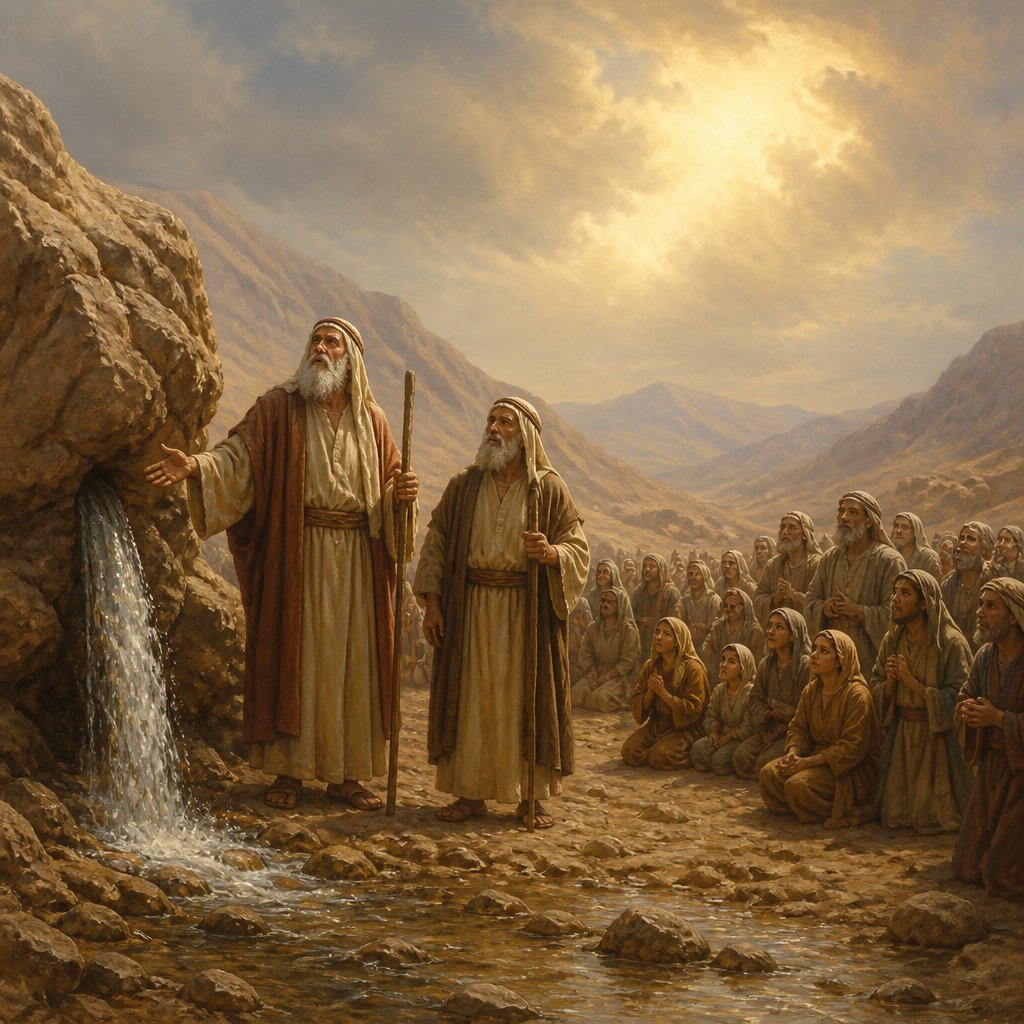
Numbers 20:13 (KJV) reads, "This is the water of Meribah; because the children of Israel strove with the Lord, and he was sanctified in them."
This verse comes from the book of Numbers in the Old Testament and is part of the story of Moses and the Israelites wandering in the wilderness. The context of this verse takes place after the Israelites had been delivered from Egypt and were wandering in the desert. They were thirsty and complained to Moses and Aaron, questioning why they had been brought to the wilderness to die of thirst. Moses and Aaron then went to the tabernacle to seek God's guidance, and He instructed them to speak to a rock, and water would flow from it for the people to drink. However, Moses, in his frustration with the Israelites, struck the rock twice instead of just speaking to it as God had commanded. Despite Moses' disobedience, water still flowed from the rock, but God was displeased with Moses' lack of faith and obedience.
The theme of obedience and faith is central to this verse. It serves as a reminder of the consequences of disobedience to God's commands. The Israelites had already experienced God's provision and deliverance numerous times, yet their lack of faith and patience led to their complaining and strife with the Lord. Moses' actions also demonstrated his lack of trust and obedience to God's instructions. The verse serves as a cautionary tale about the importance of trusting and obeying God, even in difficult circumstances.
The symbolism in this verse is significant as well. The water from the rock is a symbol of God's provision and sustenance for His people. It is a reminder that God is faithful to provide for His people, even when they doubt and complain. The rock itself represents God's strength and stability, as well as His unchanging nature. In striking the rock, Moses displayed his frustration and lack of trust in God's ability to provide. This disobedient act not only dishonored God but also set a negative example for the Israelites.
Furthermore, the location "Meribah," which means "quarrel" or "contention," also holds symbolic significance. It signifies the discord and lack of harmony that arose between the Israelites and the Lord. This serves as a warning about the dangers of complaining and questioning God's plans and provisions. It is a reminder that God desires His people to trust Him and seek His guidance, even when faced with challenges and hardships.
In a broader theological context, this verse also foreshadows the importance of obedience and faith in Christ. Just as the Israelites were called to trust and obey God, Christians are called to have faith in Jesus as the ultimate source of living water (John 4:14). Jesus Himself refers to the water from the rock in the wilderness as a symbol of spiritual nourishment and eternal life (1 Corinthians 10:4). The disobedience of Moses serves as a cautionary example for believers to remain faithful and obedient to Christ, who is the living water that satisfies our deepest needs.
In conclusion, Numbers 20:13 serves as a powerful reminder of the consequences of disobedience and lack of faith in God. It emphasizes the importance of trusting and obeying God, even in challenging circumstances. The symbolism of the rock and the water signifies God's provision and the significance of faith in His promises. This verse also points to the ultimate fulfillment of God's provision in Jesus Christ, who offers the living water of eternal life to all who believe in Him.
Get our apps


Artwork for Numbers 20:13

Numbers 20:13 - "This is the water of Meribah; because the children of Israel strove with the LORD, and he was sanctified in them."
"This is the water of Meribah; because the children of Israel strove with the LORD, and he was sanctified in them." - Numbers 20:13

Numbers 13:20 - "And what the land is, whether it be fat or lean, whether there be wood therein, or not. And be ye of good courage, and bring of the fruit of the land. Now the time was the time of the firstripe grapes."

Numbers 13:13 - "Of the tribe of Asher, Sethur the son of Michael."

Numbers 20:20 - "And he said, Thou shalt not go through. And Edom came out against him with much people, and with a strong hand."

Numbers 20:7 - "¶ And the LORD spake unto Moses, saying,"

Numbers 34:20 - "And of the tribe of the children of Simeon, Shemuel the son of Ammihud."

Luke 13:20-21

Luke 13:20-21

Numbers 33:20 - "And they departed from Rimmon-parez, and pitched in Libnah."

Luke 13:20-21

Luke 13:20-21
Luke 13:20-21

Numbers 23:1-13

"Of the tribe of Asher, Sethur the son of Michael." - Numbers 13:13
Numbers 1:13 - "Of Asher; Pagiel the son of Ocran."

Numbers 16:20 - "And the LORD spake unto Moses and unto Aaron, saying,"

Numbers 7:20 - "One spoon of gold of ten shekels, full of incense:"

hebrew 13:20

Genesis 20-13

Numbers 13:6 - "Of the tribe of Judah, Caleb the son of Jephunneh."

Numbers 13:10 - "Of the tribe of Zebulun, Gaddiel the son of Sodi."

Numbers 33:13 - "And they departed from Dophkah, and encamped in Alush."

Numbers 13:8 - "Of the tribe of Ephraim, Oshea the son of Nun."

Numbers 13:9 - "Of the tribe of Benjamin, Palti the son of Raphu."

Numbers 13:5 - "Of the tribe of Simeon, Shaphat the son of Hori."

Numbers 13:1 - "And the LORD spake unto Moses, saying,"

Numbers 13:15 - "Of the tribe of Gad, Geuel the son of Machi."

Numbers 13:12 - "Of the tribe of Dan, Ammiel the son of Gemalli."

Numbers 13:7 - "Of the tribe of Issachar, Igal the son of Joseph."