The Legacy of Faithfulness: Lessons from the Sons of Merari
“And the sons of Merari by their families; Mahli, and Mushi. These the families of the Levites according to the house of their fathers.” — Numbers 3:20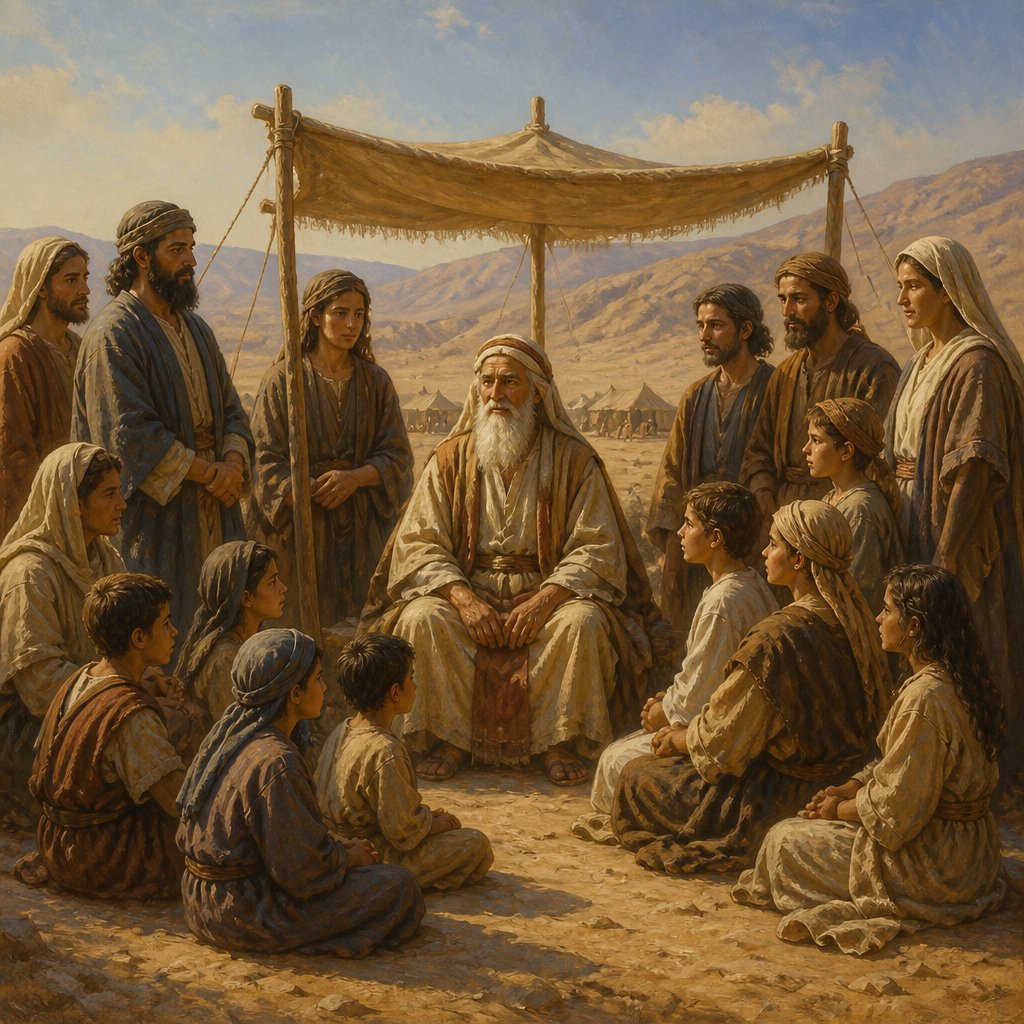
In Numbers 3:20, we read, "And the sons of Merari by their families; Mahli, and Mushi. These are the families of the Levites according to the house of their fathers." This seemingly simple verse highlights an important aspect of the biblical narrative—the lineage and legacy of faith that defines and shapes the people of God. As we reflect on this passage, we unveil the profound significance of family, heritage, and God's meticulous plan for His people.
Merari, one of the sons of Levi, had two sons: Mahli and Mushi. Their names might not appear in the grand narratives of the Bible, yet they play a crucial role in the heritage of the Levites. This passage points to their family structure, emphasizing that God honors families within His divine order. As modern believers, this invites us to consider the importance of our families in the context of faith and service to God.
The Levites were designated as caretakers of the Tabernacle, responsible for its maintenance and the accompanying sacred objects. This role was honorable yet demanding, showcasing the gravity of their service. Mahli and Mushi represent a continuation of this sacred duty, demonstrating that God’s work transcends individual achievements; it continues through the generations. Our roles in the kingdom of God are not solely about our personal ambitions but about fulfilling the responsibilities laid before us, often inherited from our spiritual forebears.
When pondering the significance of Mahli and Mushi, we recognize that every family has a story. Each family member contributes to a legacy of faith that can redefine the community around them. They serve as a reminder that even those who might be overlooked by history are still part of God’s plan. As the sons of Merari, Mahli and Mushi teach us that our obedience and faithfulness matter, regardless of the prominence of our roles. They symbolize the hidden servants of God who faithfully fulfill their calling without seeking recognition.
As Christians, we are also called to honor our family lineage in faith. Consider how your own family, be it physical or spiritual, has impacted your journey with God. What legacy do you carry, and how are you contributing to that story? This serves as a good moment for self-examination. The faithfulness of your forebears may very well be the foundation upon which you stand today.
Moreover, the names Mahli and Mushi hold deeper meanings that resonate with our spiritual lives. Mahli translates to "sickly” or “wounded,” while Mushi means “drawn out” or “taken away.” In our walk of faith, we encounter seasons of healing where we might feel sick from our battles against sin or the world, just as Mahli's name suggests. But like Mushi, we are reminded that we are drawn out—taken from darkness into light. Our struggles do not define us but are part of our process of spiritual rescue. God calls each one of us, irrespective of our past ailments, to a vibrant life of purpose.
We must never underestimate the significance of our family legacies, both historically in the Biblical narrative and contemporarily in our lives. Like the sons of Merari, we stand at the intersection of history and heritage, tasked with continuing the faithfulness we have received.
In light of this, let us commit to nurturing and passing down our faith to the next generation. Whether through teaching, sharing our testimonies, or living out Christ's love, we have a part to play in this divine heritage. May we honor our legacy and the faithful service of those who have gone before us while diligently preparing the way for those who will follow.
As we read the seemingly mundane lineage of Numbers 3:20, let us be reminded that no detail is too small in the kingdom of God. Each person has a purpose and plays a vital part in the overarching plan of our faithful Creator, and we, like Mahli and Mushi, are called to live out our divine purpose with dedication and faith.
Get our apps


Artwork for Numbers 3:20

Numbers 3:20 - "And the sons of Merari by their families; Mahli, and Mushi. These are the families of the Levites according to the house of their fathers."
"And the sons of Merari by their families; Mahli, and Mushi. These are the families of the Levites according to the house of their fathers." - Numbers 3:20

Numbers 20:3 - "And the people chode with Moses, and spake, saying, Would God that we had died when our brethren died before the LORD!"

Numbers 20:20 - "And he said, Thou shalt not go through. And Edom came out against him with much people, and with a strong hand."

Numbers 20:7 - "¶ And the LORD spake unto Moses, saying,"

Numbers 34:20 - "And of the tribe of the children of Simeon, Shemuel the son of Ammihud."

Numbers 33:20 - "And they departed from Rimmon-parez, and pitched in Libnah."

Numbers 16:20 - "And the LORD spake unto Moses and unto Aaron, saying,"

Numbers 7:20 - "One spoon of gold of ten shekels, full of incense:"
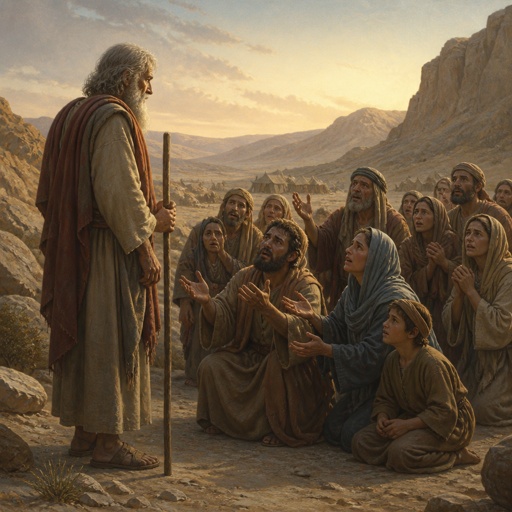
"And the people chode with Moses, and spake, saying, Would God that we had died when our brethren died before the LORD!" - Numbers 20:3

Numbers 14:20 - "And the LORD said, I have pardoned according to thy word:"

Numbers 10:20 - "And over the host of the tribe of the children of Gad was Eliasaph the son of Deuel."

Numbers 3:41

Numbers 4:20 - "But they shall not go in to see when the holy things are covered, lest they die."

Numbers 20:2 - "And there was no water for the congregation: and they gathered themselves together against Moses and against Aaron."
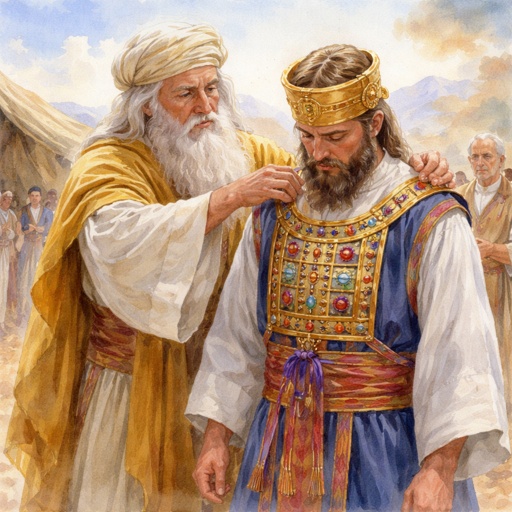
Putting Aaron’s priestly garment on Eleazar in Numbers 20

Numbers 20:9 - "And Moses took the rod from before the LORD, as he commanded him."

Numbers 35:20 - "But if he thrust him of hatred, or hurl at him by laying of wait, that he die;"

Numbers 20:13 - "This is the water of Meribah; because the children of Israel strove with the LORD, and he was sanctified in them."

Numbers 20:27 - "And Moses did as the LORD commanded: and they went up into mount Hor in the sight of all the congregation."

Numbers 21:20 - "And from Bamoth in the valley, that is in the country of Moab, to the top of Pisgah, which looketh toward Jeshimon."

Numbers 20:25 - "Take Aaron and Eleazar his son, and bring them up unto mount Hor:"

Numbers 20:23 - "And the LORD spake unto Moses and Aaron in mount Hor, by the coast of the land of Edom, saying,"

Numbers 2:20 - "And by him shall be the tribe of Manasseh: and the captain of the children of Manasseh shall be Gamaliel the son of Pedahzur."

Numbers 23:20 - "Behold, I have received commandment to bless: and he hath blessed; and I cannot reverse it."
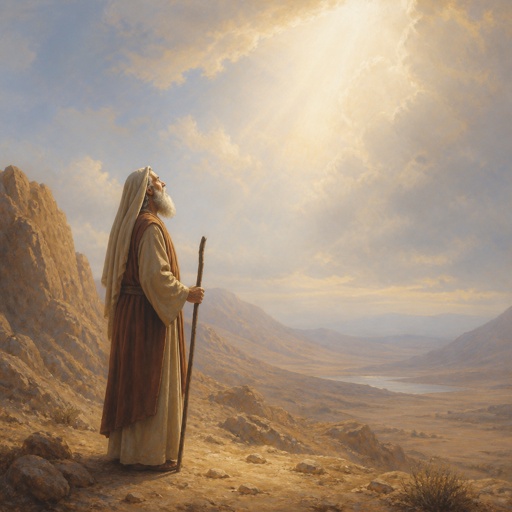
"¶ And the LORD spake unto Moses, saying," - Numbers 20:7

Numbers 3:16 - "And Moses numbered them according to the word of the LORD, as he was commanded."
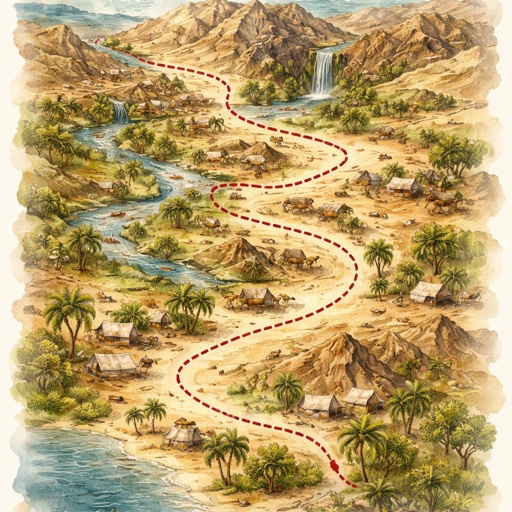
Draw me a travel map for Numbers 21:10-20

matthew 20:3
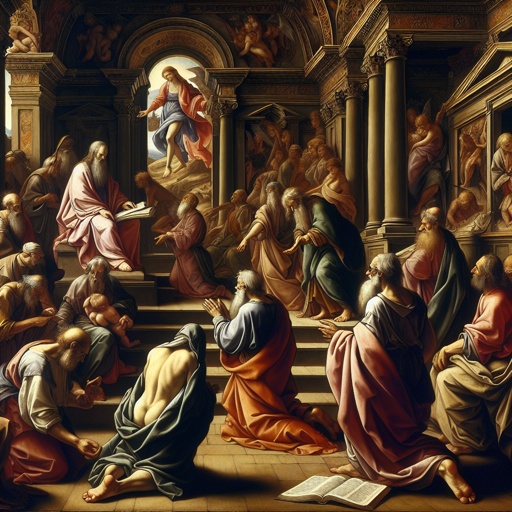
Genesis 20-3