The Weight of Justice: Understanding the Heart of God in Numbers 35:21
“Or in enmity smite him with his hand, that he die: he that smote him shall surely be put to death; for he is a murderer: the revenger of blood shall slay the murderer, when he meeteth him.” — Numbers 35:21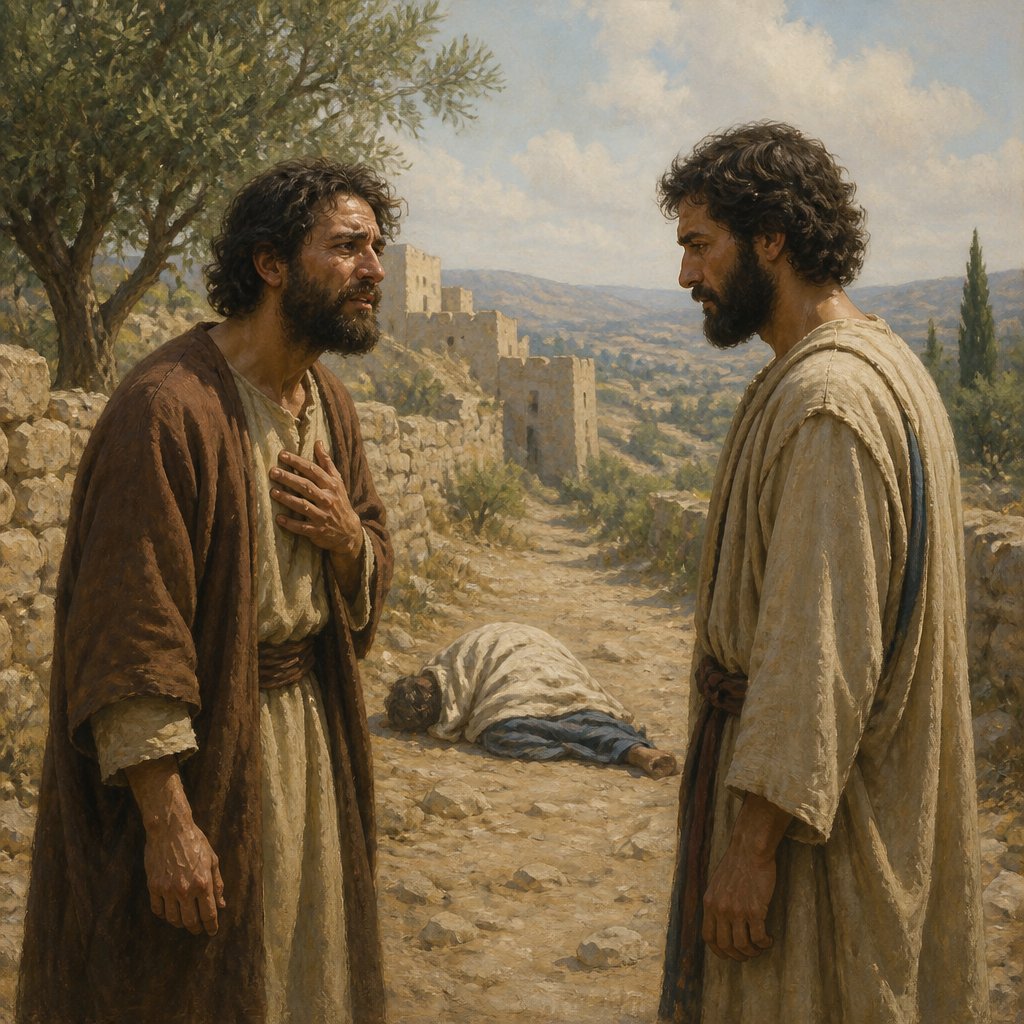
As we delve into the profound and often challenging teachings of Scripture, we encounter Numbers 35:21, which states: "Or in enmity smite him with his hand, that he die: he that smote him shall surely be put to death; for he is a murderer: the revenger of blood shall slay the murderer, when he meeteth him." This verse, nestled within the laws given to Israel, speaks to the gravity of human actions and the nature of justice as seen through the lens of God’s holiness.
To wrestle with this verse, we must first understand its context. The book of Numbers lays out God's instructions to the Israelites as they navigate their journey through the wilderness towards the Promised Land. The verses surrounding this particular passage emphasize God's desire for order, justice, and protection within His community. God establishes cities of refuge as safe havens for those who have unintentionally caused death, contrasting sharply with the immediate and severe repercussions for premeditated murder. This distinction underscores the moral fabric of God’s law; murder is a grave offense that disrupts the sanctity of life that God Himself created.
In considering the term "enmity" in this verse, we recognize that it refers to a state of hatred or hostility. God’s Law addresses the human heart at its most primal level—our capacity for revenge and outrage. This law reflects God’s understanding of human nature and the potential for wrongdoing when we give way to our emotions. When one person smites another out of enmity, it is a manifestation of deep-seated anger and malice, suggesting a heart turned away from God’s commands of love and forgiveness. Thus, God condemns this act firmly: to take a life out of spite is not only murder, but it is also an affront to God's design for human relationships.
The phrase "the revenger of blood shall slay the murderer, when he meeteth him," introduces us to the concept of justice through divine order. It highlights a natural, societal responsibility to uphold the sanctity of life. The term "revenger of blood" denotes a family member or next of kin who had the duty to avenge the death of their relative. Such a system, while harsh by modern standards, aimed to prevent a cycle of violence and vendetta by establishing clear consequences for wrongful actions.
When we look deeper, what does this mean for us today? While we are no longer under the Mosaic Law, the principles of justice, accountability, and the sanctity of life still resonate strongly within the moral fabric of our lives. Jesus' teachings during His ministry reinforced the commandment against murder, extending it to include anger and contempt in Matthew 5:21-22. Here, Jesus radicalizes the idea of murder by teaching that harboring hatred in our hearts is just as serious as physically taking a life. This opens us to the depth of God’s justice and mercy: He calls us not only to abstain from wrongful actions but also to transform our hearts towards love, reconciliation, and grace.
In applying this verse, we must ask ourselves: are there places in my life where enmity lurks—whether in relationships, conflicts, or personal grievances? This passage calls us to reject hatred and choose pathways of restoration. God’s law challenges us to reflect His heart: one that seeks harmony, not hatred.
Let us remember that God Himself does not look away from injustices but rather intends to restore and reclaim through Christ. As believers, we are called to apply the principles of justice, mercy, and love in a broken world. The call to love our enemies and pray for those who persecute us is a profound reversal of the instinct for revenge. It’s a radical declaration that our lives can reflect Christ's love.
In conclusion, while Numbers 35:21 illustrates a severe outlook on justice, may it incite in us a deeper understanding of our own hearts, the seriousness with which we must take our actions, and our calling to live out the grace we have received. Let us embrace Christ’s transformative power to renew our hearts, that we might become instruments of peace in a world so often marred by strife.
Get our apps


Artwork for Numbers 35:21
Numbers 35:21 - "Or in enmity smite him with his hand, that he die: he that smote him shall surely be put to death; for he is a murderer: the revenger of blood shall slay the murderer, when he meeteth him."
"Or in enmity smite him with his hand, that he die: he that smote him shall surely be put to death; for he is a murderer: the revenger of blood shall slay the murderer, when he meeteth him." - Numbers 35:21

Picture representing Numbers 21:21-35
Numbers 21:35 - "So they smote him, and his sons, and all his people, until there was none left him alive: and they possessed his land."

Numbers 32:35 - "And Atroth, Shophan, and Jaazer, and Jogbehah,"

Numbers 35:9 - "¶ And the LORD spake unto Moses, saying,"
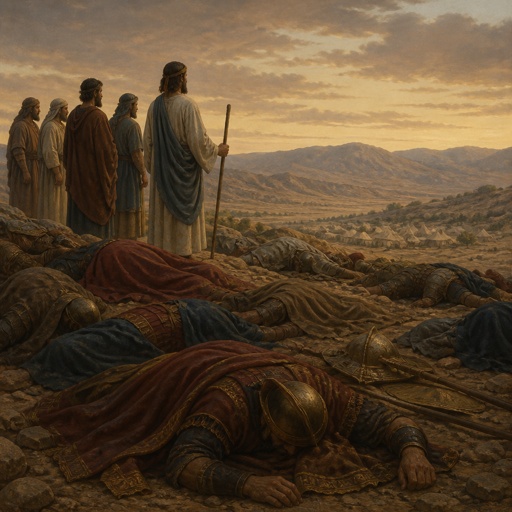
"So they smote him, and his sons, and all his people, until there was none left him alive: and they possessed his land." - Numbers 21:35

Numbers 33:35 - "And they departed from Ebronah, and encamped at Ezion-gaber."

Numbers 35. City of refuge and blood avenger

Numbers 11:35 - "And the people journeyed from Kibroth-hattaavah unto Hazeroth; and abode at Hazeroth."

Numbers 35:24 - "Then the congregation shall judge between the slayer and the revenger of blood according to these judgments:"

"And Atroth, Shophan, and Jaazer, and Jogbehah," - Numbers 32:35

"And Atroth, Shophan, and Jaazer, and Jogbehah," - Numbers 32:35

Numbers 35:1 - "And the LORD spake unto Moses in the plains of Moab by Jordan near Jericho, saying,"

Joshua 21:35 - "Dimnah with her suburbs, Nahalal with her suburbs; four cities."

Genesis 35:21 - "¶ And Israel journeyed, and spread his tent beyond the tower of Edar."

Numbers 35:20 - "But if he thrust him of hatred, or hurl at him by laying of wait, that he die;"

Numbers 1:35 - "Those that were numbered of them, even of the tribe of Manasseh, were thirty and two thousand and two hundred."

Numbers 35:13 - "And of these cities which ye shall give six cities shall ye have for refuge."

Numbers 35:3 - "And the cities shall they have to dwell in; and the suburbs of them shall be for their cattle, and for their goods, and for all their beasts."

Luke 21:35 - "For as a snare shall it come on all them that dwell on the face of the whole earth."

6 cities of refuge in the map ads provided in numbers 35

"¶ And the LORD spake unto Moses, saying," - Numbers 35:9

Numbers 16:35 - "And there came out a fire from the LORD, and consumed the two hundred and fifty men that offered incense."

Numbers 21:21 - "¶ And Israel sent messengers unto Sihon king of the Amorites, saying,"

Numbers 3:35 - "And the chief of the house of the father of the families of Merari was Zuriel the son of Abihail: these shall pitch on the side of the tabernacle northward."

Numbers 35:29 - "So these things shall be for a statute of judgment unto you throughout your generations in all your dwellings."

Numbers 29:35 - "¶ On the eighth day ye shall have a solemn assembly: ye shall do no servile work therein:"

Numbers 35:26 - "But if the slayer shall at any time come without the border of the city of his refuge, whither he was fled;"

Numbers 26:35 - "¶ These are the sons of Ephraim after their families: of Shuthelah, the family of the Shuthalhites: of Becher, the family of the Bachrites: of Tahan, the family of the Tahanites."