Redemption in the Atonement: A Journey of Restoration
“But if the man have no kinsman to recompense the trespass unto, let the trespass be recompensed unto the LORD, even to the priest; beside the ram of the atonement, whereby an atonement shall be made for him.” — Numbers 5:8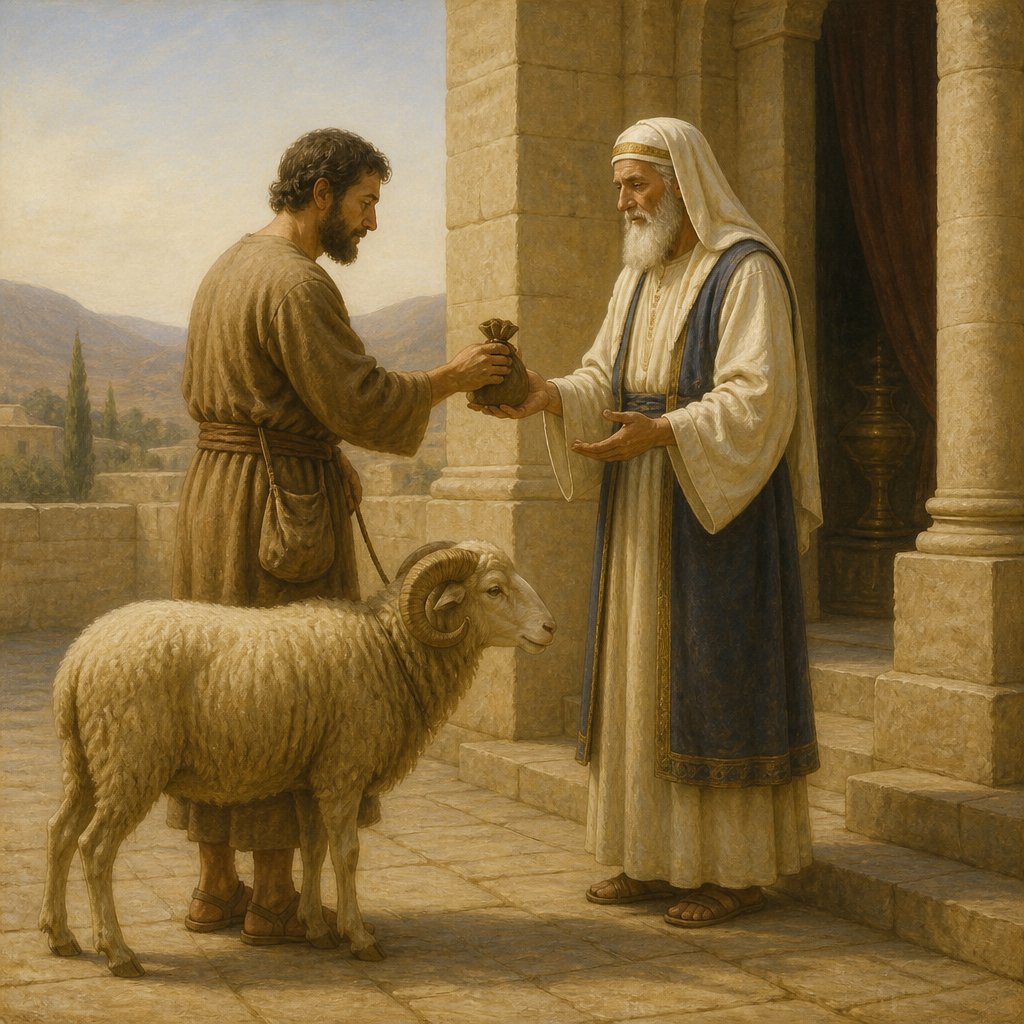
In exploring the depths of Numbers 5:8, we are brought face to face with the serious nature of sin and the profound beauty of redemption. The verse reads: "But if the man have no kinsman to recompense the trespass unto, let the trespass be recompensed unto the LORD, even to the priest; beside the ram of the atonement, whereby an atonement shall be made for him (KJV)." In this passage, God's instructions concerning restitution reveal His heart toward sin and the mechanisms He has established for restoration.
At first glance, this verse may seem specific and even archaic, addressing an ancient legal system that feels far removed from our modern-day experiences. However, this snippet of legislation provides deep insights into the character of God, particularly in matters of justice, mercy, and grace. The underlying principle is straightforward: sin results in a debt—a debt that must be acknowledged, confessed, and ultimately repaid. It is a theme that resonates through the entirety of Scripture, culminating in the ultimate act of atonement through Jesus Christ.
In the context of ancient Israel, to have transgressed against someone meant that you had wronged them, and the expectation was to make it right. However, what happens when a man finds himself in sin and without a kinsman—a relative or loved one—to aid in the restitution process? This is a critical component of the scripture that reminds us of our individual walk with God. It reflects the reality that we sometimes find ourselves isolated, facing the heavyweight of our guilt alone, perhaps feeling abandoned in our struggles.
Yet, God provides a path for restoration even in the absence of human intermediaries. The directive to transfer the trespass unto the LORD demonstrates His readiness to accept what is often left unfulfilled by humanity. The LORD, more than just an overseer of justice, dresses this burden of sin with a mantle of atonement. The requirement of a ram for the atonement is a shadow of the ultimate sacrifice that would come through Jesus Christ—a symbol of innocence taking on the guilt of the guilty. Thus, what appears to be merely legalistic procedures point towards a deeper, more profound truth—the necessity of a substitute for our failings.
The notion of being recompensed unto the priest signifies the importance of seeking the Lord's intercession. It informs us that while we individually carry our sins, we also have direct access to the high priest, who in Christianity is Christ Himself. This transforms the narrative of accountability. Instead of bearing our shame in silence, we are called to present ourselves before God, who waits with open arms, ready to embrace those who repent. It is as though God is saying, "You may not have a human kinsman, but I am here—your eternal Father, your Redeemer. Come unto me, and let us make it right."
Delving further, we are invited into the act of atonement not just as a transaction, but as a relationship. The process is not merely about restoring what was lost but creating an intimate bond again with the Lord. It beckons us to understand that our reconciliation with God is an ongoing journey. Even after we have received forgiveness, there is an invitation to live in a manner that reflects this redemption—a life characterized by holiness and purpose.
In our times of transgression, I urge you, dear reader, to remember this: there is no sin too great for God to forgive. No mistake too monumental that cannot be atoned for. The ram of atonement is already present in the person of Jesus, and regardless of how far we strayed, the path of reconciliation is always open. Let us, therefore, be swift to confess, diligent in our restitution, and relentless in our pursuit of holy living, knowing that the Lord is eager to restore us, more than we can ever imagine.
In your walk today, reflect on the areas where you need to invite God’s atonement into your life. Seek His restoration earnestly, and remember that brokenness is not the end but rather the beginning of a glorious redemption story. Atonement leads to newness of life and sets us on a path where we walk in the grace and truth of our Savior.
Get our apps


Artwork for Numbers 5:8

Numbers 5:8 - "But if the man have no kinsman to recompense the trespass unto, let the trespass be recompensed unto the LORD, even to the priest; beside the ram of the atonement, whereby an atonement shall be made for him."
"But if the man have no kinsman to recompense the trespass unto, let the trespass be recompensed unto the LORD, even to the priest; beside the ram of the atonement, whereby an atonement shall be made for him." - Numbers 5:8

Numbers 8:5 - "¶ And the LORD spake unto Moses, saying,"

"¶ And the LORD spake unto Moses, saying," - Numbers 8:5

Numbers 5:5 - "¶ And the LORD spake unto Moses, saying,"

Numbers 14:8

Numbers 14:8

numbers 25:8

numbers 25:8

Numbers 14:8

Numbers 4:8

Numbers 11:5

Numbers 26:8 - "And the sons of Pallu; Eliab."

"For ye were sometimes darkness, but now are ye light in the Lord: walk as children of light:" - Ephesians 5:8

Numbers 4:7-8

Numbers 1:8 - "Of Issachar; Nethaneel the son of Zuar."

Numbers 13:8 - "Of the tribe of Ephraim, Oshea the son of Nun."

"¶ And the LORD spake unto Moses, saying," - Numbers 5:5

Numbers 8:1 - "And the LORD spake unto Moses, saying,"

Numbers 8:23 - "¶ And the LORD spake unto Moses, saying,"

Numbers 3:5 - "¶ And the LORD spake unto Moses, saying,"

Numbers 13:5 - "Of the tribe of Simeon, Shaphat the son of Hori."

Numbers 5:1 - "And the LORD spake unto Moses, saying,"

Numbers 5:11 - "¶ And the LORD spake unto Moses, saying,"

Numbers 27:5 - "And Moses brought their cause before the LORD."

Luke 8:5-8

"And the sons of Pallu; Eliab." - Numbers 26:8

Numbers 33:5 - "And the children of Israel removed from Rameses, and pitched in Succoth."

Numbers 6:8 - "All the days of his separation he is holy unto the LORD."

Numbers 8:6 - "Take the Levites from among the children of Israel, and cleanse them."