The Offering of Peace: A Journey to Divine Reconciliation
“And he shall offer the ram for a sacrifice of peace offerings unto the LORD, with the basket of unleavened bread: the priest shall offer also his meat offering, and his drink offering.” — Numbers 6:17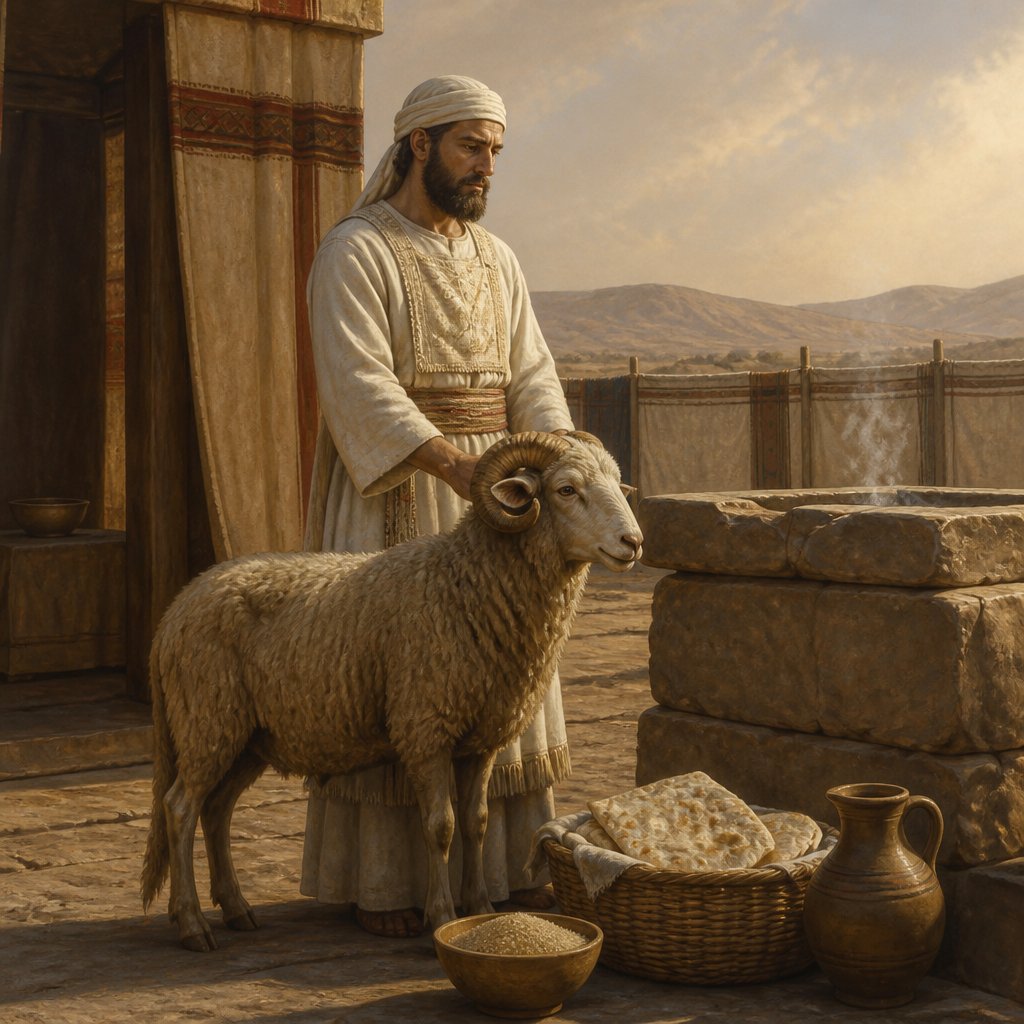
In Numbers 6:17, we find a profound directive given to the Israelites regarding their sacrifices: "And he shall offer the ram for a sacrifice of peace offerings unto the LORD, with the basket of unleavened bread: the priest shall offer also his meat offering, and his drink offering." This command encapsulates the essence of peace offerings, which were not merely ceremonial actions but heartfelt expressions of gratitude and fellowship with God.
To fully understand the significance of this verse, we delve into the context of the peace offerings. They were unique among the various types of sacrifices prescribed in the Mosaic Law. Unlike sin offerings, which addressed transgressions and sought atonement, peace offerings celebrated gratitude, devotion, and reconciliation. They were an external manifestation of an individual's inner peace with God and others. The ram was to be presented as a representation of the offerer's commitment to God, and in return, the offerer was blessed with a profound sense of communion.
The specific mention of the basket of unleavened bread evokes further layers of meaning. Unleavened bread symbolizes purity and sincerity; it is bread made without yeast, reflecting the absence of corruption and sin (1 Corinthians 5:6-8). When brought alongside the ram, it signifies that true peace with God requires sincerity in our offerings and a heart untainted by malice or hypocrisy. It is an invitation to present ourselves wholeheartedly, devoid of any hidden motives.
The inclusion of the priest's meat offering and drink offering reinforces the communal aspect of this sacrifice. The role of the priest in these offerings serves to remind us that our relationship with God is not solely an individual affair but exists within a community of faith. The priest, as a mediator, ensures that the offerings are acceptable, thus highlighting the importance of accountability and guidance in our spiritual journeys. Within this communal framework, we learn that our individual acts of devotion can contribute positively to the collective spiritual health of our community.
An essential takeaway from this verse is the emphasis on the need for intentionality in our spiritual lives. God desires offerings of peace that stem not from mere obligation but from a genuine desire to connect with Him. Our daily lives should be filled with opportunities to offer peace to others, just as we seek to experience peace ourselves. In Matthew 5:9, we are reminded, "Blessed are the peacemakers: for they shall be called the children of God." Peacemaking becomes not just an act of sacrificial love; it is an identity we embody as followers of Christ.
Engaging with Numbers 6:17 challenges us to reflect deeply on our daily practices. How often do we bring God our peace offerings—those moments of gratitude, acts of kindness, and gestures of reconciliation? What does unleavened bread—symbolizing purity—look like in the context of our everyday living? This verse encourages us to examine the intentions behind our actions.
In times of turmoil or conflict, bringing our offerings of peace becomes even more critical. There is something powerful in surrendering our concerns and disagreements before God, allowing Him to transform our hearts. The ram, unleavened bread, and the role of the priest invite us into a sacred rhythm where we recognize our dependence on God, embrace the beauty of community, and celebrate the peace we can experience through humble offerings.
Ultimately, Numbers 6:17 is more than a sacrifice guideline; it is a blueprint for a life reflective of God’s presence within us. May we continually strive to bring our peace offerings before the Lord, ensuring that we remain unwavering conduits of His love amidst a fractured world.
Get our apps


Artwork for Numbers 6:17

Numbers 6:17 - "And he shall offer the ram for a sacrifice of peace offerings unto the LORD, with the basket of unleavened bread: the priest shall offer also his meat offering, and his drink offering."
"And he shall offer the ram for a sacrifice of peace offerings unto the LORD, with the basket of unleavened bread: the priest shall offer also his meat offering, and his drink offering." - Numbers 6:17

Numbers 17:6 - "¶ And Moses spake unto the children of Israel, and every one of their princes gave him a rod apiece, for each prince one, according to their fathers' houses, even twelve rods: and the rod of Aaron was among their rods."

Numbers 11:17

Numbers 25:17 - "Vex the Midianites, and smite them:"

Numbers 15:17 - "¶ And the LORD spake unto Moses, saying,"

Numbers 33:17 - "And they departed from Kibroth-hattaavah, and encamped at Hazeroth."

Numbers 26:17 - "Of Arod, the family of the Arodites: of Areli, the family of the Arelites."

Numbers 17:1 - "And the LORD spake unto Moses, saying,"

Numbers 4:17 - "¶ And the LORD spake unto Moses and unto Aaron, saying,"

Numbers 3:17 - "And these were the sons of Levi by their names; Gershon, and Kohath, and Merari."

"And I will make thee exceeding fruitful, and I will make nations of thee, and kings shall come out of thee." - Genesis 17:6

Numbers 1:17 - "¶ And Moses and Aaron took these men which are expressed by their names:"

Numbers 11. 4 to 6

Numbers 17:7 - "And Moses laid up the rods before the LORD in the tabernacle of witness."

Numbers 6:6 - "All the days that he separateth himself unto the LORD he shall come at no dead body."

Numbers 1:6 - "Of Simeon; Shelumiel the son of Zurishaddai."

"Vex the Midianites, and smite them:" - Numbers 25:17

Numbers 21:17 - "¶ Then Israel sang this song, Spring up, O well; sing ye unto it:"

Numbers 17:11 - "And Moses did so: as the LORD commanded him, so did he."

Numbers 6:22 - "¶ And the LORD spake unto Moses, saying,"

Numbers 27:6 - "¶ And the LORD spake unto Moses, saying,"

Numbers 13:6 - "Of the tribe of Judah, Caleb the son of Jephunneh."

Genesis 17:6

Exodus 17:6

Matthew 6:17

Proverbs 17:6

Numbers 6:1 - "And the LORD spake unto Moses, saying,"

Numbers 6:24 - "The LORD bless thee, and keep thee:"

Aaron blessing the congregation in numbers 6