The Essence of Worship: Incense and Our Gratitude
“One golden spoon of ten shekels, full of incense:” — Numbers 7:38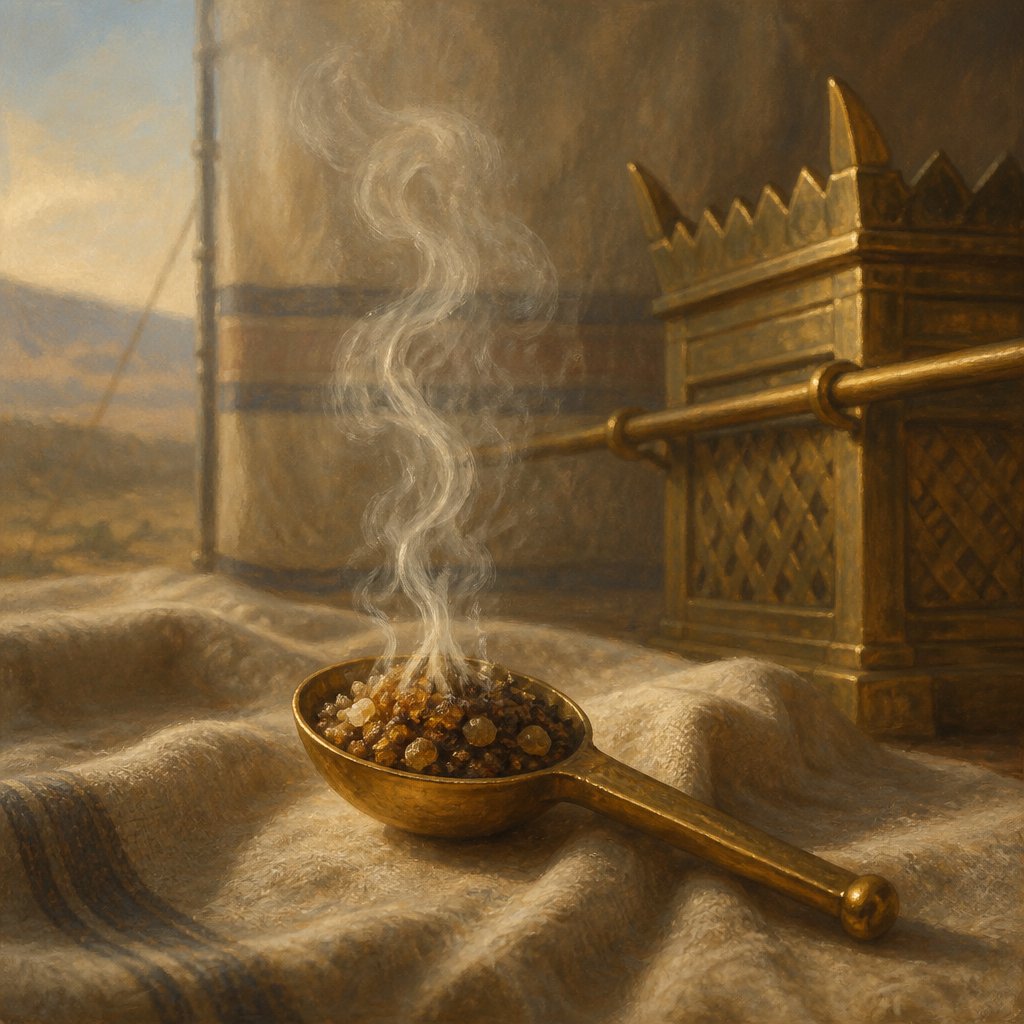
In the intricate tapestry of the Old Testament, each detail holds profound significance, echoing deeper truths about worship, sacrifice, and our relationship with God. Numbers 7:38 tells us, "One golden spoon of ten shekels, full of incense." At first glance, this verse, with its seemingly straightforward description of a ceremonial object, invites us to delve deeper into the richness of its meaning.
The mention of "one golden spoon" starkly symbolizes the worthiness of our offerings and the nature of true worship. Gold, a substance highly valued in both ancient and modern times, represents purity, divine glory, and worth. When we consider the golden spoon, we are reminded that our worship to God should be offered from the best of who we are—our thoughts, intentions, and actions. It is easy, in our busyness and the distractions of daily life, to give God what is left over instead of what is of primary importance. In our devotion to Him, we are called to bring our best, just as the tabernacle’s furnishings were fashioned from gold, symbolizing their sanctity and importance in God’s presence.
Next, let us reflect on the weight of ten shekels. Shekels were units of weight, and they denote value, both financially and spiritually. A spoon full of incense wasn’t merely about volume; it symbolized a heart overflowing with gratitude towards God. The act of worship—this offering of incense—served a dual purpose: it was both an acknowledgment of God’s holiness and a plea for His divine presence among His people. Just as the sweet aroma of incense rises and fills the air, so should our prayers and praises ascend to the heavens, pleasing to the Lord.
The notion of incense as an offering evokes our personal worship today. Incense in the Bible often represents prayer (Revelation 5:8 tells us that the "golden vials full of odors, which are the prayers of saints"). When we approach God in prayer, what is being offered before Him? Do we pour our hearts out filled with gratitude, or do we often come laden with requests and complaints? True worship transcends our needs—it is about recognizing God’s sovereignty, holiness, and love. He deserves to be honored not merely as a provider but as the Creator who desires a personal relationship with each of us.
Moreover, the act of bringing incense to the Lord speaks volumes about the nature of sharing. As the incense is offered, it symbolizes inviting God into every aspect of our lives. It indicates a surrender of our wills to His purpose and plan. When we dedicate time for prayer and worship, we invite the Holy Spirit to have His way, transforming us and ushering in His presence. The fragrance of worship serves not only as a personal devotion but also as an invitation to those around us, lighting up our environment with hope and grace.
As we meditate on Numbers 7:38, let us ask ourselves: How can we present our most precious offering to God? In what ways can we reflect the value of golden spoons in our lives—a commitment to give God not only our resources but our very selves? This passage challenges us to engage in authentic worship, invoking a spirit of joy and gratitude that permeates our daily interactions.
As we close, let us take a moment to ponder how we can make our lives a sweet aroma unto the Lord. May our offerings to Him—be they in actions of love, prayer, or devotion—reflect not only our gratitude but also our understanding of His holiness and presence. May we commit to filling our ‘golden spoons’ each day, storing up treasures in heaven that declare to the world our heartfelt worship. Seek Him, praise Him, and be transformed by the essence of worship—a fragrant offering to our most Holy God.
Get our apps


Artwork for Numbers 7:38

Numbers 7:38 - "One golden spoon of ten shekels, full of incense:"

"One golden spoon of ten shekels, full of incense:" - Numbers 7:38

Numbers 32:38

John 7:38

John 7:38
John 7:38

John 7:38

Numbers 4:38 - "And those that were numbered of the sons of Gershon, throughout their families, and by the house of their fathers,"

John 7:38

John 7:38

John 7:38

Numbers 31:38 - "And the beeves were thirty and six thousand; of which the LORD'S tribute was threescore and twelve."

Job 38:4-7

"He that believeth on me, as the scripture hath said, out of his belly shall flow rivers of living water." - John 7:38

Numbers 26:38 - "¶ The sons of Benjamin after their families: of Bela, the family of the Belaites: of Ashbel, the family of the Ashbelites: of Ahiram, the family of the Ahiramites:"

1 Kings 7:27-38

1 Kings 7:27-38

1 Chronicles 7:38 - "And the sons of Jether; Jephunneh, and Pispah, and Ara."

Numbers 14:38 - "But Joshua the son of Nun, and Caleb the son of Jephunneh, which were of the men that went to search the land, lived still."

Numbers 32:38 - "And Nebo, and Baal-meon, (their names being changed,) and Shibmah: and gave other names unto the cities which they builded."

Numbers 29:38 - "And one goat for a sin offering; beside the continual burnt offering, and his meat offering, and his drink offering."

Nehemiah 7:38 - "The children of Senaah, three thousand nine hundred and thirty."

Psalms 38:7 - "For my loins are filled with a loathsome disease: and there is no soundness in my flesh."

Genesis 38:7 - "And Er, Judah's firstborn, was wicked in the sight of the LORD; and the LORD slew him."

Numbers 1:38 - "¶ Of the children of Dan, by their generations, after their families, by the house of their fathers, according to the number of the names, from twenty years old and upward, all that were able to go forth to war;"

"And those that were numbered of the sons of Gershon, throughout their families, and by the house of their fathers," - Numbers 4:38

Job 38:7 - "When the morning stars sang together, and all the sons of God shouted for joy?"

Numbers 15:38 - "Speak unto the children of Israel, and bid them that they make them fringes in the borders of their garments throughout their generations, and that they put upon the fringe of the borders a ribband of blue:"

"When the morning stars sang together, and all the sons of God shouted for joy?" - Job 38:7

Numbers 15:38 tell them to make tassels on the corners of their garments, and to put a cord of blue on the tassel of each corner.