The Weight of Violence: A Reflection on Obadiah 1:10
“For thy violence against thy brother Jacob shame shall cover thee, and thou shalt be cut off for ever.” — Obadiah 1:10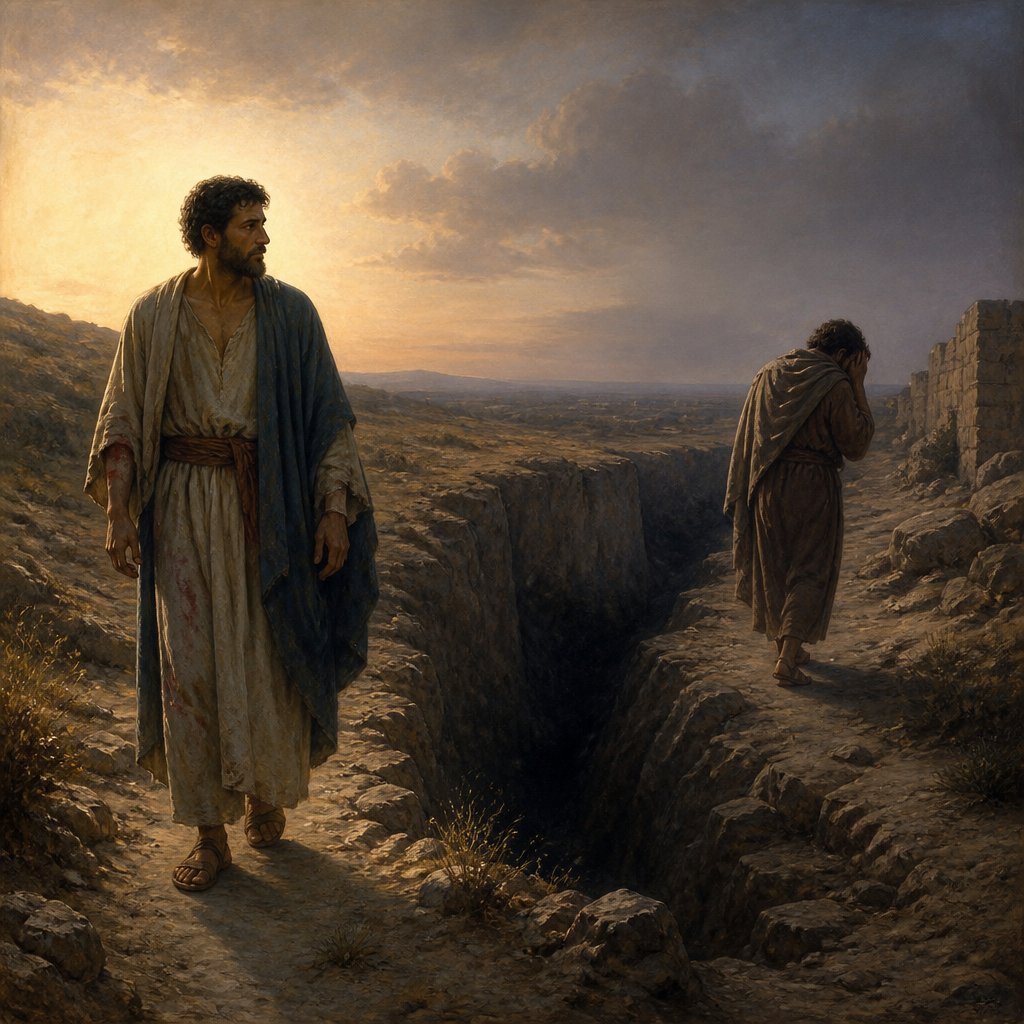
In the prophet Obadiah’s short but powerful book, we are led to reflect on the nature of violence and its consequences, particularly as it pertains to our relationships with others. Obadiah 1:10 states: *“For thy violence against thy brother Jacob shame shall cover thee, and thou shalt be cut off for ever.”* This verse, while directed specifically at the nation of Edom in the context of their historical actions against Israel, resonates deeply in our contemporary experience of interpersonal relationships—a reflection of God’s heart towards sin, violence, and ultimately, the desire for reconciliation.
At the outset, we must note that violence against one’s brother is abhorrent in the eyes of the Lord. The term “brother” is significant; it implies kinship, relationship, and the bonds of community that God established amongst humanity. In the original context, Edom was related to Israel through their shared ancestry—from Isaac’s sons, Jacob (Israel) and Esau (Edom). Hence, their violence was not just a political act; it cut deeply into the fabric of their family ties and was a breach of the command to love one’s neighbor. As we explore the implications of this verse, we must ask: how often do we play the role of Edom in our own relationships, betraying our brothers and sisters through our actions?
The first element to consider is the nature of the violence mentioned in the text. This is not limited to physical altercations but encompasses any form of emotional, spiritual, or psychological harm we inflict. Words can wound deeply, as can neglect and indifference. Jesus challenged us to understand the essence of the commandment against murder, expanding it to include anger and contempt toward others (Matthew 5:21-22). Such reflections compel us to examine our hearts. Are we harboring resentment, jealousy, or bitterness toward those whom God has placed in our lives? Like Edom, do we take pleasure in the misfortunes of others, or do we respond with compassion and support?
Now let’s focus on God’s response to this violence: *“shame shall cover thee.”* This shame is both a consequence and a warning. It is a deep spiritual reality that bears witness to the truth of our actions. Shame is often an internal experience reflecting a disconnect from God and His holiness. It serves to remind us of our failures and shortcomings, nudging us toward repentance and reconciliation with others. In our modern context, shame can drive us to isolate ourselves rather than seek restoration and forgiveness, perpetuating a cycle of despair and continued division.
However, God’s expression of judgment does not solely rest on shame; there is also a definitive outcome: *“thou shalt be cut off for ever.”* This phrase points toward the finality of God’s judgment against persistently violent behaviors—especially when unrepentant. It underscores the severity of breaking covenantal ties established by love and mutual support within a community. God desires us to strive for peace, to rectify wrongs, and to seek progeny, which mirrors His own heart for reconciliation. When we engage in violence, whether in thought, word, or deed, we risk severing ourselves from the community of believers, from our own spiritual health, and ultimately from our relationship with God.
In conclusion, Obadiah 1:10 stands as a clarion call for self-examination and humility. It urges us to confront our own tendencies toward violence against others—either directly or through neglect and apathy. As we reflect on our relationships today, let us remember the brotherhood we share through Christ, the ultimate reconciler. Let us eschew violence and embrace love, seeking to mend any broken relationships by allowing God’s reconciling power to flow through us. May we be agents of peace in a world that desperately needs the healing touch of our Savior. As we march forward, let our hearts cry out for restoration, always returning to the truth that, in love, we find our greatest strength.
Get our apps


Artwork for Obadiah 1:10

Obadiah 1:10 - "¶ For thy violence against thy brother Jacob shame shall cover thee, and thou shalt be cut off for ever."
"¶ For thy violence against thy brother Jacob shame shall cover thee, and thou shalt be cut off for ever." - Obadiah 1:10

Nehemiah 10:5 - "Harim, Meremoth, Obadiah,"

1 Kings 18:3 - "And Ahab called Obadiah, which was the governor of his house. (Now Obadiah feared the LORD greatly:"

"Harim, Meremoth, Obadiah," - Nehemiah 10:5

Obadiah 1:4

Obadiah 1:1 - "The vision of Obadiah. Thus saith the Lord GOD concerning Edom; We have heard a rumour from the LORD, and an ambassador is sent among the heathen, Arise ye, and let us rise up against her in battle."

1 Chronicles 12:9 - "Ezer the first, Obadiah the second, Eliab the third,"

"And Ahab called Obadiah, which was the governor of his house. (Now Obadiah feared the LORD greatly:" - 1 Kings 18:3

1 Chronicles 27:19 - "Of Zebulun, Ishmaiah the son of Obadiah: of Naphtali, Jerimoth the son of Azriel:"

Obadiah 1:6 - "How are the things of Esau searched out! how are his hidden things sought up!"

1 Kings 18:16 - "So Obadiah went to meet Ahab, and told him: and Ahab went to meet Elijah."

Obadiah 1:17 - "¶ But upon mount Zion shall be deliverance, and there shall be holiness; and the house of Jacob shall possess their possessions."

Obadiah 1:2 - "Behold, I have made thee small among the heathen: thou art greatly despised."

Obadiah 1:21 - "And saviours shall come up on mount Zion to judge the mount of Esau; and the kingdom shall be the LORD'S."

1 Chronicles 3:21 - "And the sons of Hananiah; Pelatiah, and Jesaiah: the sons of Rephaiah, the sons of Arnan, the sons of Obadiah, the sons of Shechaniah."

Obadiah 1:4 – "Though you soar like the eagle and make your nest among the stars, from there I will bring you down."

Obadiah 1:8 - "Shall I not in that day, saith the LORD, even destroy the wise men out of Edom, and understanding out of the mount of Esau?"

Obadiah 1:4 – "Though you soar like the eagle and make your nest among the stars, from there I will bring you down."

1 Chronicles 7:3 - "And the sons of Uzzi; Izrahiah: and the sons of Izrahiah; Michael, and Obadiah, and Joel, Ishiah, five: all of them chief men."
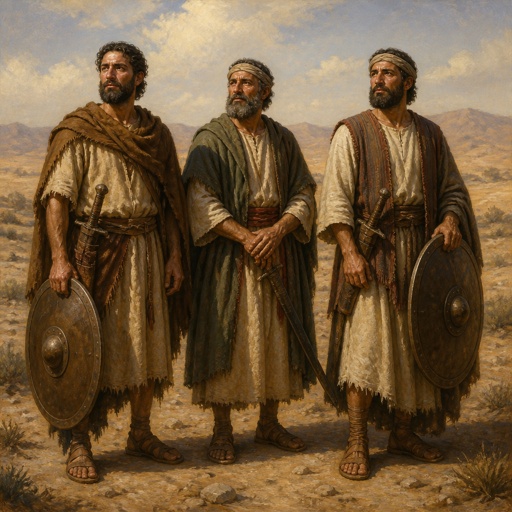
"Ezer the first, Obadiah the second, Eliab the third," - 1 Chronicles 12:9

1 Chronicles 9:16 - "And Obadiah the son of Shemaiah, the son of Galal, the son of Jeduthun, and Berechiah the son of Asa, the son of Elkanah, that dwelt in the villages of the Netophathites."

1 Chronicles 9:44 - "And Azel had six sons, whose names are these, Azrikam, Bocheru, and Ishmael, and Sheariah, and Obadiah, and Hanan: these were the sons of Azel."

Obadiah 1:9 - "And thy mighty men, O Teman, shall be dismayed, to the end that every one of the mount of Esau may be cut off by slaughter."

1 Chronicles 8:38 - "And Azel had six sons, whose names are these, Azrikam, Bocheru, and Ishmael, and Sheariah, and Obadiah, and Hanan. All these were the sons of Azel."

Obadiah 1:19 - "And they of the south shall possess the mount of Esau; and they of the plain the Philistines: and they shall possess the fields of Ephraim, and the fields of Samaria: and Benjamin shall possess Gilead."

1 Kings 18:6 - "So they divided the land between them to pass throughout it: Ahab went one way by himself, and Obadiah went another way by himself."

Obadiah 1:20 - "And the captivity of this host of the children of Israel shall possess that of the Canaanites, even unto Zarephath; and the captivity of Jerusalem, which is in Sepharad, shall possess the cities of the south."

Obadiah 1:4 - "Though thou exalt thyself as the eagle, and though thou set thy nest among the stars, thence will I bring thee down, saith the LORD."

1 Kings 18:7 - "¶ And as Obadiah was in the way, behold, Elijah met him: and he knew him, and fell on his face, and said, Art thou that my lord Elijah?"