The Cost of a False Tongue
“What shall be given unto thee? or what shall be done unto thee, thou false tongue?” — Psalms 120:3
Psalm 120:3 poses a profound question: "What shall be given unto thee? or what shall be done unto thee, thou false tongue?" This verse encapsulates the seriousness of falsehood, especially in words spoken with malice or deceitful intentions. In a world that often prioritizes appearance over truth, this verse serves as a timeless reminder of the weight our words carry and the consequences of dishonesty.
The psalmist’s inquiry is not merely rhetorical; it holds a mirror to our own behaviors and the culture we live in. Words have power. They can build up or tear down, encourage or destroy, unite or divide. The Bible consistently emphasizes the significance of our speech. In Proverbs 18:21, we are reminded that "Death and life are in the power of the tongue: and they that love it shall eat the fruit thereof." This raises the question: What kind of fruit are we producing with our words?
The psalmist here grapples with the aftermath of a lie, specifically the lies told by a "false tongue." A tongue that deceives does not merely affect its target; it also corrupts the speaker and the community around them. The damage caused by a false tongue reverberates far beyond a single moment or interaction. When lies are spoken, trust erodes, relationships fracture, and reputations can be irreparably harmed.
To understand the depth of this verse, we should consider who the psalmist is addressing and the context in which these words were written. Psalm 120 is a cry for help from a person living among deceitful neighbors. It reflects a profound sense of alienation and pain stemming from falsehoods that infiltrate interpersonal dynamics. This longing for truth and authenticity resonates deeply in our own lives. We, too, are often surrounded by falsehood; whether from others or within ourselves, the struggle against deceit is real.
What is truly alarming about the false tongue is not just its capacity for harm but its inevitability. The psalmist’s question subtly invites the reader to contemplate the inevitable outcome that awaits those who perpetuate deceit. Just as a farmer eventually reaps the harvest of his planted seeds, so too will a person who has sown lies face the consequences of their speech. Galatians 6:7 tells us, "Be not deceived; God is not mocked: for whatsoever a man soweth, that shall he also reap." The reality is that there will come a day when the facade of deceit will crumble, and the truth will emerge.
So what then shall be done to the person with a false tongue? The answer is both sobering and liberating. We can expect judgment, not only from God but also from society's inherent need for truth and justice. As believers, we are called to be bearers of light, to exercise integrity in our speech, and to mirror God’s truthfulness (John 8:32: "And ye shall know the truth, and the truth shall make you free."). In harming others with our false tongues, we not only damage them but also place ourselves in the precarious alignment of judgment before God.
Recognizing the implications of a false tongue leads us back to the heart of our faith: grace and redemption. If we have fallen prey to speaking falsehoods, there is hope in repentance. God invites us to turn from our deceitful ways and seek His forgiveness. We are reminded that as we confess our sins, He is faithful and just to forgive us and cleanse us from all unrighteousness (1 John 1:9).
Each day, we have the choice to be truth-tellers in a world stricken by lies. In an age of misinformation and rampant dishonesty, let us strive to uplift one another with our words, think critically before we speak, and honor God by representing His truth. Let our tongues be instruments of peace rather than falsehood. Let us not become paralyzed by fear of judgment but emboldened by the call to speak life and truth into the world around us.
Get our apps


Artwork for Psalms 120:3

Psalms 120:3 - "What shall be given unto thee? or what shall be done unto thee, thou false tongue?"

"What shall be given unto thee? or what shall be done unto thee, thou false tongue?" - Psalms 120:3

Psalms 120:4 - "Sharp arrows of the mighty, with coals of juniper."

Psalms 120:7 - "I am for peace: but when I speak, they are for war."

Psalms 120:6 - "My soul hath long dwelt with him that hateth peace."

"My soul hath long dwelt with him that hateth peace." - Psalms 120:6

"Woe is me, that I sojourn in Mesech, that I dwell in the tents of Kedar!" - Psalms 120:5

Psalms 120:1 - "In my distress I cried unto the LORD, and he heard me."

Psalms 120:5 - "Woe is me, that I sojourn in Mesech, that I dwell in the tents of Kedar!"

Psalms 120:2 - "Deliver my soul, O LORD, from lying lips, and from a deceitful tongue."
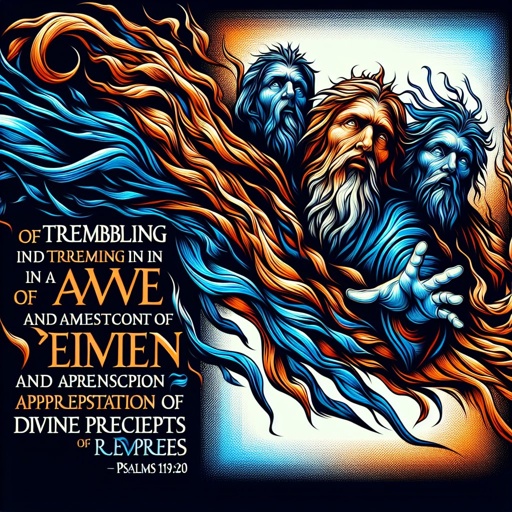
Psalms 119:120 - "My flesh trembleth for fear of thee; and I am afraid of thy judgments."

"Sharp arrows of the mighty, with coals of juniper." - Psalms 120:4

"I am for peace: but when I speak, they are for war." - Psalms 120:7

"In my distress I cried unto the LORD, and he heard me." - Psalms 120:1

"My flesh trembleth for fear of thee; and I am afraid of thy judgments." - Psalms 119:120

"Deliver my soul, O LORD, from lying lips, and from a deceitful tongue." - Psalms 120:2

Psalms 111:3 - "His work is honourable and glorious: and his righteousness endureth for ever."

Psalms 88:3 - "For my soul is full of troubles: and my life draweth nigh unto the grave."

Psalms 103:3 - "Who forgiveth all thine iniquities; who healeth all thy diseases;"

Psalms 87:3 - "Glorious things are spoken of thee, O city of God. Selah."

Psalms 67:3 - "Let the people praise thee, O God; let all the people praise thee."

Psalms 116:3 - "The sorrows of death compassed me, and the pains of hell gat hold upon me: I found trouble and sorrow."

"The sea saw it, and fled: Jordan was driven back." - Psalms 114:3

"Lo, children are an heritage of the LORD: and the fruit of the womb is his reward." - Psalms 127:3

Psalms 138:3 - "In the day when I cried thou answeredst me, and strengthenedst me with strength in my soul."

"There is no speech nor language, where their voice is not heard." - Psalms 19:3

"Great is the LORD, and greatly to be praised; and his greatness is unsearchable." - Psalms 145:3

"He healeth the broken in heart, and bindeth up their wounds." - Psalms 147:3

Psalms 56:3

"But thou art holy, O thou that inhabitest the praises of Israel." - Psalms 22:3