Longing for Home: The Heart of Exile
“By the rivers of Babylon, there we sat down, yea, we wept, when we remembered Zion.” — Psalms 137:1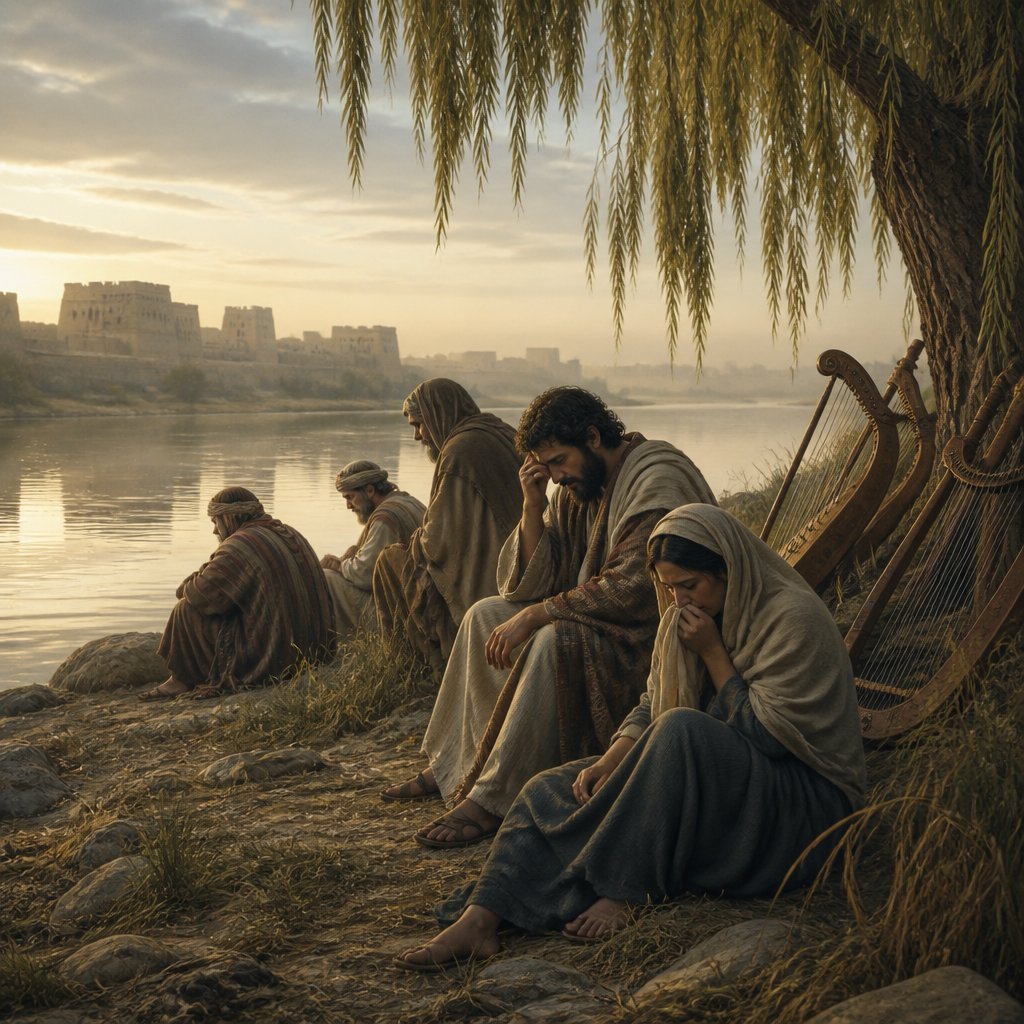
As we find ourselves in the midst of life's challenges and trials, the poignant verse from Psalm 137:1 speaks deeply to the human experience. The King James Version encapsulates the raw emotion of the exiled Israelites: "By the rivers of Babylon, there we sat down, yea, we wept, when we remembered Zion." This verse not only paints a vivid picture of physical displacement but equally significant is the emotional and spiritual anguish that accompanies it.
To understand this lament, we must first grasp the context in which it was written. The Israelites were forcibly taken from their homeland, Zion, which represents not just a geographic location but also the center of their spiritual identity and communal worship. The rivers of Babylon symbolized a foreign land, a place of oppression and sorrow, far removed from the peace and presence of God they had known.
In this verse, the imagery of sitting down by the rivers evokes a sense of hopelessness and resignation. It indicates a moment of pause; the exiles stopped to truly absorb their situation. They were in mourning—not only for their lost homeland but also for their broken relationship with God and their identity as His chosen people. How often do we find ourselves 'sitting down' in our own metaphorical Babylon? In times of uncertainty or grief, when we confront loss—be it a loved one, a job, or even a dream—we may find ourselves at our own rivers, weeping for what once was or what we long for.
These moments of sitting by the rivers—feeling despondent—are significant. They allow us to confront our grief and to acknowledge that it is okay to mourn. We remember moments of joy in Zion, the comforting presence of God, and the supportive community that once fortified our faith. Just as the Israelites remembered their homeland, we too must consider what we once held dear in our walk with God.
'Yea, we wept...' tears often symbolize the depth of our sorrow and our yearning for what we have lost. It is important to recognize that crying is a legitimate response to pain and loss. In scripture, we see others weeping: Jesus wept at the death of his friend (John 11:35) and lamented over Jerusalem's rejection (Matthew 23:37). We should not shy away from our tears, as they are often a pathway back to God.
In the midst of their mourning, the exiles still held onto the memories of Zion. Their tears were a testament to their love for their homeland and their God. Memory has a powerful place in the life of a believer. When we reminisce about God’s past faithfulness in our lives, we often find comfort for our current struggles. The act of remembering allows us to cling to our hope, even when everything around us feels bleak.
The journey through Babylon may be daunting, but it is crucial in refining our character and deepening our dependency on God. We must be reminded that exiles, even in sorrow, can find hope in their journey. Like the Israelites, we can express our grief before God. He hears our cries, shares our sorrows, and longs to lead us back to joy and restoration.
In conclusion, by the rivers of our Babylon, we may find ourselves weeping like the Israelites. Still, we can remember that Zion is not just a place; it represents the promise of God’s presence and covenant. Let us not despair; let our remembrance lead us to hope and renewed trust in the Lord. In the deepest of our sorrows, God invites us to return to Him, find fresh strength, and ultimately guide us back to our Zion.
Get our apps


Artwork for Psalms 137:1

Psalms 137:1 - "By the rivers of Babylon, there we sat down, yea, we wept, when we remembered Zion."

"By the rivers of Babylon, there we sat down, yea, we wept, when we remembered Zion." - Psalms 137:1

"Righteous art thou, O LORD, and upright are thy judgments." - Psalms 119:137

Psalms 119:137 - "Righteous art thou, O LORD, and upright are thy judgments."

Psalms 137:2 - "We hanged our harps upon the willows in the midst thereof."

"How shall we sing the LORD'S song in a strange land?" - Psalms 137:4

"We hanged our harps upon the willows in the midst thereof." - Psalms 137:2

Psalms 137:4 - "How shall we sing the LORD'S song in a strange land?"

Psalms 137:9 - "Happy shall he be, that taketh and dasheth thy little ones against the stones."

"Happy shall he be, that taketh and dasheth thy little ones against the stones." - Psalms 137:9

Psalms 137:5 - "If I forget thee, O Jerusalem, let my right hand forget her cunning."

"If I forget thee, O Jerusalem, let my right hand forget her cunning." - Psalms 137:5

Psalms 137:7 - "Remember, O LORD, the children of Edom in the day of Jerusalem; who said, Rase it, rase it, even to the foundation thereof."

Psalms 137:8 - "O daughter of Babylon, who art to be destroyed; happy shall he be, that rewardeth thee as thou hast served us."

PSALMS 137;5 SHOWING THE OLD CITY OF JERUSALEM

"O daughter of Babylon, who art to be destroyed; happy shall he be, that rewardeth thee as thou hast served us." - Psalms 137:8

Psalms 137:3 - "For there they that carried us away captive required of us a song; and they that wasted us required of us mirth, saying, Sing us one of the songs of Zion."

Psalms 137:6 - "If I do not remember thee, let my tongue cleave to the roof of my mouth; if I prefer not Jerusalem above my chief joy."

"If I do not remember thee, let my tongue cleave to the roof of my mouth; if I prefer not Jerusalem above my chief joy." - Psalms 137:6

"For there they that carried us away captive required of us a song; and they that wasted us required of us mirth, saying, Sing us one of the songs of Zion." - Psalms 137:3
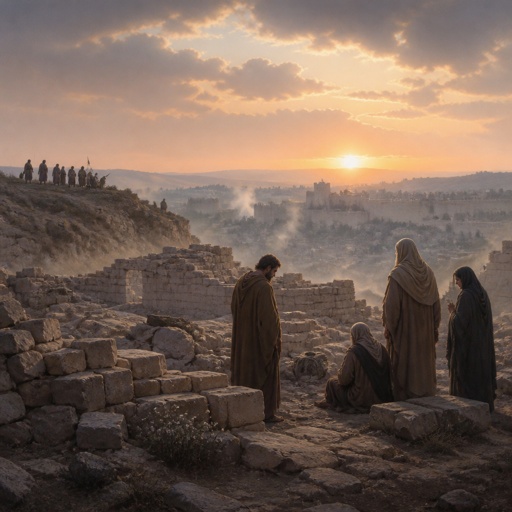
"Remember, O LORD, the children of Edom in the day of Jerusalem; who said, Rase it, rase it, even to the foundation thereof." - Psalms 137:7
psalm 80:1-7

Psalms 128:1 - "Blessed is every one that feareth the LORD; that walketh in his ways."

Psalms 122:1 - "I was glad when they said unto me, Let us go into the house of the LORD."

Psalms 15:1 (KJVA) 1 A Psalm of David. LORD, who shall abide in thy tabernacle? who shall dwell in thy holy hill?

Psalms 15:1 (KJVA) 1 A Psalm of David. LORD, who shall abide in thy tabernacle? who shall dwell in thy holy hill?

Psalms 64:1 - "Hear my voice, O God, in my prayer: preserve my life from fear of the enemy."

Psalms 14:1 (KJVA) 1 To the chief Musician, A Psalm of David. The fool hath said in his heart, There is no God. They are corrupt, they have done abominable works, there is none that doeth good.

Psalms 14:1 (KJVA) 1 To the chief Musician, A Psalm of David. The fool hath said in his heart, There is no God. They are corrupt, they have done abominable works, there is none that doeth good.

Psalms 14:1 (KJVA) 1 To the chief Musician, A Psalm of David. The fool hath said in his heart, There is no God. They are corrupt, they have done abominable works, there is none that doeth good.