Remembering the Cry of Zion: A Devotional on Psalm 137:7
“Remember, O LORD, the children of Edom in the day of Jerusalem; who said, Rase it, rase it, even to the foundation thereof.” — Psalms 137:7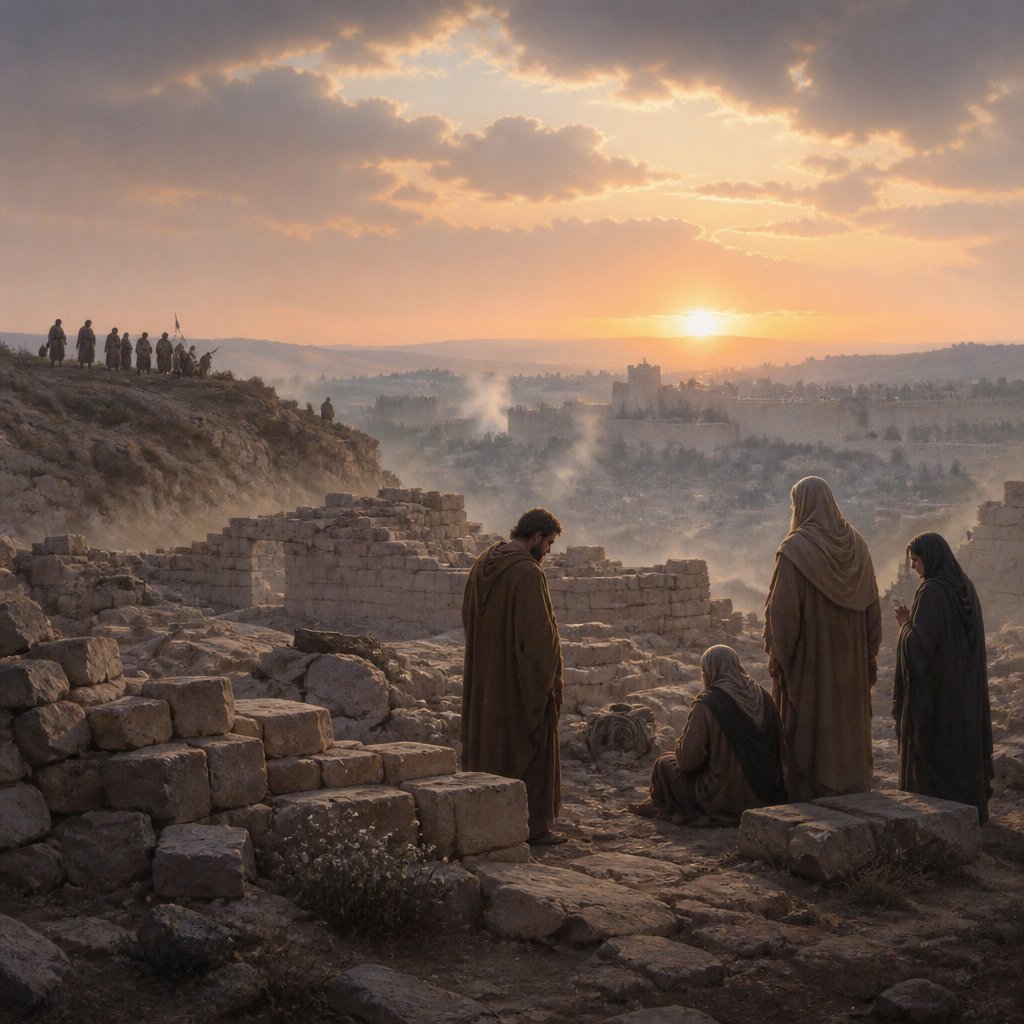
Psalm 137 is one of the most haunting passages in the Book of Psalms. It reflects the profound sorrow of the Israelites as they mourned their exile in Babylon, yearning for the city of Jerusalem, the heart of their identity and worship. Verse 7 of this Psalm declares, "Remember, O LORD, the children of Edom in the day of Jerusalem; who said, Rase it, rase it, even to the foundation thereof." This verse gives voice to the pain of betrayal and the anguish of displacement, encapsulating a historical grievance that transcends generations and speaks to our modern souls.
The phrase "Remember, O LORD" is a heartfelt plea that echoes through the corridors of history. It expresses the psalmist’s desire for God to not only recall the pain inflicted upon His people by the Edomites but also to act in defense of His chosen ones. The call for remembrance is significant. It is not merely a request for historical acknowledgment but an appeal for God to intervene, to take action, and to restore His people. This invocation prompts us to reflect: Are there grievances in our lives that we wish to bring before God? Are there challenges where we feel abandoned, yearning for divine intervention?
To understand the context behind this cry, we must situate ourselves in the historical backdrop of Edom's actions during the Babylonian siege of Jerusalem. The Edomites, descendants of Esau, were once related to the Israelites but turned against them in their time of need. Instead of providing support or compassion, they reveled in the destruction of Jerusalem, urging Babylon to "raise it, raise it, even to the foundation thereof." This desire for total destruction reflects not only animosity but a profound betrayal—one that stings particularly when the pain is inflicted by those who are supposedly related.
Today, many of us experience personal 'Edomites' in our lives—betrayals from friends, family, or even the society around us. These moments can evoke feelings of deep sorrow and animosity. We may wonder if God sees our pain or if He will remember the injustices we face. The writer of the psalm invites us into this raw and vulnerable space where we can cry out to God, asking Him to not only remember our suffering but also to act upon it.
Our collective memory, much like that of the Israelites, shapes our reality. When we remember the trials of the past and take them to God, we are reminding ourselves of His faithfulness amid hardship. The act of remembering is intrinsic to worship. In our worship, we not only recount our difficulties but also God's deliverance throughout history. As New Testament believers, we have the ultimate reminder in Christ, who faced betrayal and death but brought forth resurrection and new life.
In this verse, we see a deep yearning for justice—an understanding that wrongdoings must not be forgotten and that God cares about the injustices suffered by His people. It calls us as believers to engage in a posture of prayer and supplication, lifting up not just our grievances but also the suffering of others to the Lord. Just as the psalmist did, we can channel our frustrations toward the throne of grace, asking God to remember those who have faced oppression and injustice, advocating for their deliverance.
In our own lives, as we wrestle with memories of pain and betrayal, let us bring them into the light of God's presence. Like the psalmist, let us remember that these emotions are valid, that our cries for justice resonate in heaven. Ultimately, let this verse remind us that we serve a God who remembers. He remembers our sorrows, our pain, and all that has been done against us. He is our defender. May we find solace in His commitment to justice and restoration. As we leave behind the burdens of betrayal, let us cling to the promise that God is ever faithful to distribute His justice and mercy as we faithfully seek His face.
Get our apps


Artwork for Psalms 137:7

Psalms 137:7 - "Remember, O LORD, the children of Edom in the day of Jerusalem; who said, Rase it, rase it, even to the foundation thereof."
"Remember, O LORD, the children of Edom in the day of Jerusalem; who said, Rase it, rase it, even to the foundation thereof." - Psalms 137:7

"Righteous art thou, O LORD, and upright are thy judgments." - Psalms 119:137

Psalms 137:2 - "We hanged our harps upon the willows in the midst thereof."

Psalms 119:137 - "Righteous art thou, O LORD, and upright are thy judgments."

"How shall we sing the LORD'S song in a strange land?" - Psalms 137:4

"We hanged our harps upon the willows in the midst thereof." - Psalms 137:2

Psalms 137:4 - "How shall we sing the LORD'S song in a strange land?"

Psalms 137:9 - "Happy shall he be, that taketh and dasheth thy little ones against the stones."

"Happy shall he be, that taketh and dasheth thy little ones against the stones." - Psalms 137:9

Psalms 137:1 - "By the rivers of Babylon, there we sat down, yea, we wept, when we remembered Zion."

Psalms 137:5 - "If I forget thee, O Jerusalem, let my right hand forget her cunning."

"If I forget thee, O Jerusalem, let my right hand forget her cunning." - Psalms 137:5

"By the rivers of Babylon, there we sat down, yea, we wept, when we remembered Zion." - Psalms 137:1

Psalms 137:8 - "O daughter of Babylon, who art to be destroyed; happy shall he be, that rewardeth thee as thou hast served us."

PSALMS 137;5 SHOWING THE OLD CITY OF JERUSALEM

"O daughter of Babylon, who art to be destroyed; happy shall he be, that rewardeth thee as thou hast served us." - Psalms 137:8

Psalms 137:3 - "For there they that carried us away captive required of us a song; and they that wasted us required of us mirth, saying, Sing us one of the songs of Zion."

Psalms 137:6 - "If I do not remember thee, let my tongue cleave to the roof of my mouth; if I prefer not Jerusalem above my chief joy."

"If I do not remember thee, let my tongue cleave to the roof of my mouth; if I prefer not Jerusalem above my chief joy." - Psalms 137:6

"For there they that carried us away captive required of us a song; and they that wasted us required of us mirth, saying, Sing us one of the songs of Zion." - Psalms 137:3

Psalms 20 7
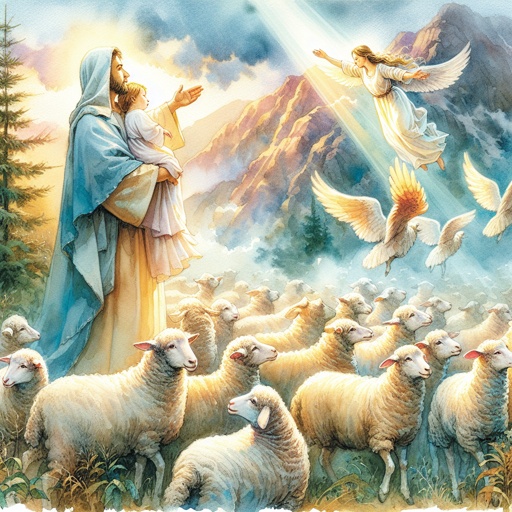
psalm 80:1-7

Psalms 98:7 - "Let the sea roar, and the fulness thereof; the world, and they that dwell therein."

"All sheep and oxen, yea, and the beasts of the field;" - Psalms 8:7

Psalms 12:7 - "Thou shalt keep them, O LORD, thou shalt preserve them from this generation for ever."

"Gebal, and Ammon, and Amalek; the Philistines with the inhabitants of Tyre;" - Psalms 83:7

"We will go into his tabernacles: we will worship at his footstool." - Psalms 132:7

"So shall the congregation of the people compass thee about: for their sakes therefore return thou on high." - Psalms 7:7

Psalms 88:7 - "Thy wrath lieth hard upon me, and thou hast afflicted me with all thy waves. Selah."