The Dilemma of Divine Delay: Understanding God's Timing in Our Trials
“O God, how long shall the adversary reproach? shall the enemy blaspheme thy name for ever?” — Psalms 74:10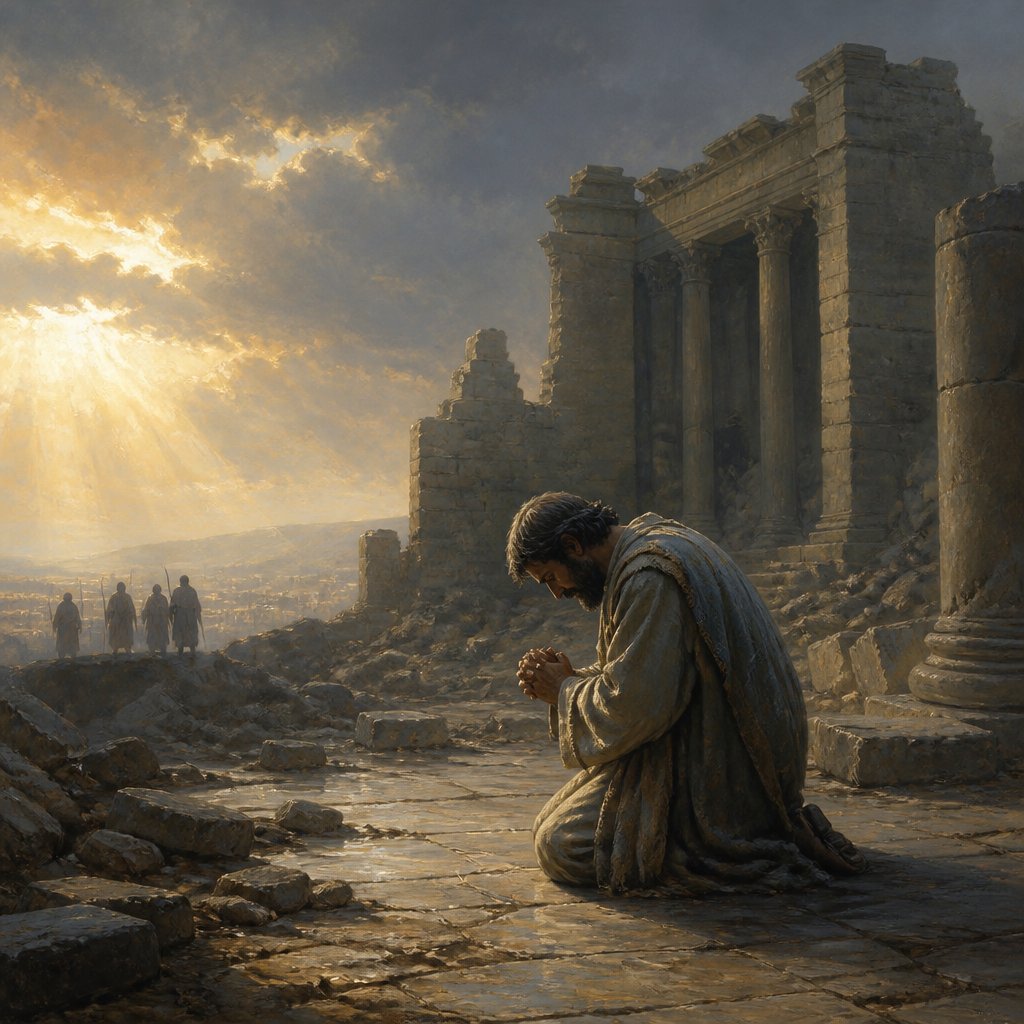
Psalm 74:10 (KJV) poses a profound question that resonates deeply in the hearts of many believers today: "O God, how long shall the adversary reproach? shall the enemy blaspheme thy name for ever?" In moments of despair and frustration, this cry reflects our human experience—feeling overwhelmed by the adversities that surround us and the seeming silence of God in times of trouble.
The psalmist, likely Asaph, frames his lament in a time when Israel faced grave threats from enemies who taunted and insulted their faith. He presents a poignant question echoing the deep-seated anguish of the faithful: how long must we endure the scorn of those who stand against God? This verse captures a moment when the psalmist's faith is challenged by the reality of suffering and the apparent triumph of evil.
As we reflect on this verse, it’s essential to recognize the context of lament in the Psalms—a literature that captures the full spectrum of human emotions, including sorrow, doubt, and confusion. Here, the psalmist voices feelings shared by many across generations. When we face adversaries, whether spiritual, situational, or personal, our prayer often mirrors the cry of Asaph. The discomfort experienced when we feel that God is distant speaks to an intrinsic part of our relationship with the Almighty.
However, this lament serves a purpose. It draws us close to God, redirecting our focus from our struggles to His eternal sovereignty. The repeated phrase “how long?” demonstrates a desperation that urges the believer to seek a response from God. It elevates an urgent plea, acknowledging that God is the only one capable of addressing the plight of His people. As we engage with this text, it encourages us to see that such questioning can be part of a sincere prayer life—many biblical figures expressed their frustrations similarly, ultimately turning back to God for understanding and help.
Furthermore, Asaph’s confession of adversarial reproach unveils an essential truth: our battles are often visible to God and have significant spiritual implications. The reproachment against God’s people is fundamentally a reproach against God Himself. This understanding transforms our trials into opportunities for spiritual warfare, compelling us to seek divine intervention through prayer and supplication. In our times of distress, we are reminded that God not only hears our cries but also longs to help us rise above the challenges we face.
The question posed—"shall the enemy blaspheme thy name for ever?"—carries an urgency that compels us to consider God's character and power. The implication is that there is a limit to the enemy's ability to mock God's name. Though evil appears to flourish at times, Scripture assures us of God's ultimate victory. Romans 8:31 reminds us, "What shall we then say to these things? If God be for us, who can be against us?" This proclamation instills hope as we grapple with the darkness around us.
Thus, while the psalmist's cry reveals the pain of waiting for God’s justice, it also encourages us to remain steadfast in hope and faith. God’s timing is not our own, and as believers, we are called to trust in His purpose. His delays are not denials but rather intricacies of a divine plan we might not fully understand.
In conclusion, we learn that it is acceptable to express our feelings of despair and frustration through prayer, as it reflects a deep engagement with our relationship with God. As we pour out our hearts—questioning His timing and power—it ultimately leads back to an assurance of His unfailing love and faithfulness. In the moments of waiting, let us cling to the promise that God is sovereign, and the day will come when every adversary shall be silenced. Until that time, let our prayers resound with the hope that even amid reproach, our God reigns supreme.
Get our apps


Artwork for Psalms 74:10
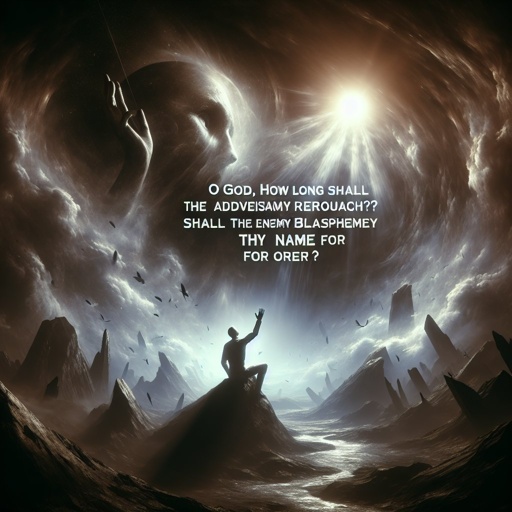
Psalms 74:10 - "O God, how long shall the adversary reproach? shall the enemy blaspheme thy name for ever?"
"O God, how long shall the adversary reproach? shall the enemy blaspheme thy name for ever?" - Psalms 74:10

Psalms 74:6 - "But now they break down the carved work thereof at once with axes and hammers."

Psalms 74:12 - "For God is my King of old, working salvation in the midst of the earth."

Psalms 74:4 - "Thine enemies roar in the midst of thy congregations; they set up their ensigns for signs."

"For God is my King of old, working salvation in the midst of the earth." - Psalms 74:12

Psalms 74:21 - "O let not the oppressed return ashamed: let the poor and needy praise thy name."

Psalms 74:13 - "Thou didst divide the sea by thy strength: thou brakest the heads of the dragons in the waters."

Psalms 119:74 - "They that fear thee will be glad when they see me; because I have hoped in thy word."

Psalms 74:18 - "Remember this, that the enemy hath reproached, O LORD, and that the foolish people have blasphemed thy name."

Psalms 74:23 - "Forget not the voice of thine enemies: the tumult of those that rise up against thee increaseth continually."

Psalms 74:15 - "Thou didst cleave the fountain and the flood: thou driedst up mighty rivers."

Psalms 74:20 - "Have respect unto the covenant: for the dark places of the earth are full of the habitations of cruelty."

Psalms 74:16 - "The day is thine, the night also is thine: thou hast prepared the light and the sun."

Psalms 74:8 - "They said in their hearts, Let us destroy them together: they have burned up all the synagogues of God in the land."

"Have respect unto the covenant: for the dark places of the earth are full of the habitations of cruelty." - Psalms 74:20

"The day is thine, the night also is thine: thou hast prepared the light and the sun." - Psalms 74:16

Psalms 74:14 - "Thou brakest the heads of leviathan in pieces, and gavest him to be meat to the people inhabiting the wilderness."

Psalms 74:17 - "Thou hast set all the borders of the earth: thou hast made summer and winter."

Psalms 74:5 - "A man was famous according as he had lifted up axes upon the thick trees."

Psalms 74:11 - "Why withdrawest thou thy hand, even thy right hand? pluck it out of thy bosom."
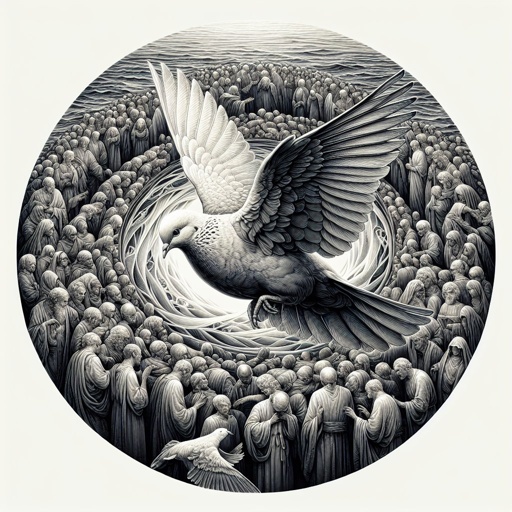
Psalms 74:19 - "O deliver not the soul of thy turtledove unto the multitude of the wicked: forget not the congregation of thy poor for ever."

Psalms 74:1 - "O God, why hast thou cast us off for ever? why doth thine anger smoke against the sheep of thy pasture?"

Psalms 74:3 - "Lift up thy feet unto the perpetual desolations; even all that the enemy hath done wickedly in the sanctuary."

Psalms 74:22 - "Arise, O God, plead thine own cause: remember how the foolish man reproacheth thee daily."

Psalms 74:9 - "We see not our signs: there is no more any prophet: neither is there among us any that knoweth how long."

Psalms 74:7 - "They have cast fire into thy sanctuary, they have defiled by casting down the dwelling place of thy name to the ground."

"We see not our signs: there is no more any prophet: neither is there among us any that knoweth how long." - Psalms 74:9

Psalms 74:2 - "Remember thy congregation, which thou hast purchased of old; the rod of thine inheritance, which thou hast redeemed; this mount Zion, wherein thou hast dwelt."

"Arise, O God, plead thine own cause: remember how the foolish man reproacheth thee daily." - Psalms 74:22