The Sovereign Authority of Christ: King of Kings and Lord of Lords
“And he hath on his vesture and on his thigh a name written, KING OF KINGS, AND LORD OF LORDS.” — Revelation 19:16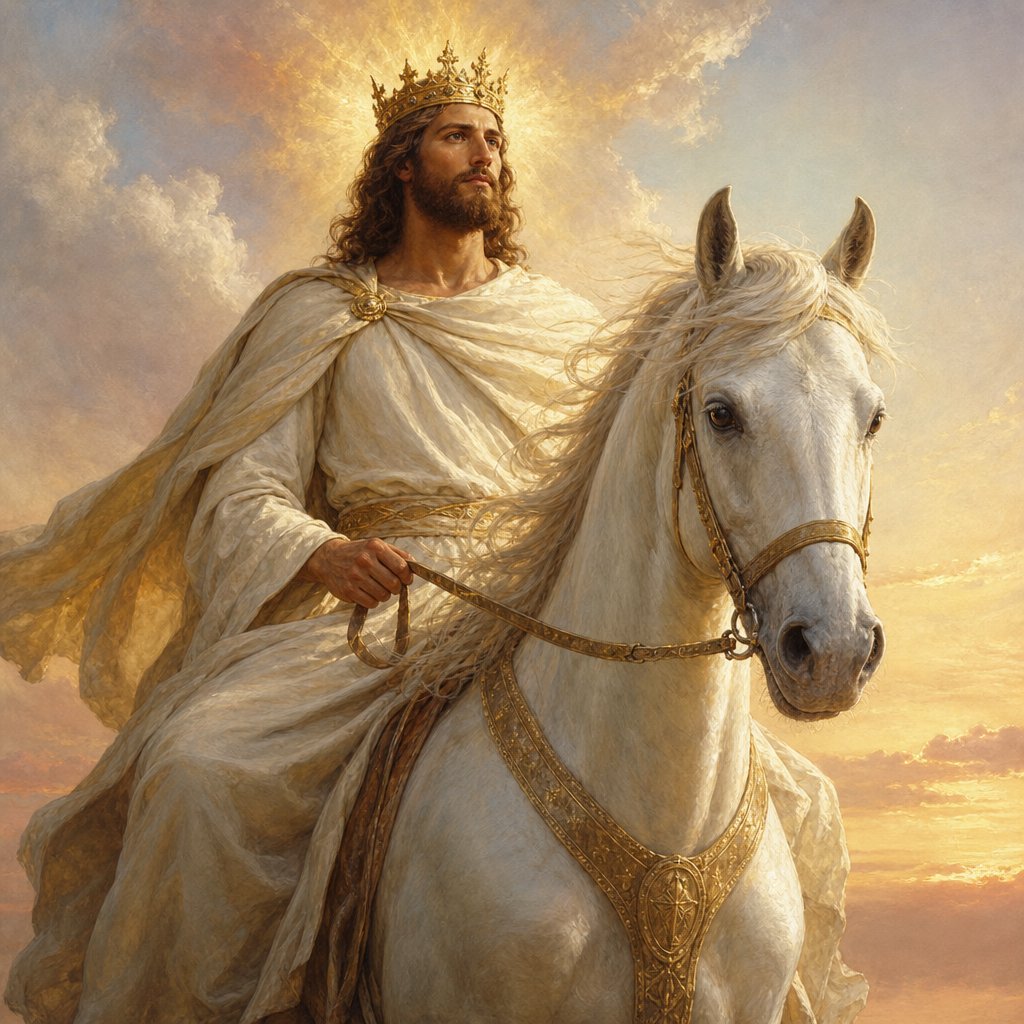
As we delve into the depths of Revelation 19:16, we encounter a profound proclamation of the majesty and sovereignty of Jesus Christ: "And he hath on his vesture and on his thigh a name written, KING OF KINGS, AND LORD OF LORDS" (KJV). This verse, nestled within a vivid apocalyptic vision, serves as a climax to the book of Revelation, where the identity of Christ is revealed in all His glory and authority.
In the days of the early church, Jesus was often regarded with reverent awe, destined to rule not only as a spiritual leader but also as a cosmic sovereign. The title "King of Kings and Lord of Lords" encapsulates the reality that He reigns supreme over all creation, transcending earthly rulers and dominions. In a culture that was enamored with power and authority, this proclamation was radical, challenging the pervasive belief in the might of Roman emperors and their divinity.
To grasp the significance of this title, we must reflect on its implications. The term "King of Kings" suggests a hierarchy in which all earthly kings, regardless of their might and influence, are subject to Christ's ultimate authority. It asserts that irrespective of how powerful a ruler may appear on earth, their power is transient and subservient to the King who holds the universe in His grasp. This notion resonates deeply for believers reflecting on the political upheavals and moral decay that pervade societal structures. In these tumultuous times, we are reminded that no matter how chaotic our world may seem, God remains sovereign.
The second part of the title, "LORD OF LORDS," amplifies the authority endowed upon Christ. The term ‘Lord’ suggests ownership and power. In the ancient Near East, the concept of lordship was associated with not only ruling but also providing for and protecting the subjects. In calling Christ the Lord of Lords, we acknowledge Him not just as a distant ruler but as one who actively engages in the lives of His people, guiding and nurturing them toward righteousness. It comforts believers that they are under the leadership of a benevolent Lord who guides them in all things.
Moreover, the image of Christ with a name inscribed on His vesture and thigh signifies His identity and mission. It reminds Christians that Jesus is not just a figure of history but is intrinsically involved in the narrative of our lives and the destiny of the world. He is a conqueror, coming to fulfill the promises of God – to judge sin, to vindicate the righteous, and to establish His eternal Kingdom.
As we consider our personal journeys of faith, the title "King of Kings and Lord of Lords" beckons us to reflect on our allegiance to Christ. Are we living in submission to His sovereign authority? Do we recognize the supremacy of Christ in our daily decisions and in our relationships? In times of uncertainty and fear, we must remember that our Lord’s authority brings peace. As Philippians 4:6-7 instructs us, we are called to bring our anxieties before God, trusting that His peace, which surpasses all comprehension, will guard our hearts and minds.
In Revelation 19, the text paints a vivid picture of the final triumph of Christ, encouraging us with the hope of His return. When we see Him clothed in splendor, we are called to join in worship and adoration, acknowledging Him not only in the grand finale of history but also as our daily leader. The declaration of Christ’s lordship goes beyond mere acknowledgment; it invites us into a deeper relationship with Him.
As we meditate on this powerful verse today, let it embolden us to proclaim with confidence that our King reigns. Despite the trials we face or the giants we may encounter, we serve a King who is seated on the throne. Let us submit to His lordship, allowing Him to transform our hearts and minds, so that in every aspect of our lives, we may reflect His glory as children of the true King of Kings and Lord of Lords.
Get our apps


Artwork for Revelation 19:16

Revelation 19:16 - "And he hath on his vesture and on his thigh a name written, KING OF KINGS, AND LORD OF LORDS."

"And he hath on his vesture and on his thigh a name written, KING OF KINGS, AND LORD OF LORDS." - Revelation 19:16
"And he hath on his vesture and on his thigh a name written, KING OF KINGS, AND LORD OF LORDS." - Revelation 19:16

Revelation 19:19-21

Revelation 19:19-21

Revelation 19:19-21

Revelation 16:19 - "And the great city was divided into three parts, and the cities of the nations fell: and great Babylon came in remembrance before God, to give unto her the cup of the wine of the fierceness of his wrath."

Revelation 19:4

Revelation 16:2

Revelation 3:16

Revelation 1:16

Revelation 16:2

Revelation 1:16

Revelation 1:16

Revelation 1:16

Revelation 1:16

Revelation 16:16 - "And he gathered them together into a place called in the Hebrew tongue Armageddon."

Revelation 13:16-17

Revelation 1:12-16

Revelation 1:12-16

revelation 1:13-16

Revelations 1:13-16

Revelation 19:19 - "And I saw the beast, and the kings of the earth, and their armies, gathered together to make war against him that sat on the horse, and against his army."

Revelation 16:20 - "And every island fled away, and the mountains were not found."

Revelation 3:19 - "As many as I love, I rebuke and chasten: be zealous therefore, and repent."

Revelation 19:3 - "And again they said, Alleluia. And her smoke rose up for ever and ever."

lake of fire from the Bible at Revelation 19:20

Revelation 16:11 - "And blasphemed the God of heaven because of their pains and their sores, and repented not of their deeds."

Revelation 19:13 - "And he was clothed with a vesture dipped in blood: and his name is called The Word of God."

Revelation 19:1-6 A beautiful scene in heaven of the entirety of heaven giving praises to God. The great multitude, twenty four elders, and the four archangels, all give praise and glory to God.