The Balances of Life: A Reflection on Revelation 6:5
“And when he had opened the third seal, I heard the third beast say, Come and see. And I beheld, and lo a black horse; and he that sat on him had a pair of balances in his hand.” — Revelation 6:5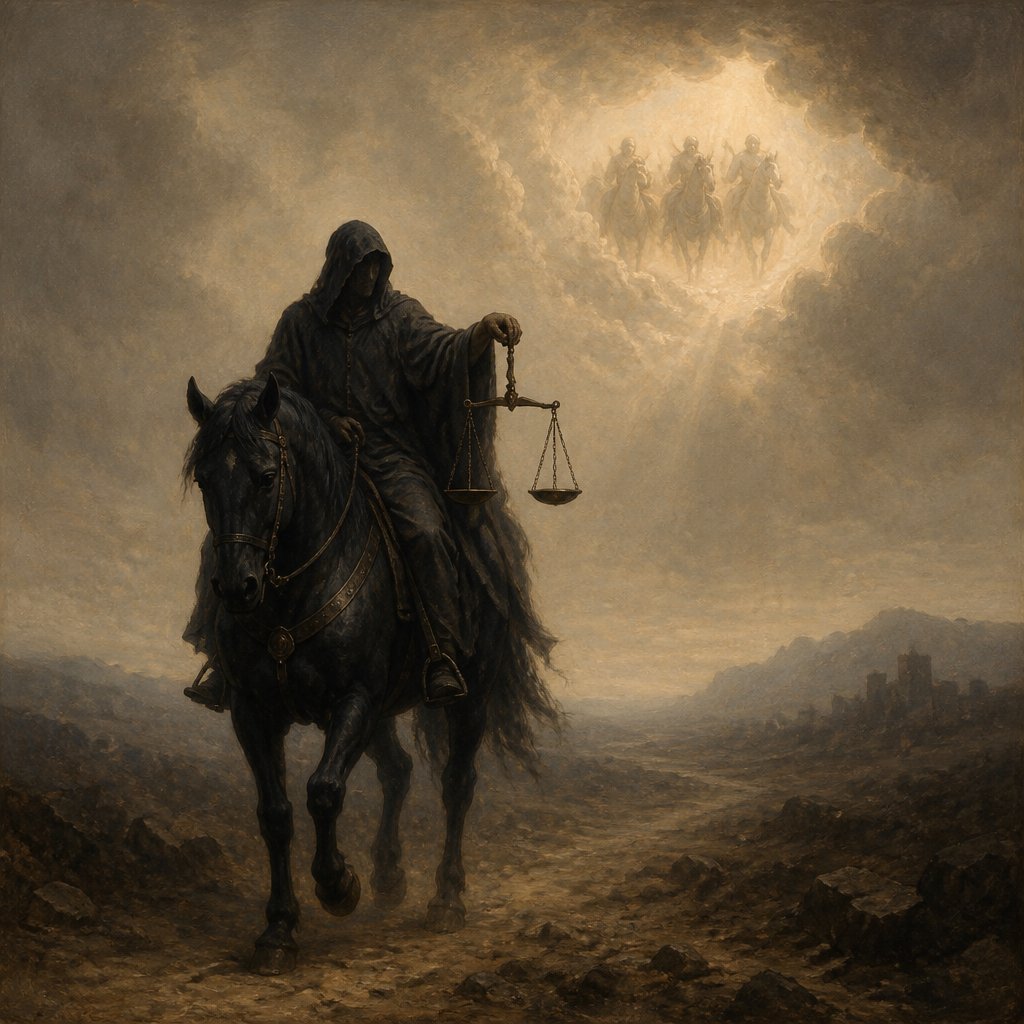
In the apocalyptic imagery of Revelation, the third seal introduces us to a striking and stark symbol: the black horse and its rider, wielding a pair of balances. The verse states, "And when he had opened the third seal, I heard the third beast say, Come and see. And I beheld, and lo a black horse; and he that sat on him had a pair of balances in his hand" (Revelation 6:5, KJV). This powerful verse invites us to delve into the meaning behind this imagery, exploring themes of judgment, justice, and the state of the human condition in a world fraught with inequity.
To understand the implications of the black horse and its rider, we must first recognize the context of Revelation. The opening of each seal represents a progression of events and revelations that unfold as part of God’s ultimate plan. The first two seals unveil a white horse with a rider conquering and a red horse signaling war and bloodshed. As we move to the third seal, the black horse emerges, introducing a period marked by scarcity and economic distress. The balances in the rider's hands speak volumes about weighing judgment and the measure of justice — a reminder that God's scales are always balanced, and He will hold all to account.
The imagery of the black horse and the balances carries significant implications for our lives today. The color black is often associated with mourning, loss, and despair. In various ways, we are witnessing the realities of a world marked by economic struggles, inequalities, and dire circumstances that force many into a state of want and hunger. The balances symbolize the scales of justice — a poignant reminder that God is aware of our struggles and imposes fairness in His divine economy. While we may feel overwhelmed by the injustices we see around us, this passage invites hope that God—in His perfect timing—will address these inequities, weighing both the hearts of men and the actions of nations.
Moreover, the call to “Come and see” is not just a passive invitation to observe; it implores us to engage, reflect, and respond to the state of our world. How often do we turn a blind eye to the suffering around us? In every community, there are signs of distress—hunger, injustice, and desperation. As believers, we are called to act as reflections of Christ's love and justice. We are the hands and feet of Christ in this world, tasked to support the marginalized, advocate for the disenfranchised, and weigh our lives by these balances of compassion, justice, and mercy.
The balances in the rider’s hands can also signify how we measure our own lives. Are we adhering to the scales of God’s righteousness in our pursuits of happiness, wealth, and success? In the pursuit of our goals, do we prioritize material gain over spiritual growth? As we evaluate our lives against the balances of justice, we must also assess how we are fulfilling God’s commands to love our neighbors and help those in need. Jesus Himself said, “For I was hungry, and ye gave me meat: I was thirsty, and ye gave me drink: I was a stranger, and ye took me in” (Matthew 25:35). These realities compel us to not only recognize our own blessings but also share them with those facing hardships.
Ultimately, Revelation 6:5 serves as both a warning and a wake-up call. It speaks of a somber reality in a world wrestling with chaos while also offering hope that the God of justice rules over all. We can take comfort in the fact that He sees each imbalance and is poised to restore what is broken. As we confront injustices within our neighborhoods and the world at large, let us hold fast to the promise of divine justice, and let that propel us into action motivated by love, service, and the desire for godly justice. May we remain vigilant in our faith and compassionate in our actions, always willing to heed the call to "Come and see" what God is doing and how we can be a part of His redemptive work.
Get our apps


Artwork for Revelation 6:5

Revelation 6:5 - "And when he had opened the third seal, I heard the third beast say, Come and see. And I beheld, and lo a black horse; and he that sat on him had a pair of balances in his hand."
"And when he had opened the third seal, I heard the third beast say, Come and see. And I beheld, and lo a black horse; and he that sat on him had a pair of balances in his hand." - Revelation 6:5

Revelation 5:6

Revelation 5:6

Revelation 5:6

Revelation 5:6 the lamb looking as if it had been slain

Revelation 5:6 a bleeding lamb with seven horns and seven eyes on a throne

Revelation 5:6 a slain lamb with seven horns and seven eyes on a throne

Revelation 5:6 a slain lamb with seven horns and seven eyes on a throne

Revelation 5:6 a bleeding lamb with seven horns and seven eyes on a throne

Revelation 5:5

Revelation 6

Revelation 5:6 - "And I beheld, and, lo, in the midst of the throne and of the four beasts, and in the midst of the elders, stood a Lamb as it had been slain, having seven horns and seven eyes, which are the seven Spirits of God sent forth into all the earth."

Revelation 21:5

Revelation 8:5

Revelation 5:8

Revelation 21:6

Revelation 14:6

Revelation 5:1-10

Revelation 15:5-8

Revelation 15:5-8

Revelation 17:3-6

Revelation 17:3-6

Revelation 17:3-6

Revelation 15:5-8

Revelation 22: 1-5

Revelation 17:3-6

Revelation 17:3-6

Revelations 8:3-5

REVELATION 11:6. WATERS TURNING TO BLOOD