The Inclusive God: A Reflection on Romans 3:29
“Is he the God of the Jews only? is he not also of the Gentiles? Yes, of the Gentiles also:” — Romans 3:29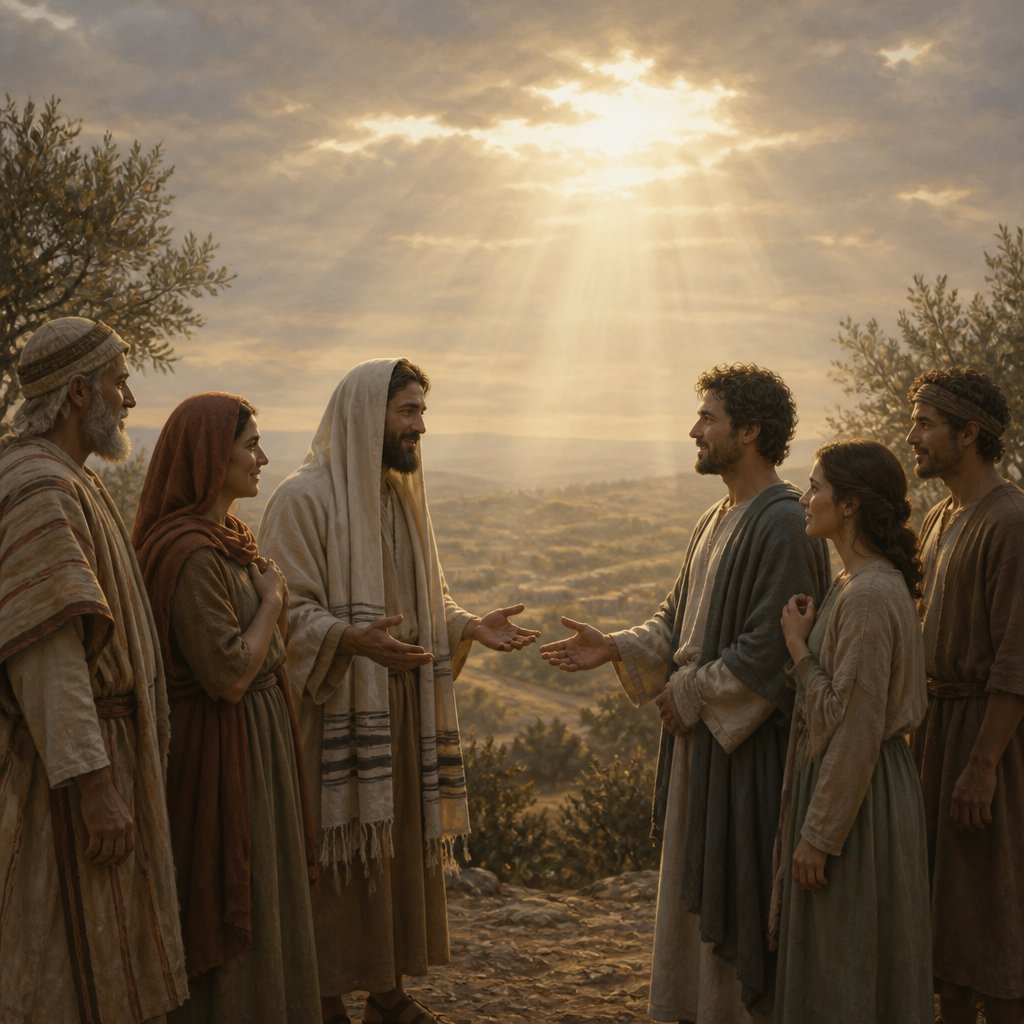
As we delve into the profound truths encapsulated in Romans 3:29, we encounter a pivotal question posed by the Apostle Paul: "Is he the God of the Jews only? is he not also of the Gentiles? Yes, of the Gentiles also." This verse is rich with theological significance and insight, urging us to examine the nature of God’s mercy and grace. It calls us to embrace a broader view of God’s redemptive plan that includes all of humanity, transcending cultural, ethnic, and religious boundaries.
To comprehend Paul’s message fully, we must understand the historical context. The early church was navigating tensions between Jewish believers, who held tightly to the law and covenant of Moses, and Gentile converts, who were often seen as outsiders to the promises God had made to Israel. Paul, an apostle to the Gentiles, addresses these divisions head-on. He beautifully articulates that the same God who called Israel into a covenant relationship has also extended His grace to the Gentiles. This revelation was groundbreaking.
Paul’s rhetorical questions imply that God’s love and sovereignty are not limited to a select race or group of people; rather, God is inclusive, inviting all to partake in His salvation. The Gospel, rooted in the Jewish faith, breaks forth beyond its original boundaries, beckoning to the Gentiles with the promise of redemption. This is a radical shift from the exclusivity that marked the Abrahamic covenant, where the Jews were uniquely set apart as God’s chosen people.
The depth of this verse calls us to reflect on our own understanding of God’s grace. Do we view God's love as a confined treasure, awarded only to certain individuals or communities? Or do we embrace the truth that God's love is expansive and available to all? The heartbeat of the Gospel is one of inclusion—everyone, regardless of their lineage, background, or past, is offered the same access to God through faith in Jesus Christ.
When we extol the rich tapestry of humanity, it leads us to appreciate the diverse expressions of worship and faith. God, in His wisdom, created us uniquely, and each culture reflects facets of His character. Paul's declaration challenges us to celebrate differences while recognizing our shared need for grace. It’s a humbling reminder that we all stand on equal footing at the foot of the cross.
Additionally, this verse invites serious self-examination regarding our attitudes towards others. In a world that is often divided along lines of race, nationality, and religion, are we agents of grace? Are we actively pursuing relationships across boundaries and inviting others to see the beauty of God in their lives? This message of inclusion should compel us to reach out—not just to those who look, think, or believe like us, but to everyone.
Furthermore, God’s all-encompassing love assures us that our identity is not tied to our past, family heritage, or societal status but to our relationship with Him. The same grace that forgives a long-time sinner is available to a new believer. This equality in our spiritual standing creates a community marked by love, acceptance, and mutual respect.
In conclusion, Romans 3:29 serves as a powerful reminder that God is much larger than our finite definitions of who is ‘in’ and who is ‘out.’ As we reflect on this verse, let us embrace our role in God’s grand narrative—a narrative that includes all of humanity. May we acknowledge with gratitude that our God is the God of the Gentiles as much as He is the God of the Jews, reminding us that His salvation is a universal gift to be shared and celebrated among all people.
Get our apps


Artwork for Romans 3:29

Romans 3:29 - "Is he the God of the Jews only? is he not also of the Gentiles? Yes, of the Gentiles also:"
"Is he the God of the Jews only? is he not also of the Gentiles? Yes, of the Gentiles also:" - Romans 3:29

Romans 8:29

Romans 11:29 - "For the gifts and calling of God are without repentance."

"For the gifts and calling of God are without repentance." - Romans 11:29

Romans 4:3

Romans 2:29 - "But he is a Jew, which is one inwardly; and circumcision is that of the heart, in the spirit, and not in the letter; whose praise is not of men, but of God."

Romans 3:24

Romans 1:29 - "Being filled with all unrighteousness, fornication, wickedness, covetousness, maliciousness; full of envy, murder, debate, deceit, malignity; whisperers,"

Romans 15:29 - "And I am sure that, when I come unto you, I shall come in the fulness of the blessing of the gospel of Christ."

Romans 3:16 - "Destruction and misery are in their ways:"

Romans 3:17 - "And the way of peace have they not known:"

Romans 3:15 - "Their feet are swift to shed blood:"

Romans 3:10 - "As it is written, There is none righteous, no, not one:"

Romans 3:18 - "There is no fear of God before their eyes."

Romans 3:3 - "For what if some did not believe? shall their unbelief make the faith of God without effect?"

Romans 3:14 - "Whose mouth is full of cursing and bitterness:"

Romans 8:29 - "For whom he did foreknow, he also did predestinate to be conformed to the image of his Son, that he might be the firstborn among many brethren."

Genesis 29-3

Romans 9:29 - "And as Esaias said before, Except the Lord of Sabaoth had left us a seed, we had been as Sodoma, and been made like unto Gomorrha."

Romans 3:11 - "There is none that understandeth, there is none that seeketh after God."

Romans 16:3 - "Greet Priscilla and Aquila my helpers in Christ Jesus:"

Romans 3:1 - "What advantage then hath the Jew? or what profit is there of circumcision?"

Romans 3:23 - "For all have sinned, and come short of the glory of God;"

Romans 3:6 - "God forbid: for then how shall God judge the world?"

"Destruction and misery are in their ways:" - Romans 3:16

Romans 3:27 - "Where is boasting then? It is excluded. By what law? of works? Nay: but by the law of faith."

Romans 3:24 - "Being justified freely by his grace through the redemption that is in Christ Jesus:"

"And the way of peace have they not known:" - Romans 3:17

Romans 3:28 - "Therefore we conclude that a man is justified by faith without the deeds of the law."