The Depth of Christ's Sacrifice: A Love Beyond Measure
“For scarcely for a righteous man will one die: yet peradventure for a good man some would even dare to die.” — Romans 5:7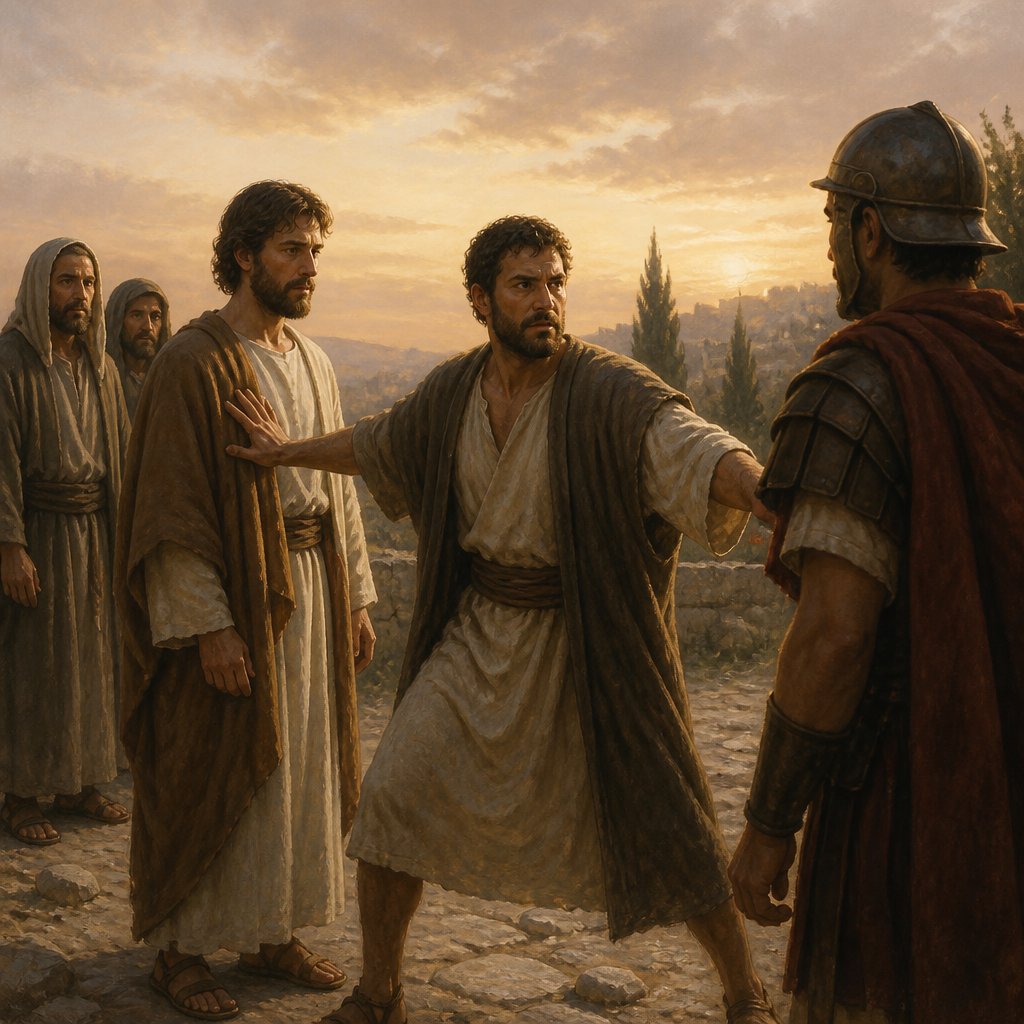
When we read Romans 5:7, we encounter a profound truth woven into the fabric of the Gospel: "For scarcely for a righteous man will one die: yet peradventure for a good man some would even dare to die." This verse invites us to probe the depths of our understanding of sacrifice and love, and it culminates in the magnificent act of Jesus Christ on our behalf—a love that far exceeds our human understanding.
In the Apostle Paul's succinct observation, he makes a powerful statement about the rarity of selfless sacrifice. He notes that for a "righteous man"—someone who is morally upright—very few would contemplate laying down their life. The use of the word "scarcely" underscores the exceptional nature of such an act. A righteous man earns respect; his decisions and actions align with societal norms, compelling us to honor him. Yet, even for him, the prospect of dying in his stead is met with hesitance.
Next, Paul introduces a "good man," someone who embodies kindness and virtue, suggesting that there are intervals when a few might be moved to risk everything for his sake. This contrast emphasizes an essential truth about human relationships: while we are capable of love and sacrifice, our affections are often limited by circumstances and societal boundaries. The hesitation to die for another, even for someone we hold in high regard, speaks to the intrinsic, protective instinct in every human heart.
However, Paul’s use of “peradventure” hints at the uncertainty of such sacrifices—highlighting the unpredictable nature of human valor. Yet, consider the gravity of Christ’s love in comparison. He did not wait for us to prove our righteousness or goodness; He took action when we were at our lowest, acknowledging our state as “yet sinners,” as Romans 5:8 states: "But God commendeth his love toward us, in that, while we were yet sinners, Christ died for us."
As we meditate on this, we begin to see the grander narrative of the Gospel unfold. Jesus’ love is perfect, radical, and unattainable by human standards. He knowingly died for the unrighteous, those who stood in opposition to God’s holiness, shocking the world with the immeasurable scope of His grace. Where humanity might risk their lives for a righteous or good person, Christ displayed a self-sacrificial love that wrapped around the heart of rebellion and sin—a love that tears down barriers, crossing the chasms of human ability to love.
This fact transforms our view of God’s character. He is not merely indifferent or passive towards our plight; He actively intervened, entering into our suffering without conditions. His willingness to suffer and die for us—while we were sinful—paints a picturesque image of divine love, one that invites us into relationship rather than standing aloof from our failures.
As we reflect on this, we must also confront the challenge it presents. If Christ, out of unfathomable love, lived and died for us, what does that call us to do? How do we respond to such a sacrifice? Our lives should then embody parallel humility and selflessness, marked by a readiness to love and serve those around us—especially the unlovable.
In our families, communities, and workplaces, the challenge from Romans 5:7 echoes through time, calling us to lay down our lives—not necessarily in death, but through our time, attention, and resources. Are we willing to extend grace and love to those who may not be worthy in our eyes?
As we gather our thoughts around Romans 5:7, let us not only marvel at the heights of Christ's love but also allow that love to shape our actions and attitudes. Let us ask the Holy Spirit for the strength to love others with the same tenacity that we see in our Lord. May our response be one that reflects His grace—a grace that changes hearts and lives, starting with our own.
Get our apps


Artwork for Romans 5:7

Romans 5:7 - "For scarcely for a righteous man will one die: yet peradventure for a good man some would even dare to die."
"For scarcely for a righteous man will one die: yet peradventure for a good man some would even dare to die." - Romans 5:7
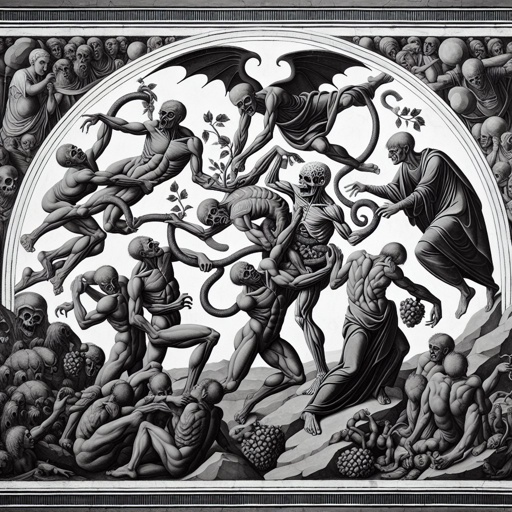
Romans 7:5 - "For when we were in the flesh, the motions of sins, which were by the law, did work in our members to bring forth fruit unto death."

Romans 5:1

Romans 5:19

Romans 5:8

Romans 5:8

Romans 5:8

Romans 5:19

Romans 7:19

Romans 7:12

Romans 5: 1-11

Romans 5: 1-11

romans 12: 4-5

Romans 5:4 - "And patience, experience; and experience, hope:"

Romans 6:7 - "For he that is dead is freed from sin."

Romans 7:12 - "Wherefore the law is holy, and the commandment holy, and just, and good."

Romans 14:7 - "For none of us liveth to himself, and no man dieth to himself."

Romans 7:17 - "Now then it is no more I that do it, but sin that dwelleth in me."

Romans 7:22 - "For I delight in the law of God after the inward man:"

Romans 5:5 - "And hope maketh not ashamed; because the love of God is shed abroad in our hearts by the Holy Ghost which is given unto us."

Romans 7:10 - "And the commandment, which was ordained to life, I found to be unto death."

Romans 4:7 - "Saying, Blessed are they whose iniquities are forgiven, and whose sins are covered."

Romans 5:13 - "(For until the law sin was in the world: but sin is not imputed when there is no law."

Romans 7:11 - "For sin, taking occasion by the commandment, deceived me, and by it slew me."

Romans 11:5 - "Even so then at this present time also there is a remnant according to the election of grace."

"And patience, experience; and experience, hope:" - Romans 5:4
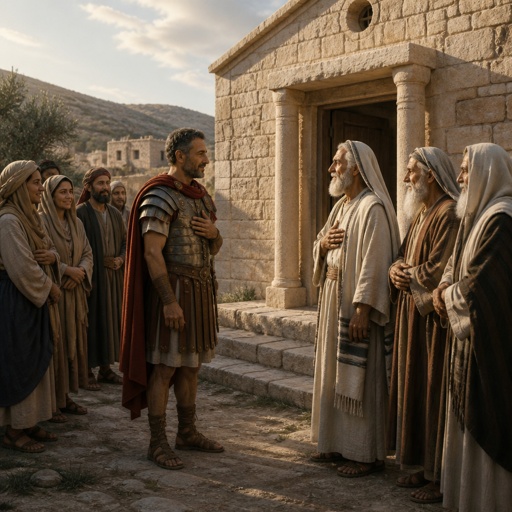
"For he loveth our nation, and he hath built us a synagogue." - Luke 7:5

Romans 12:7 - "Or ministry, let us wait on our ministering: or he that teacheth, on teaching;"
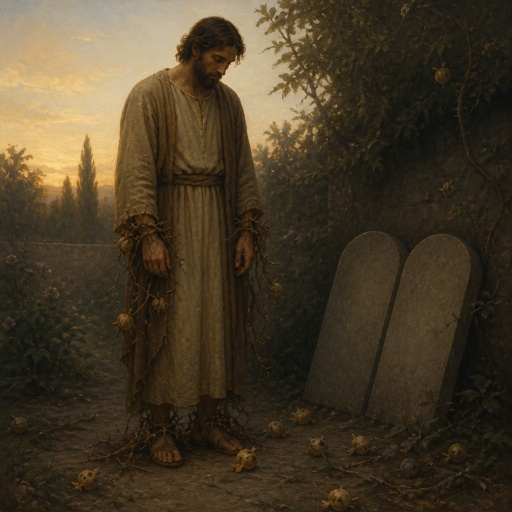
"For when we were in the flesh, the motions of sins, which were by the law, did work in our members to bring forth fruit unto death." - Romans 7:5