Recognizing the Beauty of Love: A Reflection on Song of Solomon 6:4
“Thou art beautiful, O my love, as Tirzah, comely as Jerusalem, terrible as an army with banners.” — Song of Solomon 6:4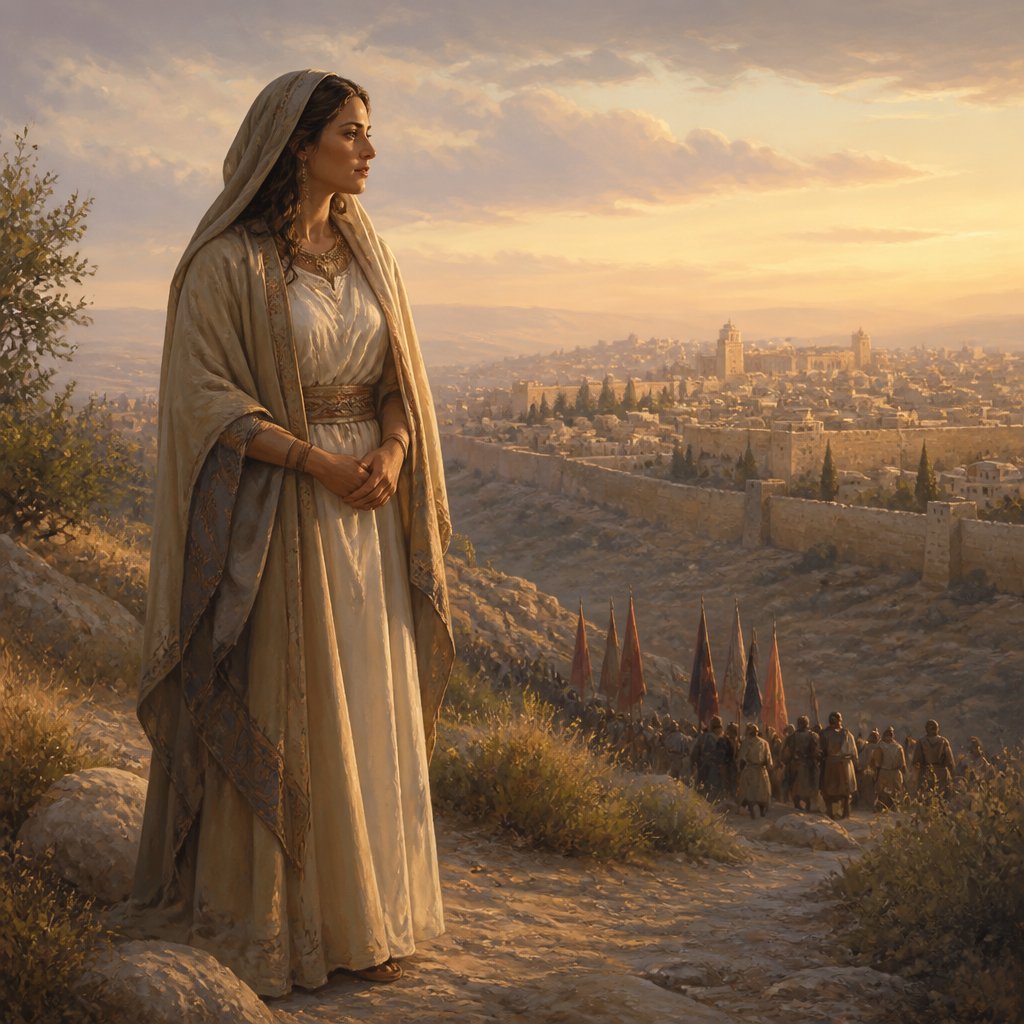
In the heart of the poetic verses of the Song of Solomon, we find a rich tapestry of imagery and emotion, deeply woven into the fabric of romantic love. The verse from Song of Solomon 6:4 stands out as a profound declaration of beauty and strength. The passage reads: "Thou art beautiful, O my love, as Tirzah, comely as Jerusalem, terrible as an army with banners." This verse is more than a mere compliment; it encapsulates a divine perspective of love that combines the gentleness of beauty with the strength of valor.
Initially, the phrase "Thou art beautiful, O my love, as Tirzah" presents the beauty of the beloved. Tirzah was known in ancient times for its beauty and pleasantness, which invokes thoughts of elegance and grace. It serves as an image that tells us beauty can be both external and internal—reflecting a deeper, spiritual quality that resonates in the hearts of those in love. As we think of this beauty, we are reminded that we, too, possess a beauty that comes from our identity in Christ. 1 Peter 3:3-4 instructs believers about this inner beauty, "Whose adorning let it not be that outward adorning of plaiting the hair, and of wearing of gold, or of putting on of apparel; but let it be the hidden man of the heart, in that which is not corruptible, even the ornament of a meek and quiet spirit, which is in the sight of God of great price."
The verse continues with the assertion that the beloved is "comely as Jerusalem." Jerusalem, the holy city, represents a place of divine presence and beauty, marked by rich history and spirituality. The comparison made here invites us to see love not only as a human connection but also as a reflection of a higher faith. The beauty of Jerusalem embodies the holiness and peace that comes when two hearts unite under God's guidance. It asks us to cherish our beloved not just for their physical attributes but also for the spiritual bond we share, cultivating a sanctuary where faith flourishes.
However, the verse does not stop at beauty. It boldly declares the beloved to be "terrible as an army with banners." This striking imagery reveals that love possesses a strength that can be daunting, fierce, and powerfully protective. An army, with its banners waving, signifies unity, purpose, and unwavering loyalty. Similarly, in romantic relationships, there is a need for strong foundations, commitment, and protection against the storms of life. When we profess our love to someone, we are called to stand by them, just as an army rallies to defend its own.
Love should be viewed as both a delicate flower and a fortified fortress. Its beauty captivates us, drawing us into its embrace, while its strength is a reminder of our responsibilities. As we embark on relationships—be it romantic, familial, or friendships—we are challenged to be beautiful like Tirzah, comely like Jerusalem, and fierce as an army. This profound interplay requires faith, commitment, and effort.
Dear reader, let us ponder our roles as lovers, friends, and family members in light of this verse. Are we cultivating beauty in our relationships that reflects Christ's love? Are we creating a safe haven, a ‘Jerusalem,’ where grace flourishes? And do we stand ready to protect and defend those we love, displaying a fierce, unwavering spirit like that of an army?
As we meditate on Song of Solomon 6:4, may it inspire us to recognize and nurture the complexities of love—the soft beauty and the fierce strength, always pointing back to the divine love that Christ exemplifies. Let our love be a testament to His glory, and may we carry ourselves in such a way that reflects the manifold beauty of His creation.
Get our apps


Artwork for Song of Solomon 6:4

Song of Solomon 6:4 - "¶ Thou art beautiful, O my love, as Tirzah, comely as Jerusalem, terrible as an army with banners."
"¶ Thou art beautiful, O my love, as Tirzah, comely as Jerusalem, terrible as an army with banners." - Song of Solomon 6:4

Song of Solomon 4:6 - "Until the day break, and the shadows flee away, I will get me to the mountain of myrrh, and to the hill of frankincense."

Song of Solomon 6:8 - "There are threescore queens, and fourscore concubines, and virgins without number."

Song of Solomon 1:4

Song of Solomon 3:4

Song of Solomon 1:4

Song of Solomon 6:7 - "As a piece of a pomegranate are thy temples within thy locks."

Song of Solomon 6:12 - "Or ever I was aware, my soul made me like the chariots of Amminadib."

Song of Solomon 6:3 - "I am my beloved's, and my beloved is mine: he feedeth among the lilies."
!["Who [is] she [that] looketh forth as the morning, fair as the moon, clear as the sun, [and] terrible as [an army] with banners?" - Song of Solomon 6:10](https://media.bible.art/6b2ee690-5202-4c13-a4ad-2500f2f9b28c-thumbnail.jpg)
"Who [is] she [that] looketh forth as the morning, fair as the moon, clear as the sun, [and] terrible as [an army] with banners?" - Song of Solomon 6:10
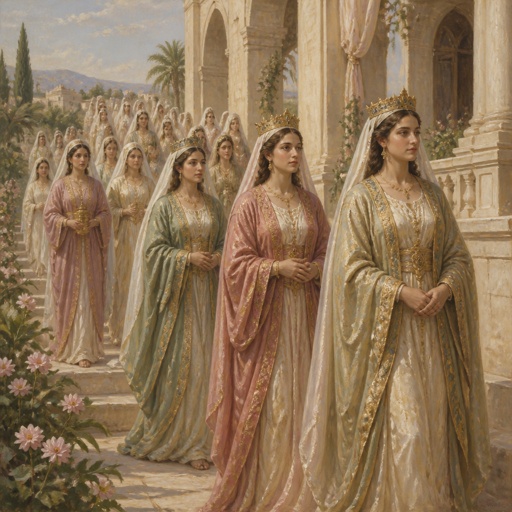
"There are threescore queens, and fourscore concubines, and virgins without number." - Song of Solomon 6:8
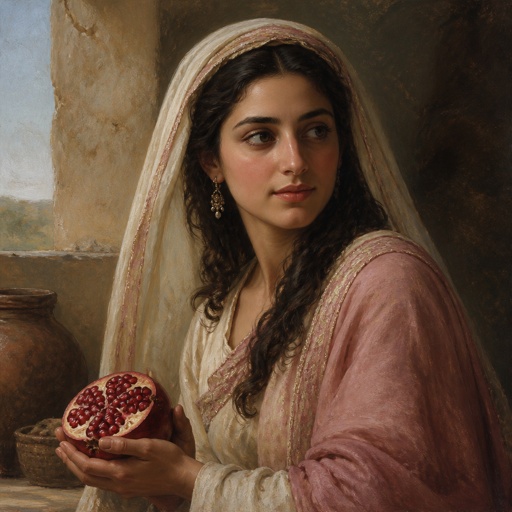
"As a piece of a pomegranate are thy temples within thy locks." - Song of Solomon 6:7

Song of Solomon 4:13 - "Thy plants are an orchard of pomegranates, with pleasant fruits; camphire, with spikenard,"
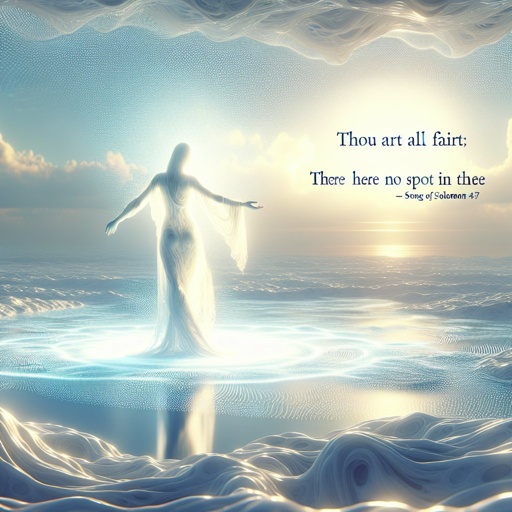
Song of Solomon 4:7 - "Thou art all fair, my love; there is no spot in thee."

Song of Solomon 4:15 - "A fountain of gardens, a well of living waters, and streams from Lebanon."

Song of Solomon 7:6 - "How fair and how pleasant art thou, O love, for delights!"

Song of Solomon 6:5 - "Turn away thine eyes from me, for they have overcome me: thy hair is as a flock of goats that appear from Gilead."

Song of Solomon 6:10 - "¶ Who is she that looketh forth as the morning, fair as the moon, clear as the sun, and terrible as an army with banners?"

Song of Solomon 6:2 - "My beloved is gone down into his garden, to the beds of spices, to feed in the gardens, and to gather lilies."
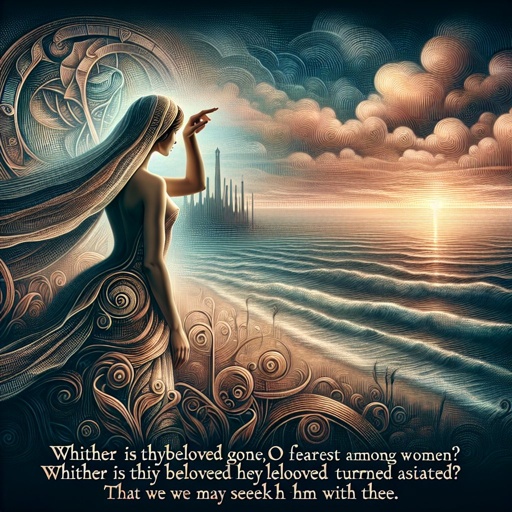
Song of Solomon 6:1 - "Whither is thy beloved gone, O thou fairest among women? whither is thy beloved turned aside? that we may seek him with thee."

Song of Solomon 6:11 - "I went down into the garden of nuts to see the fruits of the valley, and to see whether the vine flourished, and the pomegranates budded."

Song of Solomon 2:4 - "He brought me to the banqueting house, and his banner over me was love."
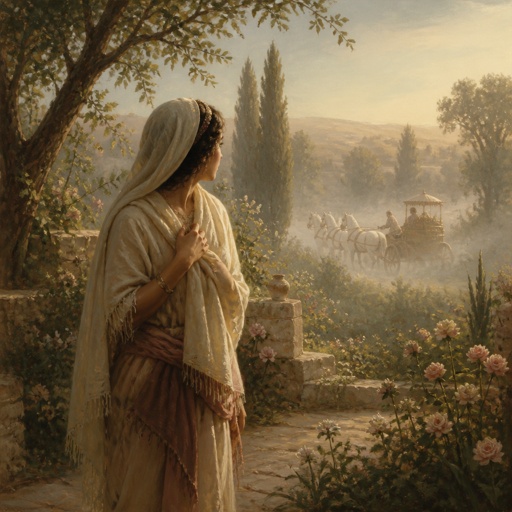
"Or ever I was aware, my soul made me like the chariots of Amminadib." - Song of Solomon 6:12

Song of Solomon 6:6 - "Thy teeth are as a flock of sheep which go up from the washing, whereof every one beareth twins, and there is not one barren among them."
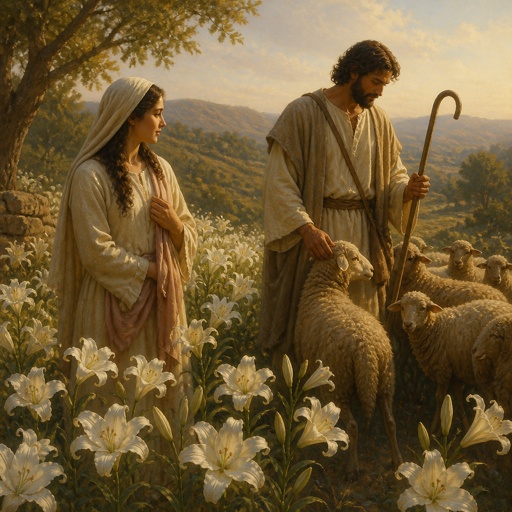
"I am my beloved's, and my beloved is mine: he feedeth among the lilies." - Song of Solomon 6:3

Song of Solomon 4:4 - "Thy neck is like the tower of David builded for an armoury, whereon there hang a thousand bucklers, all shields of mighty men."

Song of Solomon 1:1 - "The song of songs, which is Solomon's."

Song of Solomon 4:12 - "A garden inclosed is my sister, my spouse; a spring shut up, a fountain sealed."

Song of Solomon 2:6 - "His left hand is under my head, and his right hand doth embrace me."