The Journey of Love: Embracing Our Beloved
“Who is this that cometh up from the wilderness, leaning upon her beloved? I raised thee up under the apple tree: there thy mother brought thee forth: there she brought thee forth that bare thee.” — Song of Solomon 8:5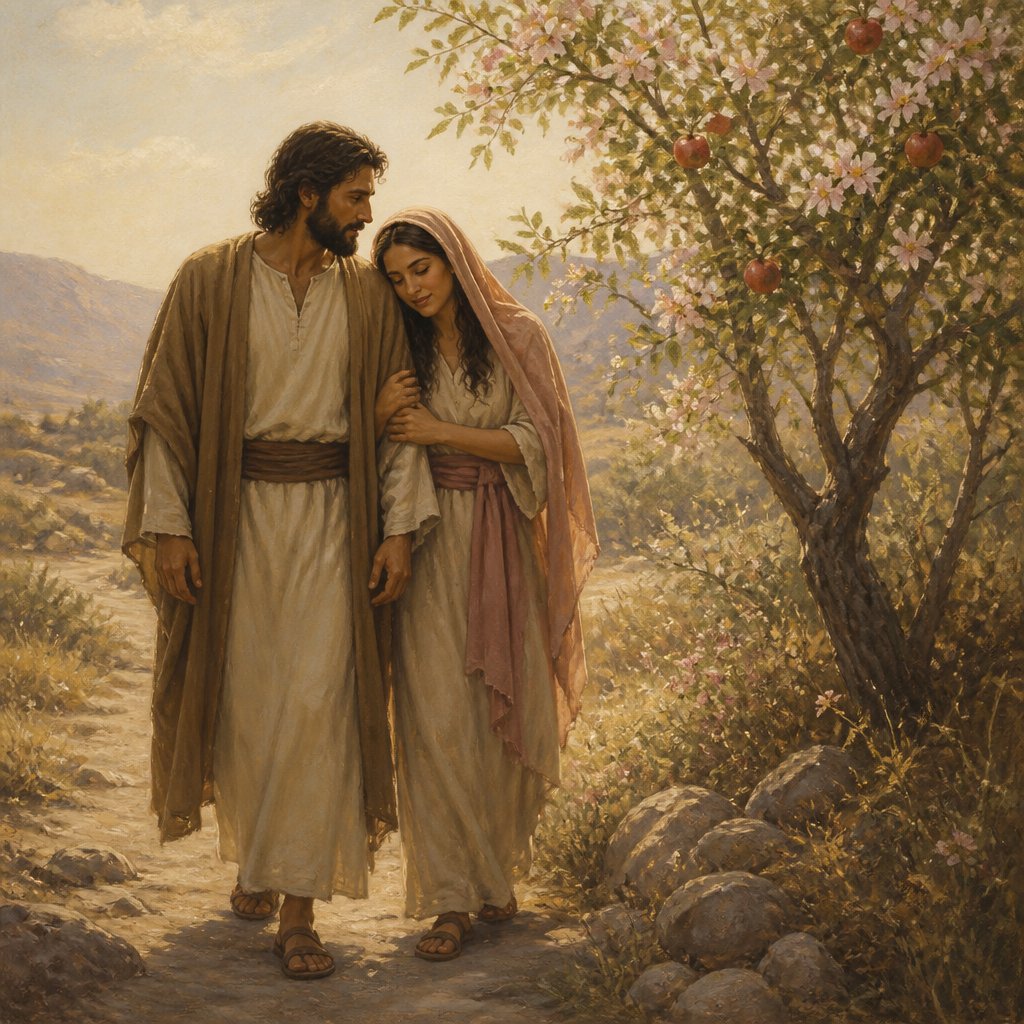
The verse we reflect upon today, Song of Solomon 8:5, reads: "Who is this that cometh up from the wilderness, leaning upon her beloved? I raised thee up under the apple tree: there thy mother brought thee forth: there she brought thee forth that bare thee." This beautiful passage evokes imagery of both tenderness and strength, a celebration of love's journey amidst the trials of life.
The wilderness, as mentioned in this verse, symbolizes a place of desolation, struggle, and uncertainty. It serves as a metaphor for the various challenges and hardships we face in our spiritual and earthly walks. Each of us experiences our wilderness—a time when we feel lost, abandoned, or solely reliant on our strength to navigate the difficulties in life. However, the remarkable aspect of this verse is the imagery it produces when it speaks of one "leaning upon her beloved."
In the midst of our desolate experiences, we are called to lean on our Beloved. This is reminiscent of John 15:5, where Jesus declares, "I am the vine, ye are the branches: He that abideth in me, and I in him, the same bringeth forth much fruit: for without me ye can do nothing." Just as the Shulammite maiden leans upon her beloved in the wilderness, we too must recognize our need for reliance on Christ. We find ourselves weakened in our wilderness, but it is in that state of vulnerability that we can encounter Christ's strength.
The beloved represents a source of comfort, companionship, and assurance. In moments of doubt or despair, it is with the touch of His kindness that we feel the burden of our wilderness lifted. It beckons us to consider the fullness of our relationship with Christ. Just as the maiden emerges from her struggles into the world with assurance and love, we too are invited to rise from our trials—not untouched or unmarked, but leaning on the consistent and unwavering support of our Beloved.
The reference to being raised "under the apple tree" is particularly poignant. The apple tree has deep roots in biblical symbolism representing love, fruitfulness, and beauty. It is here, beneath its protective shade, that the narrative traces back to origins—new life emerging from an assured foundation. For the maiden, it reminds her of her mother’s love and nurturing. For us, it symbolizes the divine presence of God as our Creator, nurturing us even before we were conceived. This accentuates our identity as beloved children of God being shaped and formed under His careful guidance.
Consider the significance of our personal journeys. There may have been moments in our wilderness where we felt abandoned or alone. However, it is crucial to remember that we have not been cast aside; the apple tree stands as a reminder of our beginnings and the abiding love that has accompanied us from the start. Just like the maiden who embraces her beloved upon emerging from the wilderness, we too can acknowledge the story of our past as we lean into our relationship with Christ.
As we ponder upon this verse, let us introspectively question: Who are we in this wilderness? In what ways can we recognize our Beloved standing beside us? Calling us, beckoning us to find refuge in His presence?
In closing, may we each find solace in knowing that our divine Beloved is ever-present, ensuring that as we navigate through life’s wilderness, the embrace of His love will accompany us, transforming our struggles into testimonies of triumph. As we journey onward, let the truth of Song of Solomon 8:5 remind us that we are never alone; together with Him, we can rise from our wilderness and into the vibrant life He calls us to.
Get our apps


Artwork for Song of Solomon 8:5

Song of Solomon 8:5 - "Who is this that cometh up from the wilderness, leaning upon her beloved? I raised thee up under the apple tree: there thy mother brought thee forth: there she brought thee forth that bare thee."
"Who is this that cometh up from the wilderness, leaning upon her beloved? I raised thee up under the apple tree: there thy mother brought thee forth: there she brought thee forth that bare thee." - Song of Solomon 8:5

Songs of solomon 8:10

Song of Solomon 5:11

Song of Solomon 5:8 - "I charge you, O daughters of Jerusalem, if ye find my beloved, that ye tell him, that I am sick of love."

Song of Solomon 8:3 - "His left hand should be under my head, and his right hand should embrace me."

Song of Solomon 1:5 - "I am black, but comely, O ye daughters of Jerusalem, as the tents of Kedar, as the curtains of Solomon."

Song of Solomon 6:8 - "There are threescore queens, and fourscore concubines, and virgins without number."

Song of Solomon 8:13 - "Thou that dwellest in the gardens, the companions hearken to thy voice: cause me to hear it."

Song of Solomon 8:14 - "¶ Make haste, my beloved, and be thou like to a roe or to a young hart upon the mountains of spices."

Song of Solomon 5:10 - "My beloved is white and ruddy, the chiefest among ten thousand."

Song of Solomon 8:4 - "I charge you, O daughters of Jerusalem, that ye stir not up, nor awake my love, until he please."

Song of Solomon 8:10 - "I am a wall, and my breasts like towers: then was I in his eyes as one that found favour."

Song of Solomon 8:12 - "My vineyard, which is mine, is before me: thou, O Solomon, must have a thousand, and those that keep the fruit thereof two hundred."

Song of Solomon 8:8 - "¶ We have a little sister, and she hath no breasts: what shall we do for our sister in the day when she shall be spoken for?"

Song of Solomon 2:5 - "Stay me with flagons, comfort me with apples: for I am sick of love."

Song of Solomon 5:11 - "His head is as the most fine gold, his locks are bushy, and black as a raven."

Song of Solomon 5:12 - "His eyes are as the eyes of doves by the rivers of waters, washed with milk, and fitly set."

Song of Solomon 8:11 - "Solomon had a vineyard at Baal-hamon; he let out the vineyard unto keepers; every one for the fruit thereof was to bring a thousand pieces of silver."

"Many waters cannot quench love, neither can the floods drown it: if a man would give all the substance of his house for love, it would utterly be contemned." - Song of Solomon 8:7

Song of Solomon 2:8 - "¶ The voice of my beloved! behold, he cometh leaping upon the mountains, skipping upon the hills."

Song of Solomon 5:4 - "My beloved put in his hand by the hole of the door, and my bowels were moved for him."

Song of Solomon 4:5 - "Thy two breasts are like two young roes that are twins, which feed among the lilies."

Song of Solomon 1:1 - "The song of songs, which is Solomon's."

Song of Solomon 5:14 - "His hands are as gold rings set with the beryl: his belly is as bright ivory overlaid with sapphires."

Song of Solomon 8:7 - "Many waters cannot quench love, neither can the floods drown it: if a man would give all the substance of his house for love, it would utterly be contemned."

Song of Solomon 5:5 - "I rose up to open to my beloved; and my hands dropped with myrrh, and my fingers with sweet smelling myrrh, upon the handles of the lock."
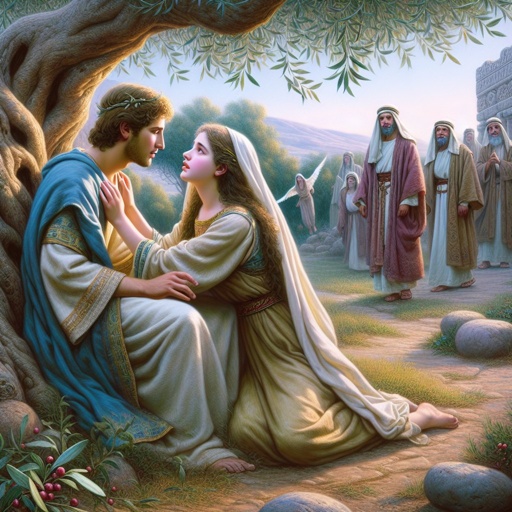
Song of Solomon 8:1 - "O that thou wert as my brother, that sucked the breasts of my mother! when I should find thee without, I would kiss thee; yea, I should not be despised."

Song of Solomon 8:2 - "I would lead thee, and bring thee into my mother's house, who would instruct me: I would cause thee to drink of spiced wine of the juice of my pomegranate."
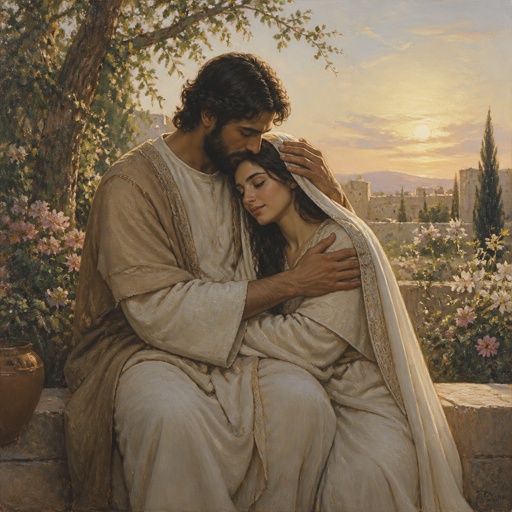
"His left hand should be under my head, and his right hand should embrace me." - Song of Solomon 8:3