What does 1 Chronicles 10:2 mean?
“And the Philistines followed hard after Saul, and after his sons; and the Philistines slew Jonathan, and Abinadab, and Malchi-shua, the sons of Saul.” — 1 Chronicles 10:2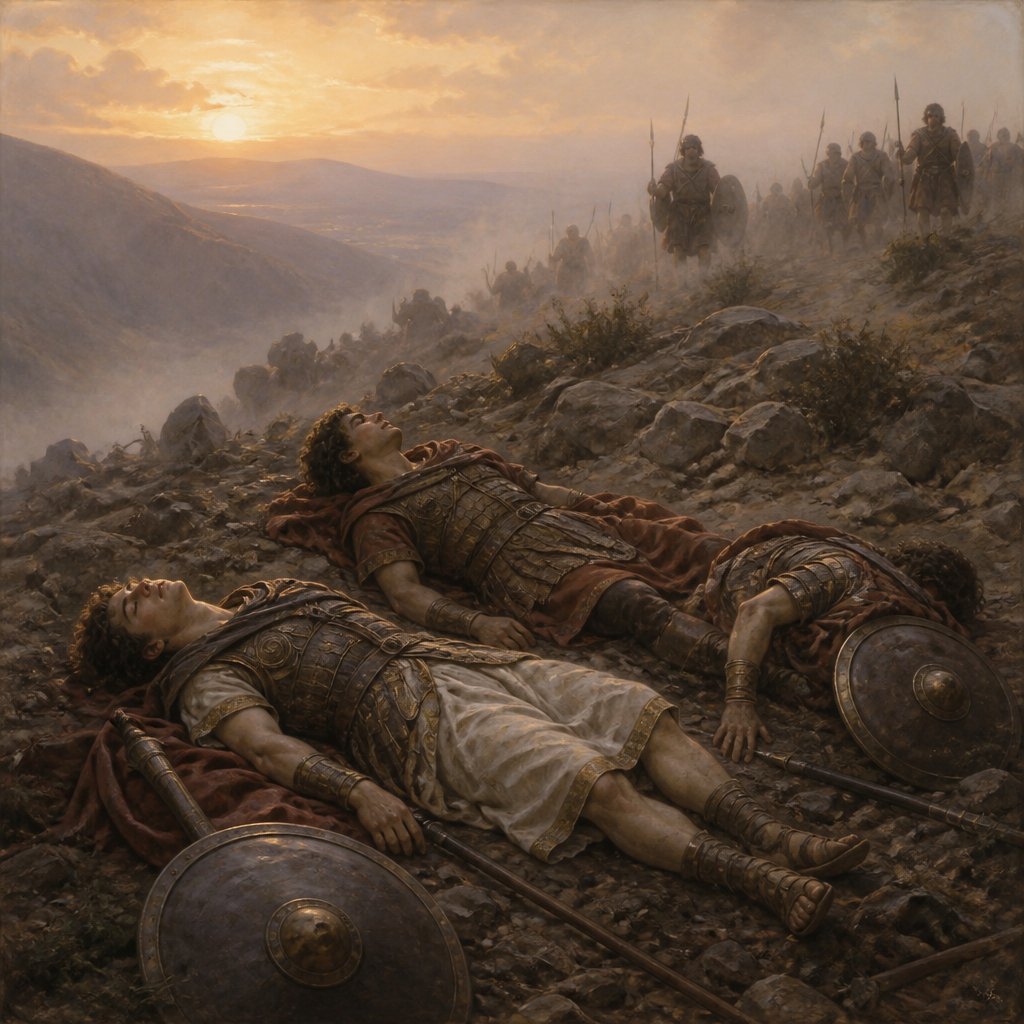
The Bible verse 1 Chronicles 10:2 in the King James Version reads: "And the Philistines followed hard after Saul, and after his sons; and the Philistines slew Jonathan, and Abinadab, and Malchishua, the sons of Saul."
This verse is part of the larger narrative of 1 Chronicles 10, which recounts the death of Saul, the first king of Israel, and his sons at the hands of the Philistines. This event is a turning point in the history of Israel, as it marks the end of Saul's reign and paves the way for David to become the next king. The death of Saul and his sons is a tragic and significant event, and this verse captures the moment when the Philistines defeated and killed Saul's sons, including his beloved son Jonathan.
The theme of the verse is the consequences of disobedience and the defeat of the Israelites by their enemies. The story of Saul's downfall is a cautionary tale about the dangers of pride, disobedience, and turning away from God. Throughout the Old Testament, God's people are warned about the consequences of disobedience and idolatry, and Saul's demise serves as a powerful example of the fulfillment of these warnings.
The verse also highlights the theme of sacrifice and the high cost of warfare. The deaths of Jonathan, Abinadab, and Malchishua are a stark reminder of the human cost of battle and the sacrifices made in the pursuit of power and control. Their deaths are a tragic result of Saul's failed leadership and the ongoing conflict between the Israelites and the Philistines.
In addition to its themes, 1 Chronicles 10:2 also has significant historical and cultural context. The Philistines were a powerful and longstanding enemy of the Israelites, and their conflict is a recurring theme throughout the Old Testament. The defeat of Saul and his sons by the Philistines represents a major victory for the Philistines and a devastating blow to the Israelites.
Symbolism also plays a role in this verse, particularly in the names of Saul's sons. Jonathan, whose name means "Gift of Jehovah," represents the legacy and promise of God's provision. His death symbolizes the loss of this divine gift and the breaking of the covenant between God and the Israelites. Abinadab, whose name means "Father of Generosity," and Malchishua, whose name means "My King is Wealth," also carry symbolic weight in their deaths, representing the loss of familial and royal blessings.
Overall, 1 Chronicles 10:2 is a poignant and significant verse that captures a pivotal moment in the history of Israel. It serves as a reminder of the consequences of disobedience, the high cost of warfare, and the enduring conflict between God's people and their enemies. The deaths of Saul's sons are a tragic symbol of the loss of divine gifts and the breaking of God's covenant, and their story carries profound implications for the wider themes of sacrifice, leadership, and divine judgment in the Bible.
Get our apps


Artwork for 1 Chronicles 10:2

1 Chronicles 10:2 - "And the Philistines followed hard after Saul, and after his sons; and the Philistines slew Jonathan, and Abinadab, and Malchi-shua, the sons of Saul."
"And the Philistines followed hard after Saul, and after his sons; and the Philistines slew Jonathan, and Abinadab, and Malchi-shua, the sons of Saul." - 1 Chronicles 10:2

1 Chronicles 2:10 - "And Ram begat Amminadab; and Amminadab begat Nahshon, prince of the children of Judah;"

2 Chronicles 10:1 - "And Rehoboam went to Shechem: for to Shechem were all Israel come to make him king."

2 Chronicles 23:10

2 Chronicles 23:10

2 Chronicles 30:10

2 Chronicles 35:10

2 Chronicles 1:10 - "Give me now wisdom and knowledge, that I may go out and come in before this people: for who can judge this thy people, that is so great?"

2 Chronicles 10:2 - "And it came to pass, when Jeroboam the son of Nebat, who was in Egypt, whither he had fled from the presence of Solomon the king, heard it, that Jeroboam returned out of Egypt."

1 Chronicles 4 : 10

1 Chronicles 10:10 - "And they put his armour in the house of their gods, and fastened his head in the temple of Dagon."

1 Chronicles 9:10 - "¶ And of the priests; Jedaiah, and Jehoiarib, and Jachin,"

1 Chronicles 1:10 - "And Cush begat Nimrod: he began to be mighty upon the earth."

"And Ram begat Amminadab; and Amminadab begat Nahshon, prince of the children of Judah;" - 1 Chronicles 2:10

1 Chronicles 12:10 - "Mishmannah the fourth, Jeremiah the fifth,"

1 Chronicles 24:10 - "The seventh to Hakkoz, the eighth to Abijah,"

1 Chronicles 10:6 - "So Saul died, and his three sons, and all his house died together."

2 Chronicles 10:19 - "And Israel rebelled against the house of David unto this day."

2 Chronicles 33:10 - "And the LORD spake to Manasseh, and to his people: but they would not hearken."

2 Chronicles 11:10 - "And Zorah, and Aijalon, and Hebron, which are in Judah and in Benjamin fenced cities."

1 Chronicles 10:11 - "¶ And when all Jabesh-gilead heard all that the Philistines had done to Saul,"

2 Chronicles 10:17 - "But as for the children of Israel that dwelt in the cities of Judah, Rehoboam reigned over them."

1 Chronicles 10:5 - "And when his armourbearer saw that Saul was dead, he fell likewise on the sword, and died."

1 Chronicles 1:2 - "Kenan, Mahalaleel, Jered,"
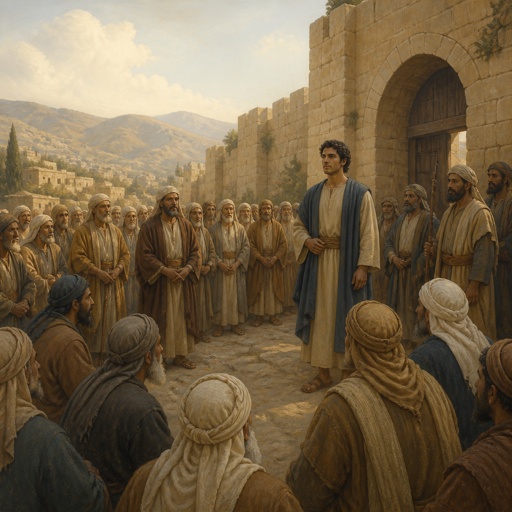
"And Rehoboam went to Shechem: for to Shechem were all Israel come to make him king." - 2 Chronicles 10:1

2 Chronicles 4:10 - "And he set the sea on the right side of the east end, over against the south."

2 Chronicles 10:13 - "And the king answered them roughly; and king Rehoboam forsook the counsel of the old men,"

1 Chronicles 15:10 - "Of the sons of Uzziel; Amminadab the chief, and his brethren an hundred and twelve."

1 Chronicles 8:10 - "And Jeuz, and Shachia, and Mirma. These were his sons, heads of the fathers."