What does 1 Chronicles 11:44 mean?
“Uzzia the Ashterathite, Shama and Jehiel the sons of Hothan the Aroerite,” — 1 Chronicles 11:44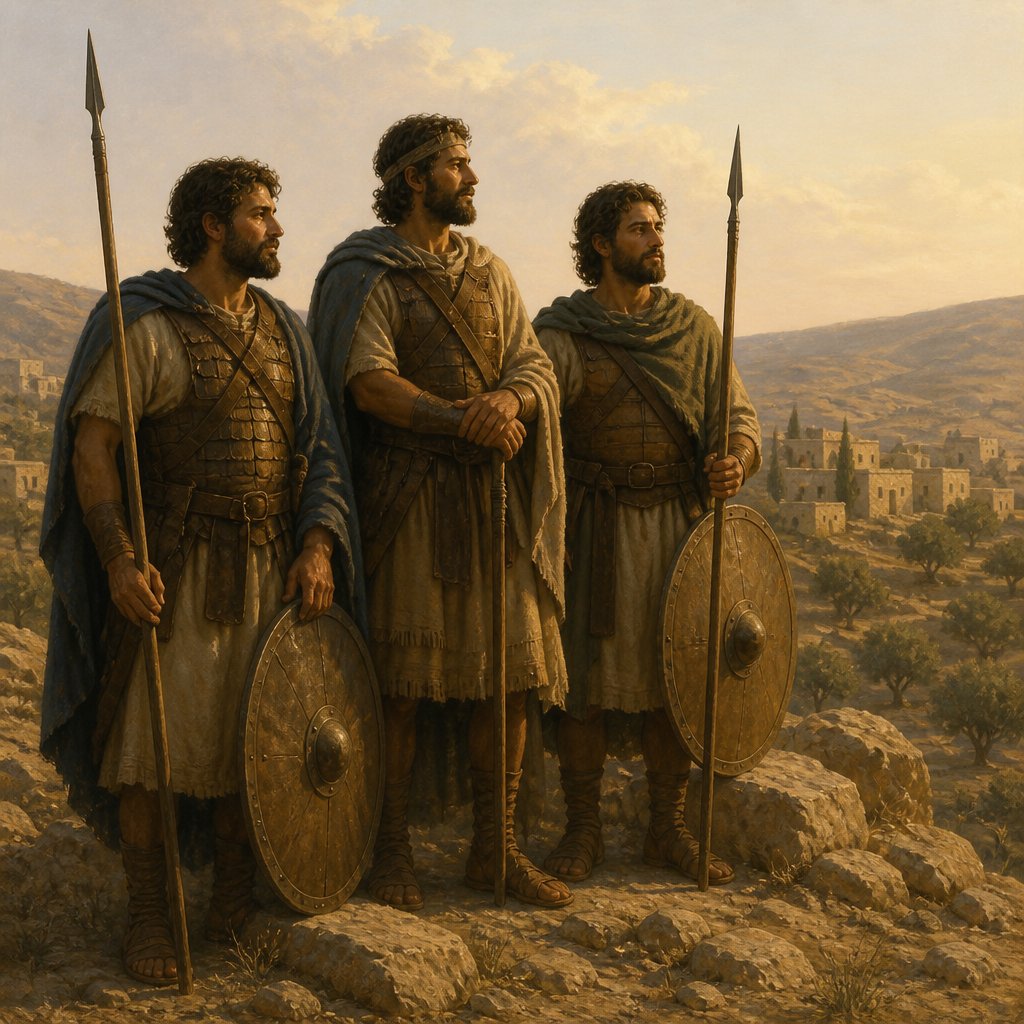
1 Chronicles 11:44 (KJV) - "Uzzia the Ashterathite, Shama and Jehiel the sons of Hothan the Aroerite,"
In order to fully understand the meaning and significance of 1 Chronicles 11:44, it is important to consider the broader context of the verse within the book of 1 Chronicles, as well as the historical and cultural context in which it was written. The book of 1 Chronicles is part of the Old Testament and is a historical account of the genealogy of the Israelites, as well as the reign and accomplishments of King David. The verse comes near the end of a long list of David's mighty men, who were known for their bravery and loyalty to the king.
In 1 Chronicles 11:44, we are introduced to three individuals: Uzzia the Ashterathite, Shama, and Jehiel the sons of Hothan the Aroerite. While this verse may seem unremarkable at first glance, it is important to consider the significance of each of these individuals within the broader narrative of 1 Chronicles, as well as the underlying themes and symbolism present in the verse.
One of the key themes that emerges from 1 Chronicles 11:44 is the idea of loyalty and faithfulness. Throughout the book of 1 Chronicles, King David is surrounded by a group of mighty and loyal men who are willing to fight and sacrifice for the king and the kingdom. These men exemplify the qualities of bravery, commitment, and unwavering loyalty, and their stories serve as a reminder of the importance of remaining faithful and true in the face of adversity. Uzzia, Shama, and Jehiel are just three examples of these faithful and valiant men who are remembered for their dedication to the king and the kingdom.
The verse also serves as a reminder of the diversity and unity within the kingdom of Israel. Uzzia is identified as an Ashterathite, which likely indicates that he was from the region of Ashterath, while Shama and Jehiel are described as the sons of Hothan the Aroerite, suggesting that they were from the region of Aroer. This diversity within the mighty men of David's army highlights the fact that the kingdom of Israel was made up of people from various regions and backgrounds, yet they were united in their commitment to serving the king and defending the kingdom. This message of unity and diversity is a timeless and important one, reminding readers of the value of coming together for a common purpose, despite differences in background or origin.
Furthermore, the mention of these individuals serves as a reminder of the importance of remembering and honoring the contributions of all individuals, no matter how seemingly small or insignificant. While Uzzia, Shama, and Jehiel may not be as well-known as some of the other mighty men mentioned in 1 Chronicles, their names are still recorded for posterity, serving as a reminder that every individual has a role to play in the grand narrative of history. This message is a powerful one, emphasizing the value of every individual and the importance of honoring and valuing the contributions of all members of society.
In addition to these themes, there is also symbolic significance present in the mention of these individuals. Throughout the Bible, names often carry symbolic meaning, and this may also be the case for Uzzia, Shama, and Jehiel. The name Uzzia means "the strength of the Lord," while Shama means "renowned" or "famous," and Jehiel means "God lives" or "whom God makes." These meanings may serve as a reminder of the source of the individuals' strength and resilience, as well as a reflection of the qualities that made them worthy of being included in the list of David's mighty men.
In conclusion, 1 Chronicles 11:44 may seem like a brief and unremarkable verse at first glance, but upon closer examination, it is clear that there is rich meaning and significance to be found within its words. The verse serves as a reminder of the importance of loyalty and faithfulness, the value of diversity and unity, and the significance of honoring the contributions of all individuals. It also carries symbolic meaning that adds depth to the narrative. Overall, the verse is a meaningful and important part of the larger story of King David and his mighty men, and it offers valuable lessons and insights that are still relevant and impactful today.
Get our apps


Artwork for 1 Chronicles 11:44

1 Chronicles 11:44 - "Uzzia the Ashterathite, Shama and Jehiel the sons of Hothan the Aroerite,"
"Uzzia the Ashterathite, Shama and Jehiel the sons of Hothan the Aroerite," - 1 Chronicles 11:44

1 Chronicles 1:44 - "And when Bela was dead, Jobab the son of Zerah of Bozrah reigned in his stead."

1 Chronicles 2:44 - "And Shema begat Raham, the father of Jorkoam: and Rekem begat Shammai."
1 Chronicles 6:44 - "And their brethren the sons of Merari stood on the left hand: Ethan the son of Kishi, the son of Abdi, the son of Malluch,"

1 Chronicles 9:44 - "And Azel had six sons, whose names are these, Azrikam, Bocheru, and Ishmael, and Sheariah, and Obadiah, and Hanan: these were the sons of Azel."
"And Shema begat Raham, the father of Jorkoam: and Rekem begat Shammai." - 1 Chronicles 2:44
"And when Bela was dead, Jobab the son of Zerah of Bozrah reigned in his stead." - 1 Chronicles 1:44

1 Chronicles 1:11 - "And Mizraim begat Ludim, and Anamim, and Lehabim, and Naphtuhim,"

1 Chronicles 11:29 - "Sibbecai the Hushathite, Ilai the Ahohite,"

1 Chronicles 12:11 - "Attai the sixth, Eliel the seventh,"

1 Chronicles 24:11 - "The ninth to Jeshua, the tenth to Shecaniah,"

1 Chronicles 11:40 - "Ira the Ithrite, Gareb the Ithrite,"

1 Chronicles 11:27 - "Shammoth the Harorite, Helez the Pelonite,"

1 Chronicles 11:36 - "Hepher the Mecherathite, Ahijah the Pelonite,"

1 Chronicles 11:47 - "Eliel, and Obed, and Jasiel the Mesobaite."

1 Chronicles 11:33 - "Azmaveth the Baharumite, Eliahba the Shaalbonite,"

1 Chronicles 8:11 - "And of Hushim he begat Abitub, and Elpaal."

1 Chronicles 11:43 - "Hanan the son of Maachah, and Joshaphat the Mithnite,"

1 Chronicles 11:32 - "Hurai of the brooks of Gaash, Abiel the Arbathite,"

1 Chronicles 11:41 - "Uriah the Hittite, Zabad the son of Ahlai,"

1 Chronicles 11:37 - "Hezro the Carmelite, Naarai the son of Ezbai,"

1 Chronicles 6:11 - "And Azariah begat Amariah, and Amariah begat Ahitub,"

1 Chronicles 11:30 - "Maharai the Netophathite, Heled the son of Baanah the Netophathite,"

1 Chronicles 2:11 - "And Nahshon begat Salma, and Salma begat Boaz,"

1 Chronicles 11:38 - "Joel the brother of Nathan, Mibhar the son of Haggeri,"

1 Chronicles 11:28 - "Ira the son of Ikkesh the Tekoite, Abiezer the Antothite,"

1 Chronicles 11:16 - "And David was then in the hold, and the Philistines' garrison was then at Beth-lehem."

1 Chronicles 11:45 - "Jediael the son of Shimri, and Joha his brother, the Tizite,"

1 Chronicles 11:34 - "The sons of Hashem the Gizonite, Jonathan the son of Shage the Hararite,"