What does 1 Chronicles 12:9 mean?
“Ezer the first, Obadiah the second, Eliab the third,” — 1 Chronicles 12:9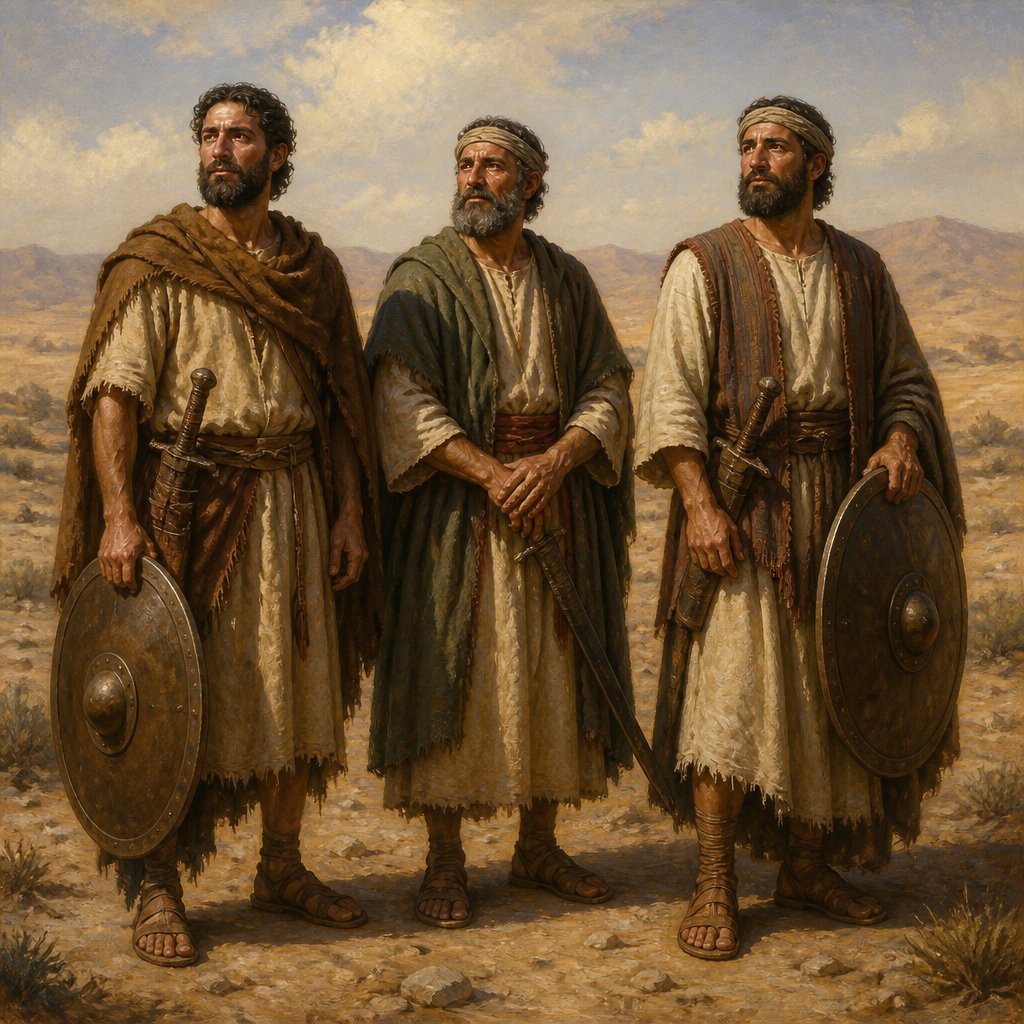
The Bible verse 1 Chronicles 12:9 in the King James Version (KJV) reads: "Ezer the first, Obadiah the second, Eliab the third."
This verse is part of a longer passage that describes the various divisions of warriors who came to David at Hebron to turn his kingdom over to him, as Saul's reign in Israel came to a close. The men mentioned in this verse were leaders of divisions of warriors from the tribe of Benjamin who came to pledge their allegiance to David. These men were notable for their military skills and prowess, and their support was essential for David as he sought to establish and secure his kingdom.
To fully understand the meaning and significance of this verse, it is important to consider its context within the larger narrative of 1 Chronicles. The book of 1 Chronicles is part of the historical literature of the Old Testament, and it focuses on the history of Israel, particularly the reign of King David and the establishment of the Davidic dynasty. In the verses leading up to 1 Chronicles 12:9, the author lists the various groups of warriors who came to support David, detailing the size of each group and the names of their leaders. These verses underscore the military and political acumen of David as he consolidated his reign and the loyalty of his subjects.
The mention of Ezer, Obadiah, and Eliab in this verse may seem minimal and insignificant at first glance, but it is important to note that these men played a crucial role in the establishment of David's kingdom. Their leadership and the allegiance of their divisions of warriors contributed to David's strength and authority as king. This verse serves as a reminder of the diverse support that David received from various tribes and clans within Israel, symbolizing the unity and solidarity that was necessary for the success of his reign.
Furthermore, the names of these three leaders may also hold symbolic significance within the larger biblical narrative. Ezer, which means "help" or "aid," may allude to the assistance and support that these men provided to David in his time of need. Obadiah, whose name means "servant of Yahweh," could symbolize the devotion and loyalty that these men had toward God and His chosen king. Eliab, whose name means "God is father," reflects the acknowledgment of God as the ultimate authority and source of strength in the establishment of David's kingdom.
In a broader theological sense, this verse also points to the larger theme of divine providence and the fulfillment of God's promises. The support that David received from these warriors was part of God's plan to establish David as the rightful king of Israel, fulfilling the covenant that God had made with David and his descendants. The men listed in this verse were instrumental in God's unfolding plan for Israel, and their actions were significant in the larger redemptive history of God's people.
In conclusion, 1 Chronicles 12:9, though short and seemingly unremarkable, carries important themes of unity, strength, and divine providence within the larger narrative of David's reign. The leaders mentioned in this verse played a crucial role in establishing David's kingdom, and their support highlights the divine orchestration of events in the Old Testament. Their names also hold symbolic significance, reflecting themes of assistance, loyalty, and acknowledgment of God's authority. As with all biblical texts, a deeper exploration of the historical and cultural context, as well as the broader theological themes, enriches our understanding of the significance of this verse within the biblical narrative.
Get our apps


Artwork for 1 Chronicles 12:9

1 Chronicles 12:9 - "Ezer the first, Obadiah the second, Eliab the third,"
"Ezer the first, Obadiah the second, Eliab the third," - 1 Chronicles 12:9
1 Chronicles 9:12 - "And Adaiah the son of Jeroham, the son of Pashur, the son of Malchijah, and Maasiai the son of Adiel, the son of Jahzerah, the son of Meshullam, the son of Meshillemith, the son of Immer;"

1 chronicles 12:8

1 Chronicles 12:12 - "Johanan the eighth, Elzabad the ninth,"

1 Chronicles 1:12 - "And Pathrusim, and Casluhim, (of whom came the Philistines,) and Caphthorim."

1 Chronicles 12:10 - "Mishmannah the fourth, Jeremiah the fifth,"

1 Chronicles 12:13 - "Jeremiah the tenth, Machbanai the eleventh."

1 Chronicles 12:11 - "Attai the sixth, Eliel the seventh,"

1 Chronicles 9:37 - "And Gedor, and Ahio, and Zechariah, and Mikloth."

1 Chronicles 9:10 - "¶ And of the priests; Jedaiah, and Jehoiarib, and Jachin,"

1 Chronicles 24:12 - "The eleventh to Eliashib, the twelfth to Jakim,"

1 Chronicles 24:9 - "The fifth to Malchijah, the sixth to Mijamin,"

"Johanan the eighth, Elzabad the ninth," - 1 Chronicles 12:12

1 Chronicles 12:7 - "And Joelah, and Zebadiah, the sons of Jeroham of Gedor."

1 Chronicles 9:5 - "And of the Shilonites; Asaiah the firstborn, and his sons."

1 Chronicles 6:12 - "And Ahitub begat Zadok, and Zadok begat Shallum,"

1 Chronicles 12:26 - "Of the children of Levi four thousand and six hundred."

1 Chronicles 12:6 - "Elkanah, and Jesiah, and Azareel, and Joezer, and Jashobeam, the Korhites,"

Revelation 12:3-9

1 Chronicles 9:30 - "And some of the sons of the priests made the ointment of the spices."

1 Chronicles 6:9 - "And Ahimaaz begat Azariah, and Azariah begat Johanan,"

1 Chronicles 12:5 - "Eluzai, and Jerimoth, and Bealiah, and Shemariah, and Shephatiah the Haruphite,"

1 Chronicles 2:12 - "And Boaz begat Obed, and Obed begat Jesse,"

1 Chronicles 14:9 - "And the Philistines came and spread themselves in the valley of Rephaim."

1 Chronicles 5:12 - "Joel the chief, and Shapham the next, and Jaanai, and Shaphat in Bashan."

1 Chronicles 12:16 - "And there came of the children of Benjamin and Judah to the hold unto David."

1 Chronicles 23:12 - "¶ The sons of Kohath; Amram, Izhar, Hebron, and Uzziel, four."

1 Chronicles 1:9 - "And the sons of Cush; Seba, and Havilah, and Sabta, and Raamah, and Sabtecha. And the sons of Raamah; Sheba, and Dedan."

"Mishmannah the fourth, Jeremiah the fifth," - 1 Chronicles 12:10