What does 1 Chronicles 16:3 mean?
“And he dealt to every one of Israel, both man and woman, to every one a loaf of bread, and a good piece of flesh, and a flagon of wine.” — 1 Chronicles 16:3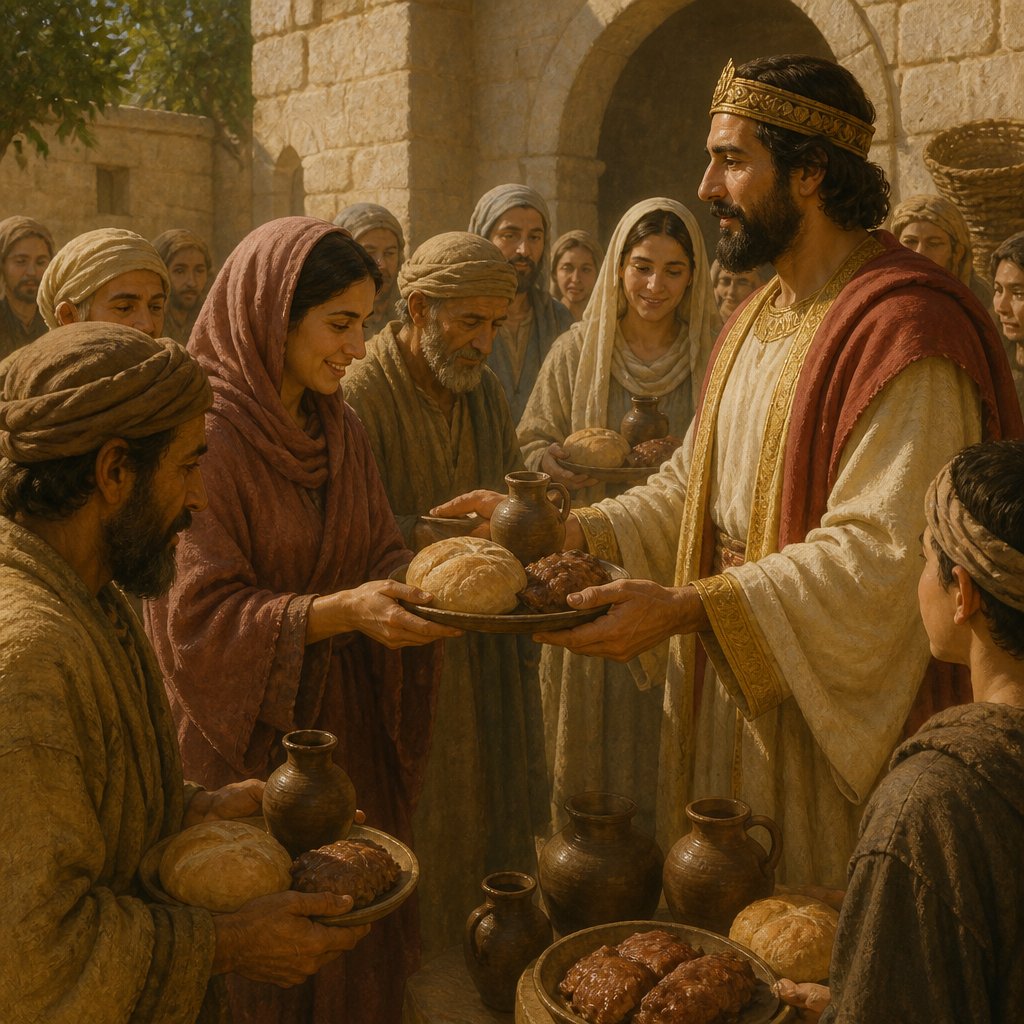
1 Chronicles 16:3 (KJV): "And he dealt to every one of Israel, both man and woman, to every one a loaf of bread, and a good piece of flesh, and a flagon of wine."
The book of 1 Chronicles is a historical account of the lineage of King David and the establishment of Jerusalem as the center of worship for the Israelites. This particular verse comes from a passage where David organizes a great feast to celebrate the return of the Ark of the Covenant to Jerusalem. He appoints Asaph, a Levite, to lead the musicians in praising the Lord with instruments such as harps, lyres, and cymbals. The verse states that David provided a generous portion of food and wine for all the people of Israel, both men and women, to enjoy the feast.
The significance of this verse lies in its portrayal of David as a generous and benevolent king, as well as the importance of communal worship and celebration in the life of the Israelite community. It also sheds light on David's devotion to the Lord and his desire to honor and praise God through the act of feasting and merrymaking.
The act of providing a loaf of bread, a good piece of flesh, and a flagon of wine to every man and woman conveys the idea of abundance and lavishness. It symbolizes the abundance of blessings that God has bestowed upon the Israelites and the overflowing generosity of King David as a leader. The provision of food and wine for all the people also reinforces the idea of communal unity and equality, as everyone, regardless of their status or gender, is invited to partake in the feast and rejoice together.
Furthermore, the choice of food items - bread, flesh, and wine - carries symbolic significance. Bread is often used in the Bible to symbolize sustenance and nourishment, both physical and spiritual. It represents the basic necessity of life and also alludes to the spiritual nourishment received through God's word. The "good piece of flesh" symbolizes the abundance and richness of God's provisions, as well as the joy and satisfaction that come from partaking in God's blessings. The flagon of wine, on the other hand, is a symbol of celebration and joy. In the Old Testament, wine is often associated with feasting, offering, and worship, and it symbolizes the joy and gladness that comes from knowing and praising God.
In a broader context, this verse underscores the importance of gratitude and celebration in the life of believers. It emphasizes the act of giving thanks and rejoicing in the presence of God, as well as the significance of communal worship and fellowship. It also highlights the role of leaders in fostering a spirit of generosity and inclusivity within the community, regardless of social or gender differences.
In conclusion, 1 Chronicles 16:3 captures the spirit of abundance, generosity, and celebration within the context of communal worship. Through the provision of food and wine for all the people, King David exemplifies the qualities of a benevolent leader and a devout worshipper of God. The verse also conveys powerful symbolism through the choice of food items, emphasizing the themes of sustenance, abundance, joy, and unity. As believers, we can draw inspiration from this passage to cultivate a spirit of gratitude, generosity, and celebration in our own lives, both individually and within the community of believers.
Get our apps


Artwork for 1 Chronicles 16:3

1 Chronicles 16:3 - "And he dealt to every one of Israel, both man and woman, to every one a loaf of bread, and a good piece of flesh, and a flagon of wine."
"And he dealt to every one of Israel, both man and woman, to every one a loaf of bread, and a good piece of flesh, and a flagon of wine." - 1 Chronicles 16:3

1 Chronicles 3:16 - "And the sons of Jehoiakim: Jeconiah his son, Zedekiah his son."
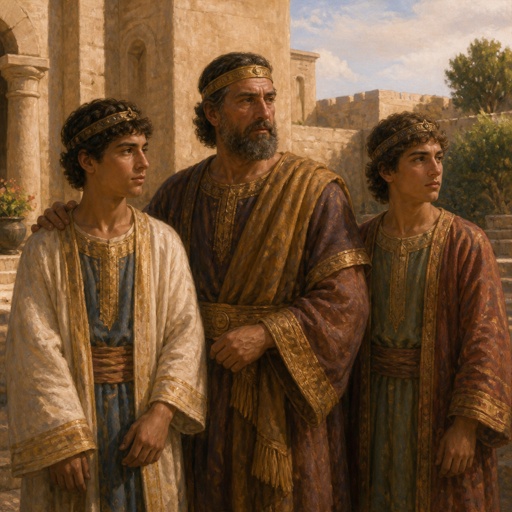
"And the sons of Jehoiakim: Jeconiah his son, Zedekiah his son." - 1 Chronicles 3:16

1 Chronicles 1:16 - "And the Arvadite, and the Zemarite, and the Hamathite."

1 Chronicles 16:16 - "Even of the covenant which he made with Abraham, and of his oath unto Isaac;"

1 Chronicles 1:3 - "Henoch, Methuselah, Lamech,"

1 Chronicles 24:16 - "The nineteenth to Pethahiah, the twentieth to Jehezekel,"

1 Chronicles 23:16 - "Of the sons of Gershom, Shebuel was the chief."

1 Chronicles 6:16 - "¶ The sons of Levi; Gershom, Kohath, and Merari."

1 Chronicles 8:16 - "And Michael, and Ispah, and Joha, the sons of Beriah;"

1 corinthians 3:16-17

1 corinthians 3:16-17

"And the Arvadite, and the Zemarite, and the Hamathite." - 1 Chronicles 1:16

1 Chronicles 11:16 - "And David was then in the hold, and the Philistines' garrison was then at Beth-lehem."

1 corinthians 3:16-17

1 Chronicles 4:16 - "And the sons of Jehaleleel; Ziph, and Ziphah, Tiria, and Asareel."

Joshua 3:16

Genesis 3:16

John 3:16

2 Chronicles 3:16 - "And he made chains, as in the oracle, and put them on the heads of the pillars; and made an hundred pomegranates, and put them on the chains."

John 3:16

1 Chronicles 3:3 - "The fifth, Shephatiah of Abital: the sixth, Ithream by Eglah his wife."

1 Chronicles 16:19 - "When ye were but few, even a few, and strangers in it."

John 3:16

John 3:16

John 3-16

John 3:16

John 3:16

1 Chronicles 12:16 - "And there came of the children of Benjamin and Judah to the hold unto David."