What does 1 Chronicles 18:12 mean?
“Moreover Abishai the son of Zeruiah slew of the Edomites in the valley of salt eighteen thousand.” — 1 Chronicles 18:12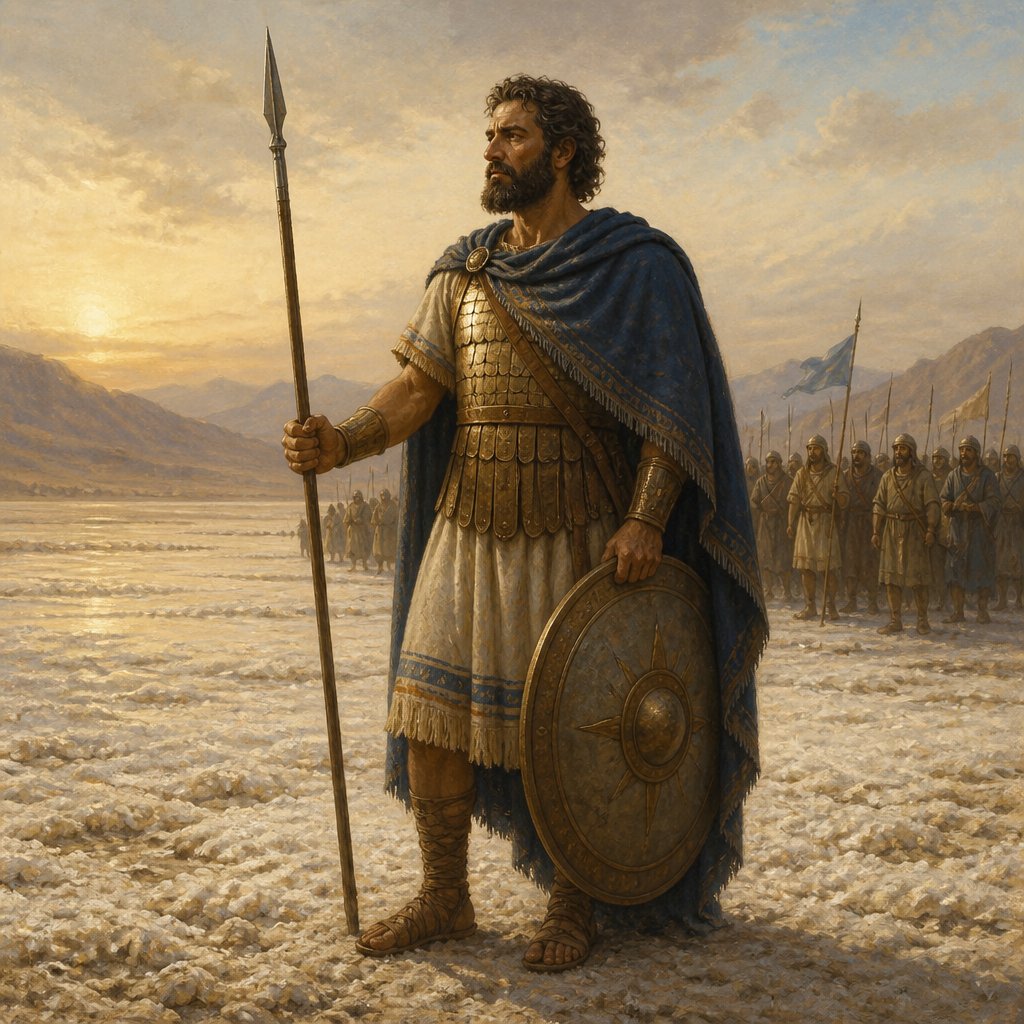
1 Chronicles 18:12 (KJV) states, "Moreover Abishai the son of Zeruiah slew of the Edomites in the Valley of Salt eighteen thousand."
This verse is a part of the historical account of David's reign as king of Israel. It records the military victories and conquests that David achieved during his reign. In order to fully understand the meaning and significance of this verse, it is important to examine the context in which it is situated within the larger narrative of 1 Chronicles.
The book of 1 Chronicles is essentially a historical record of the genealogy and reign of King David. It traces the lineage of Israel's kings from the time of Adam to the time of the Babylonian exile. It also provides a detailed account of David's military conquests, his organization of the priesthood and the Levites, and his preparation for the building of the Temple in Jerusalem.
In 1 Chronicles 18, the chapter begins with a description of David's military campaigns against various neighboring nations, including the Philistines, Moabites, and Syrians. The verse in question, 1 Chronicles 18:12, specifically mentions the defeat of the Edomites in the Valley of Salt. The Valley of Salt is thought to be located in the southern region of Edom, near the Dead Sea. It was a strategic area for trade and military control, making it a crucial location for David to conquer as he sought to expand and secure his kingdom.
The significance of Abishai's role in this victory cannot be overstated. Abishai was the nephew of David and the son of David's sister Zeruiah. He was also a prominent military leader in David's army, known for his bravery and prowess in battle. In this verse, Abishai is credited with slaying 18,000 Edomites in the Valley of Salt, a feat that demonstrates his skill and valor as a warrior.
The symbolism and themes present in this verse are rooted in the larger biblical themes of conquest, divine favor, and the establishment of the Davidic kingdom. David's military successes were often attributed to the favor and guidance of God, and his victories served to solidify his reign as a powerful and successful king. The defeat of the Edomites in the Valley of Salt was a tangible demonstration of God's faithfulness to David and his chosen people, as well as a fulfillment of the promises made to the nation of Israel.
Furthermore, the verse serves as a testament to the importance of courageous and skilled leaders like Abishai, who played a crucial role in fulfilling God's purposes for the nation of Israel. The valor and heroism displayed by Abishai in this battle exemplify the biblical virtues of courage, loyalty, and selflessness in service to God and his chosen leaders.
In conclusion, 1 Chronicles 18:12 is a significant verse within the larger narrative of David's reign, highlighting the military conquests and divine favor that characterized his rule. The verse symbolizes the triumph of God's chosen people over their enemies, as well as the importance of courageous and skilled leaders in fulfilling God's purposes. It also serves as a powerful reminder of the faithfulness of God in fulfilling his promises and establishing his kingdom on earth.
Get our apps


Artwork for 1 Chronicles 18:12

1 Chronicles 18:12 - "Moreover Abishai the son of Zeruiah slew of the Edomites in the valley of salt eighteen thousand."
"Moreover Abishai the son of Zeruiah slew of the Edomites in the valley of salt eighteen thousand." - 1 Chronicles 18:12

1 Chronicles 12:12 - "Johanan the eighth, Elzabad the ninth,"

1 Chronicles 1:18 - "And Arphaxad begat Shelah, and Shelah begat Eber."

Acts 18:12

1 Chronicles 23:18 - "Of the sons of Izhar; Shelomith the chief."

1 Chronicles 1:12 - "And Pathrusim, and Casluhim, (of whom came the Philistines,) and Caphthorim."

1 chronicles 12:8

Psalm 10:12-18

1 Chronicles 8:18 - "Ishmerai also, and Jezliah, and Jobab, the sons of Elpaal;"

1 Chronicles 24:18 - "The three and twentieth to Delaiah, the four and twentieth to Maaziah."

1 Chronicles 26:18 - "At Parbar westward, four at the causeway, and two at Parbar."

1 Chronicles 12:11 - "Attai the sixth, Eliel the seventh,"

1 Chronicles 12:10 - "Mishmannah the fourth, Jeremiah the fifth,"

1 Chronicles 12:13 - "Jeremiah the tenth, Machbanai the eleventh."

1 Chronicles 24:12 - "The eleventh to Eliashib, the twelfth to Jakim,"

1 Chronicles 3:18 - "Malchiram also, and Pedaiah, and Shenazar, Jecamiah, Hoshama, and Nedabiah."

1 Chronicles 7:18 - "And his sister Hammoleketh bare Ishod, and Abiezer, and Mahalah."

1 Chronicles 6:18 - "And the sons of Kohath were, Amram, and Izhar, and Hebron, and Uzziel."

"Johanan the eighth, Elzabad the ninth," - 1 Chronicles 12:12

1 Chronicles 12:7 - "And Joelah, and Zebadiah, the sons of Jeroham of Gedor."

1 Chronicles 12:18 - "Then the spirit came upon Amasai, who was chief of the captains, and he said, Thine are we, David, and on thy side, thou son of Jesse: peace, peace be unto thee, and peace be to thine helpers; for thy God helpeth thee. Then David received them, and made them captains of the band."

1 Chronicles 6:12 - "And Ahitub begat Zadok, and Zadok begat Shallum,"

1 Chronicles 12:26 - "Of the children of Levi four thousand and six hundred."

1 Chronicles 12:9 - "Ezer the first, Obadiah the second, Eliab the third,"

1 Chronicles 12:6 - "Elkanah, and Jesiah, and Azareel, and Joezer, and Jashobeam, the Korhites,"

1 Chronicles 12:5 - "Eluzai, and Jerimoth, and Bealiah, and Shemariah, and Shephatiah the Haruphite,"

1 Chronicles 2:12 - "And Boaz begat Obed, and Obed begat Jesse,"

1 Chronicles 27:18 - "Of Judah, Elihu, one of the brethren of David: of Issachar, Omri the son of Michael:"

1 Chronicles 25:18 - "The eleventh to Azareel, he, his sons, and his brethren, were twelve:"