What does 1 Chronicles 19:3 mean?
“But the princes of the children of Ammon said to Hanun, Thinkest thou that David doth honour thy father, that he hath sent comforters unto thee? are not his servants come unto thee for to search, and to overthrow, and to spy out the land?” — 1 Chronicles 19:3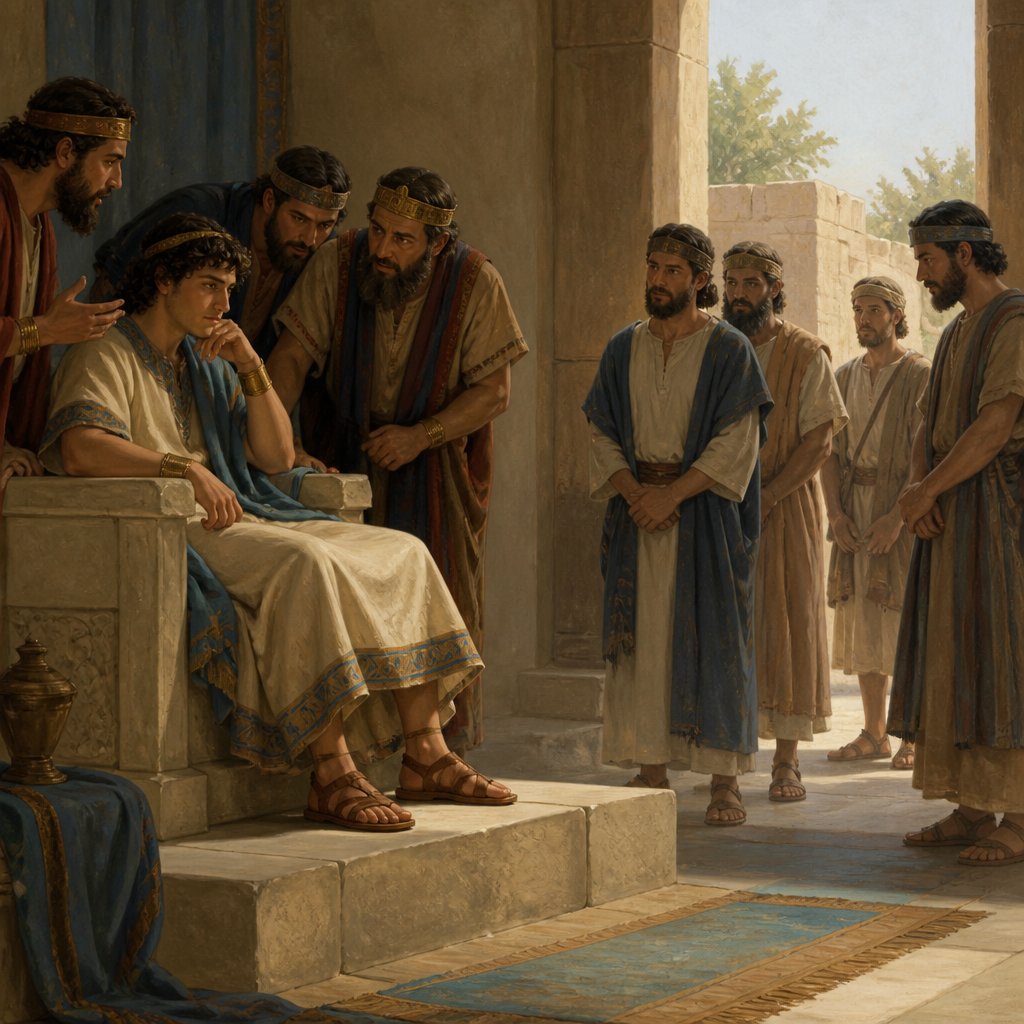
The Bible verse 1 Chronicles 19:3 in the King James Version (KJV) states, "But the princes of the children of Ammon said to Hanun, Thinkest thou that David doth honor thy father, that he hath sent comforters unto thee? are not his servants come unto thee for to search, and to overthrow, and to spy out the land?"
This verse is part of a larger narrative found in the Old Testament book of 1 Chronicles. It occurs in the context of a conflict between the Ammonites and the Israelites. The Ammonites had been defeated in battle by King David's father, Nahash, and when Nahash died, David sent messengers to express his condolences to Nahash's son, Hanun. However, the princes of the children of Ammon accused David of ulterior motives, believing that he had sent the messengers as spies rather than as comforters.
This verse reveals a few important themes. One of the key themes is the importance of communication and understanding in avoiding conflict. The misunderstanding between the Ammonites and the Israelites led to a heated conflict that could have been avoided if there had been clear communication and trust between the two parties. This serves as a reminder for us to seek understanding and to consider the intentions of others before jumping to conclusions.
Another important theme in this verse is the idea of honor and respect. The princes of the children of Ammon questioned whether David truly honored Hanun's father by sending messengers. This raises the question of what it means to show honor and respect, and it challenges us to consider how our actions are perceived by others. In a broader sense, this theme encourages us to think about how we treat others and the importance of showing respect and understanding in our interactions.
The context of this verse also provides valuable insight into the historical and political dynamics of the time. It gives us a glimpse into the power struggles and tensions between different nations and serves as a reminder of the complexities of international relations. This historical context helps to deepen our understanding of the broader themes of the passage and provides valuable insight into the challenges and conflicts faced by the people of that time.
Symbolism can also be found in this verse. The messengers sent by David can be seen as symbolic of peace and reconciliation. However, the mistrust and suspicion of the Ammonites turned a gesture of goodwill into a source of conflict. This serves as a reminder of the fragility of peace and the importance of trust and understanding in maintaining harmonious relationships.
In conclusion, 1 Chronicles 19:3 from the King James Version presents a significant narrative that explores themes of communication, honor, and understanding, while also providing valuable historical and political context. It challenges us to consider our own interactions with others and serves as a reminder of the complexities of human relationships. This verse not only provides spiritual guidance but also offers timeless wisdom that is relevant to our daily lives.
Get our apps


Artwork for 1 Chronicles 19:3

1 Chronicles 19:3 - "But the princes of the children of Ammon said to Hanun, Thinkest thou that David doth honour thy father, that he hath sent comforters unto thee? are not his servants come unto thee for to search, and to overthrow, and to spy out the land?"
"But the princes of the children of Ammon said to Hanun, Thinkest thou that David doth honour thy father, that he hath sent comforters unto thee? are not his servants come unto thee for to search, and to overthrow, and to spy out the land?" - 1 Chronicles 19:3

1 Chronicles 3:19 - "And the sons of Pedaiah were, Zerubbabel, and Shimei: and the sons of Zerubbabel; Meshullam, and Hananiah, and Shelomith their sister:"

1 Chronicles 8:19 - "And Jakim, and Zichri, and Zabdi,"

"And the sons of Pedaiah were, Zerubbabel, and Shimei: and the sons of Zerubbabel; Meshullam, and Hananiah, and Shelomith their sister:" - 1 Chronicles 3:19

2 Chronicles 19:3 - "Nevertheless there are good things found in thee, in that thou hast taken away the groves out of the land, and hast prepared thine heart to seek God."

1 Chronicles 1:3 - "Henoch, Methuselah, Lamech,"

1 Chronicles 5:19 - "And they made war with the Hagarites, with Jetur, and Nephish, and Nodab."

1 Cor 3:19

Psalm 19:3

1 Chronicles 16:19 - "When ye were but few, even a few, and strangers in it."

1 Chronicles 7:19 - "And the sons of Shemidah were, Ahian, and Shechem, and Likhi, and Aniam."

1 Chronicles 26:19 - "These are the divisions of the porters among the sons of Kore, and among the sons of Merari."

1 Chronicles 6:19 - "The sons of Merari; Mahli, and Mushi. And these are the families of the Levites according to their fathers."

1 Chronicles 27:19 - "Of Zebulun, Ishmaiah the son of Obadiah: of Naphtali, Jerimoth the son of Azriel:"

2 Chronicles 19:1 - "And Jehoshaphat the king of Judah returned to his house in peace to Jerusalem."

1 Chronicles 3:3 - "The fifth, Shephatiah of Abital: the sixth, Ithream by Eglah his wife."

John 19:1-3

Psalm 19:3-4

1 Chronicles 3:7 - "And Nogah, and Nepheg, and Japhia,"

1 Chronicles 25:19 - "The twelfth to Hashabiah, he, his sons, and his brethren, were twelve:"

1 Chronicles 19:1 - "Now it came to pass after this, that Nahash the king of the children of Ammon died, and his son reigned in his stead."

"And Jakim, and Zichri, and Zabdi," - 1 Chronicles 8:19

1 Chronicles 3:8 - "And Elishama, and Eliada, and Eliphelet, nine."

1 Chronicles 15:19 - "So the singers, Heman, Asaph, and Ethan, were appointed to sound with cymbals of brass;"

1 Chronicles 19:8 - "And when David heard of it, he sent Joab, and all the host of the mighty men."

1 Chronicles 21:19 - "And David went up at the saying of Gad, which he spake in the name of the LORD."

1 Chronicles 3:6 - "Ibhar also, and Elishama, and Eliphelet,"

1 Chronicles 23:19 - "Of the sons of Hebron; Jeriah the first, Amariah the second, Jahaziel the third, and Jekameam the fourth."
1 Samuel 3:19-21