What does 1 Chronicles 19:8 mean?
“And when David heard of it, he sent Joab, and all the host of the mighty men.” — 1 Chronicles 19:8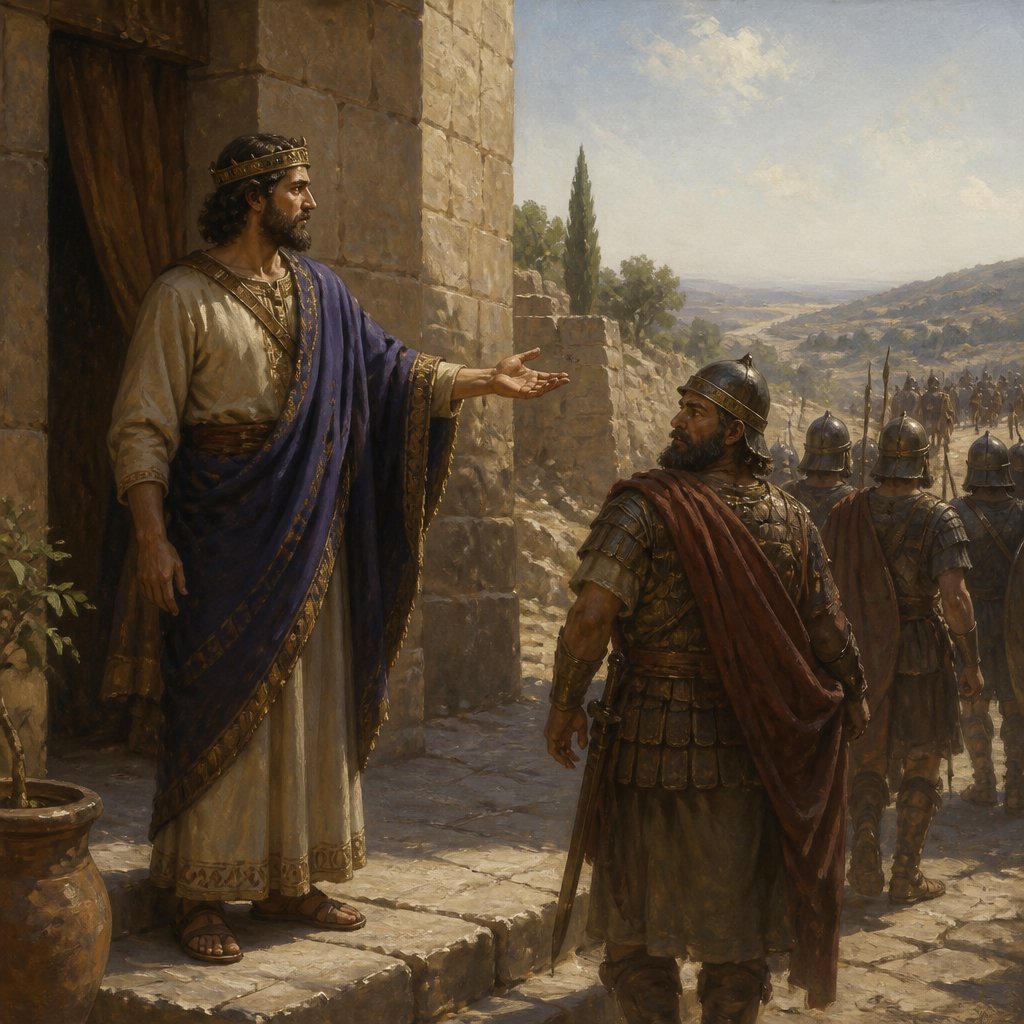
The verse 1 Chronicles 19:8 in the King James Version reads: "And when David heard of it, he sent Joab, and all the host of the mighty men."
This verse is a part of a larger passage that describes the conflict between the Ammonites and the people of Israel during the time of King David. The Ammonites had hired mercenaries from the Syrians to fight against Israel, which posed a significant threat to David and his kingdom. When David heard of this, he took action by sending his army commander Joab and all his mighty men to confront the Ammonites.
This verse is significant in several ways, and its context sheds light on its deeper meaning and implications. Firstly, it highlights David's leadership and decisiveness as a king. Upon learning of the potential threat to his kingdom, David did not hesitate to take action. He immediately mobilized his army and entrusted Joab, a trusted and capable commander, to lead the military campaign. This demonstrates David's commitment to protect and defend his people, as well as his strategic acumen as a military leader.
The verse also underscores the theme of warfare and conflict, which is a recurring motif throughout the Old Testament. The ancient Israelites often found themselves engaged in battles and struggles against their enemies, and these conflicts were not merely physical but also spiritual and ideological. In this particular instance, the conflict with the Ammonites and the Syrians represents the ongoing struggle for power and control in the region. It reflects the larger geopolitical dynamics of the ancient Near East and the constant threat of aggression and conquest faced by the Israelites.
Furthermore, the verse speaks to the theme of trust and loyalty. David's decision to send Joab and the mighty men reveals his trust in their abilities and his reliance on their loyalty and dedication to the kingdom. It emphasizes the importance of solidarity and unity in the face of external threats, as well as the value of having capable and steadfast allies in times of crisis. This theme of trust and loyalty is echoed in other parts of the Bible, particularly in the relationships between rulers and their advisors, and between God and his chosen people.
Symbolically, the verse can be seen as a metaphor for the ongoing spiritual warfare and moral struggles that characterize human existence. The conflict between the Israelites and their adversaries reflects the universal battle between good and evil, righteousness and sin, which plays out on both individual and collective levels. The figure of David, as a righteous and courageous king, can be seen as a symbol of spiritual leadership and moral fortitude, while Joab and the mighty men represent the faithful and valiant warriors who fight on behalf of righteousness and justice.
In conclusion, 1 Chronicles 19:8 is a verse that encapsulates the themes of leadership, warfare, trust, and loyalty within its historical and cultural context. Its significance extends beyond the specific events described in the passage, offering broader insights into the human experience and the timeless struggle for righteousness and justice. By exploring its deeper meanings and implications, we can gain a deeper understanding of the rich symbolism and enduring relevance of this biblical verse.
Get our apps


Artwork for 1 Chronicles 19:8

1 Chronicles 19:8 - "And when David heard of it, he sent Joab, and all the host of the mighty men."
"And when David heard of it, he sent Joab, and all the host of the mighty men." - 1 Chronicles 19:8

1 Chronicles 8:19 - "And Jakim, and Zichri, and Zabdi,"

"And Jakim, and Zichri, and Zabdi," - 1 Chronicles 8:19

Romans 8:19

Romans 8:19

Proverbs 19:8

Proverbs 19:8

1 Chronicles 1:8 - "¶ The sons of Ham; Cush, and Mizraim, Put, and Canaan."

1 Chronicles 5:19 - "And they made war with the Hagarites, with Jetur, and Nephish, and Nodab."

1 chronicles 12:8

1 King 19:8

1 Chronicles 8:31 - "And Gedor, and Ahio, and Zacher."

1 Chronicles 8:20 - "And Elienai, and Zilthai, and Eliel,"

1 Chronicles 8:24 - "And Hananiah, and Elam, and Antothijah,"
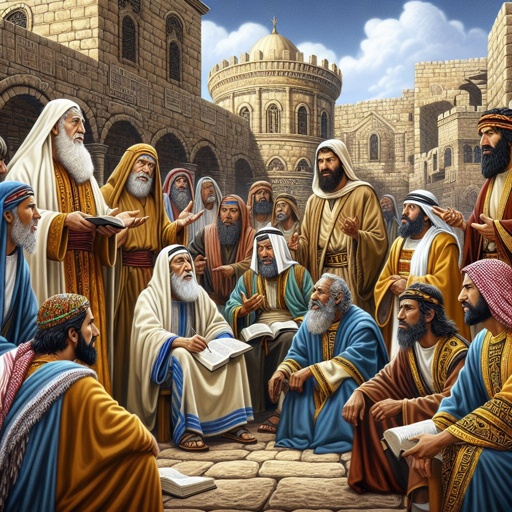
2 Chronicles 19:8 - "¶ Moreover in Jerusalem did Jehoshaphat set of the Levites, and of the priests, and of the chief of the fathers of Israel, for the judgment of the LORD, and for controversies, when they returned to Jerusalem."

1 Chronicles 8:5 - "And Gera, and Shephuphan, and Huram."

1 Chronicles 8:26 - "And Shamsherai, and Shehariah, and Athaliah,"

1 Chronicles 8:22 - "And Ishpan, and Heber, and Eliel,"

1 Chronicles 8:14 - "And Ahio, Shashak, and Jeremoth,"

1 Chronicles 2:8 - "And the sons of Ethan; Azariah."

1 Chronicles 8:23 - "And Abdon, and Zichri, and Hanan,"

1 Chronicles 8:4 - "And Abishua, and Naaman, and Ahoah,"

1 Chronicles 8:15 - "And Zebadiah, and Arad, and Ader,"

1 Chronicles 16:19 - "When ye were but few, even a few, and strangers in it."

1 Chronicles 7:19 - "And the sons of Shemidah were, Ahian, and Shechem, and Likhi, and Aniam."

1 Chronicles 8:2 - "Nohah the fourth, and Rapha the fifth."

1 Chronicles 3:8 - "And Elishama, and Eliada, and Eliphelet, nine."

1 Chronicles 8:17 - "And Zebadiah, and Meshullam, and Hezeki, and Heber,"

1 Chronicles 24:8 - "The third to Harim, the fourth to Seorim,"