What does 1 Chronicles 2:29 mean?
“And the name of the wife of Abishur was Abihail, and she bare him Ahban, and Molid.” — 1 Chronicles 2:29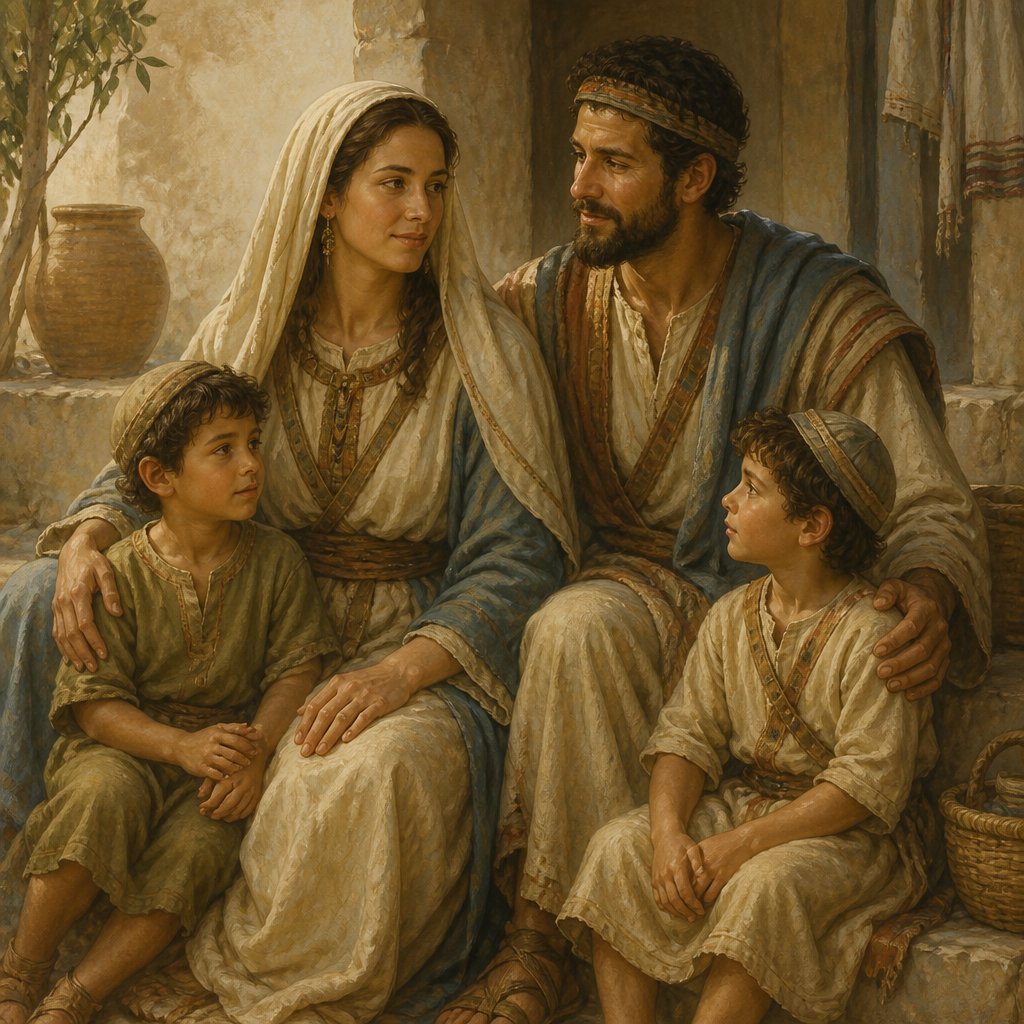
1 Chronicles 2:29 (KJV) reads, "And the name of the wife of Abishur was Abihail, and she bare him Ahban, and Molid." This verse seems straightforward at first glance, simply listing the family lineage of Abishur. However, when we dig deeper and consider the themes, context, and symbolism, we can find a deeper meaning and significance within this verse.
The book of 1 Chronicles is part of the Old Testament and is a historical record of the genealogy of the tribes of Israel. It serves to document the lineages and history of Israel, tracing the descendants of a chosen people from the first man, Adam, to the time of the Babylonian exile. This verse specifically falls within a section that details the descendants of Judah, one of the 12 tribes of Israel.
In this particular verse, we are introduced to Abishur, whose wife is named Abihail. They are the parents of two sons, Ahban and Molid. This may seem like a simple, factual account of a family tree, but there are several themes and lessons that we can draw from it.
One of the key themes in this verse is the importance of family and lineage. In ancient Israelite culture, lineage was of utmost importance. It determined one's inheritance, social standing, and tribal affiliation. The genealogical records were meticulously kept and passed down from generation to generation. This verse highlights the continuation of the family line through the birth of Ahban and Molid, ensuring the legacy and perpetuity of the family name.
Another theme that can be derived from this verse is the faithfulness of God in fulfilling His promises. Throughout the Bible, we see the fulfillment of God's promises through the births of children, particularly in the lineage of Jesus Christ. The mention of the birth of Ahban and Molid in this verse may seem insignificant, but it is a reminder of God's faithfulness in preserving and multiplying the descendants of His chosen people.
The context of this verse within the larger narrative of 1 Chronicles is also significant. The book of 1 Chronicles was written after the Babylonian exile, as a way of preserving the history and heritage of the Israelites. It was a way of reconnecting with their roots and lineage, and reinforcing their identity as the people of God. The meticulous recording of genealogies was a way of affirming their place in history and their connection to the promises of God.
In terms of symbolism, the names of the individuals mentioned in this verse are also noteworthy. In Hebrew culture, names often carried significant meaning and symbolism. The name "Abishur" means "Father of the wall" or "Father of the fortification," which could symbolize strength and protection. "Abihail" means "My father is might," which could suggest divine strength and support. The names "Ahban" and "Molid" do not have clear meanings, but their significance lies in their association with the lineage of Abishur and their role in continuing the family line.
Ultimately, 1 Chronicles 2:29 may appear as a simple record of a family lineage, but upon closer examination, it reveals deeper themes of faithfulness, identity, and the importance of family. It serves as a reminder of the significance of our own family histories and the faithfulness of God in preserving and fulfilling His promises throughout generations.
Get our apps


Artwork for 1 Chronicles 2:29

1 Chronicles 2:29 - "And the name of the wife of Abishur was Abihail, and she bare him Ahban, and Molid."

"And the name of the wife of Abishur was Abihail, and she bare him Ahban, and Molid." - 1 Chronicles 2:29

1 Chronicles 2:9 - "The sons also of Hezron, that were born unto him; Jerahmeel, and Ram, and Chelubai."
"The sons also of Hezron, that were born unto him; Jerahmeel, and Ram, and Chelubai." - 1 Chronicles 2:9

1 Chronicles 4:29 - "And at Bilhah, and at Ezem, and at Tolad,"

2 Chronicles 29:29 - "And when they had made an end of offering, the king and all that were present with him bowed themselves, and worshipped."

1 Chronicles 1:29 - "¶ These are their generations: The firstborn of Ishmael, Nebaioth; then Kedar, and Adbeel, and Mibsam,"

1 Chronicles 11:29 - "Sibbecai the Hushathite, Ilai the Ahohite,"

2 Chronicles 29:26 - "And the Levites stood with the instruments of David, and the priests with the trumpets."

2 Chronicles 29:1 - "Hezekiah began to reign when he was five and twenty years old, and he reigned nine and twenty years in Jerusalem. And his mother's name was Abijah, the daughter of Zechariah."

1 Chronicles 24:29 - "Concerning Kish: the son of Kish was Jerahmeel."

2 Chronicles 29:13 - "And of the sons of Elizaphan; Shimri, and Jeiel: and of the sons of Asaph; Zechariah, and Mattaniah:"

2 Chronicles 34:29 - "¶ Then the king sent and gathered together all the elders of Judah and Jerusalem."

2 Chronicles 29:14 - "And of the sons of Heman; Jehiel, and Shimei: and of the sons of Jeduthun; Shemaiah, and Uzziel."

2 Chronicles 29:2 - "And he did that which was right in the sight of the LORD, according to all that David his father had done."

2 Chronicles 29:33 - "And the consecrated things were six hundred oxen and three thousand sheep."

2 Chronicles 29:4 - "And he brought in the priests and the Levites, and gathered them together into the east street,"

1 Chronicles 29:29 - "Now the acts of David the king, first and last, behold, they are written in the book of Samuel the seer, and in the book of Nathan the prophet, and in the book of Gad the seer,"

1 Chronicles 29:26 - "¶ Thus David the son of Jesse reigned over all Israel."

1 Chronicles 8:29 - "And at Gibeon dwelt the father of Gibeon; whose wife's name was Maachah:"

2 Chronicles 29:20 - "¶ Then Hezekiah the king rose early, and gathered the rulers of the city, and went up to the house of the LORD."

"And at Bilhah, and at Ezem, and at Tolad," - 1 Chronicles 4:29

2 Chronicles 29:36 - "And Hezekiah rejoiced, and all the people, that God had prepared the people: for the thing was done suddenly."

1 Chronicles 25:29 - "The two and twentieth to Giddalti, he, his sons, and his brethren, were twelve:"

1 Chronicles 16:29 – "Ascribe to the Lord the glory due his name; bring an offering and come before him."

2 Chronicles 29:23 - "And they brought forth the he goats for the sin offering before the king and the congregation; and they laid their hands upon them:"

1 Chronicles 29:13 - "Now therefore, our God, we thank thee, and praise thy glorious name."

1 Chronicles 26:29 - "¶ Of the Izharites, Chenaniah and his sons were for the outward business over Israel, for officers and judges."

2 Chronicles 29:15 - "And they gathered their brethren, and sanctified themselves, and came, according to the commandment of the king, by the words of the LORD, to cleanse the house of the LORD."

2 Chronicles 29:28 - "And all the congregation worshipped, and the singers sang, and the trumpeters sounded: and all this continued until the burnt offering was finished."