What does 1 Chronicles 21:23 mean?
“And Ornan said unto David, Take it to thee, and let my lord the king do that which is good in his eyes: lo, I give thee the oxen also for burnt offerings, and the threshing instruments for wood, and the wheat for the meat offering; I give it all.” — 1 Chronicles 21:23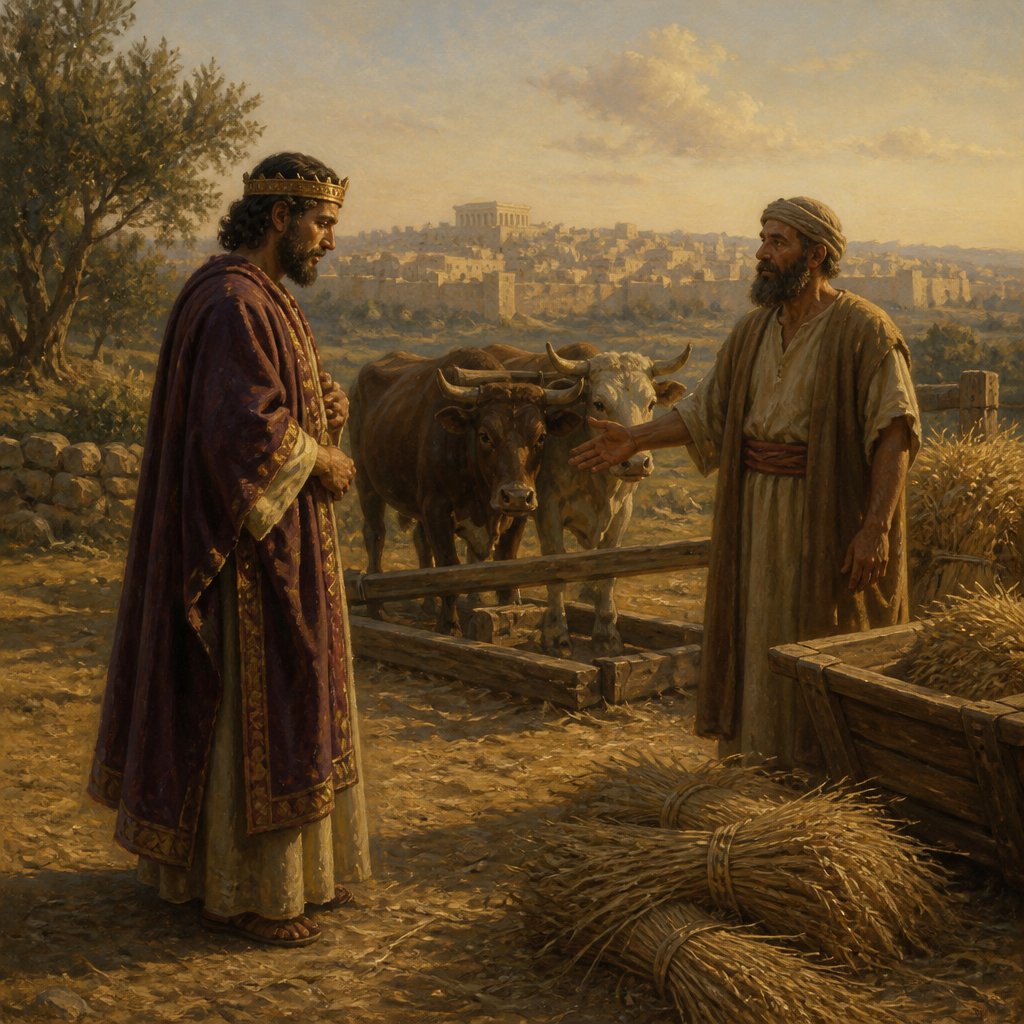
The Bible verse 1 Chronicles 21:23 in the King James Version (KJV) states: "And Ornan said unto David, Take it to thee, and let my lord the king do that which is good in his eyes: lo, I give thee the oxen also for burnt offerings, and the threshing instruments for wood, and the wheat for the meat offering; I give it all."
This verse comes from the story of King David conducting a census of the people of Israel, which was a sinful act in the eyes of God. As a result of this disobedience, God sent a plague upon Israel, leading to the death of 70,000 men. In response to this devastation, David sought the Lord's forgiveness and intercession to stop the plague.
In the preceding verses, God had directed David to build an altar to Him on the threshing floor of Ornan the Jebusite. When David approached Ornan to buy his threshing floor, Ornan offered it to David for free, along with the oxen for burnt offerings, the threshing instruments for wood, and the wheat for the meat offering. Ornan's generosity is evident in his words to David in 1 Chronicles 21:23.
At first glance, this verse may seem like a simple exchange of goods between David and Ornan. However, there are deeper themes, context, and symbolism at play in this passage. One of the prominent themes in this verse is that of sacrifice and atonement. Ornan's willingness to offer his possessions to David reflects the concept of sacrificial giving, as well as the desire for reconciliation and atonement. In a similar way, David's act of building an altar and offering sacrifices was an expression of his repentance and seeking God's forgiveness for his sinful actions.
The context of this verse is also significant. The story of King David's sinful census and its consequences serves as a reminder of the destructive power of pride and disobedience. It underscores the importance of humility, obedience, and seeking forgiveness from God. It also highlights the mercy and grace of God, as He ultimately stopped the plague and spared the people of Israel in response to David's repentance and obedience.
Symbolism can be found in Ornan's act of giving. His generous offering of the threshing floor, oxen, threshing instruments, and wheat symbolizes a complete surrender and submission to God's will. This act mirrors the heart of true worship and devotion, as Ornan willingly gave his best to the Lord without holding anything back. Additionally, Ornan's actions can be seen as a foreshadowing of the ultimate sacrifice of Jesus Christ, who offered Himself as a perfect and sufficient atonement for the sins of the world.
Overall, 1 Chronicles 21:23 holds profound spiritual truths that point to the themes of sacrifice, atonement, obedience, and humility. It serves as a reminder of the consequences of sin, the mercy and grace of God, and the transformative power of repentance and seeking forgiveness. It also invites believers to reflect on their own attitudes towards giving, worship, and surrender to God's will. Ultimately, this verse encourages us to emulate Ornan's spirit of sacrificial giving and David's posture of repentance and obedience towards God.
Get our apps


Artwork for 1 Chronicles 21:23
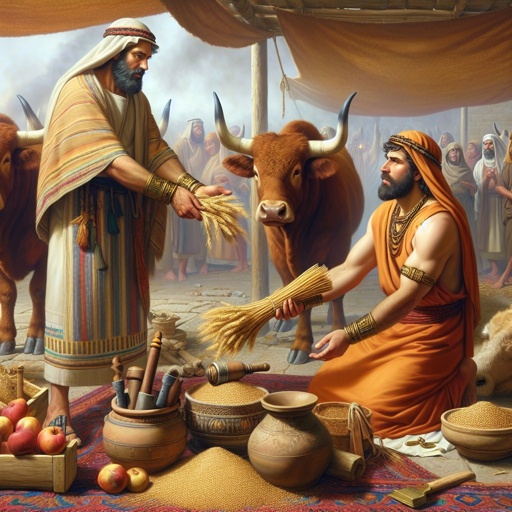
1 Chronicles 21:23 - "And Ornan said unto David, Take it to thee, and let my lord the king do that which is good in his eyes: lo, I give thee the oxen also for burnt offerings, and the threshing instruments for wood, and the wheat for the meat offering; I give it all."
"And Ornan said unto David, Take it to thee, and let my lord the king do that which is good in his eyes: lo, I give thee the oxen also for burnt offerings, and the threshing instruments for wood, and the wheat for the meat offering; I give it all." - 1 Chronicles 21:23

1 Chronicles 23:21 - "¶ The sons of Merari; Mahli, and Mushi. The sons of Mahli; Eleazar, and Kish."
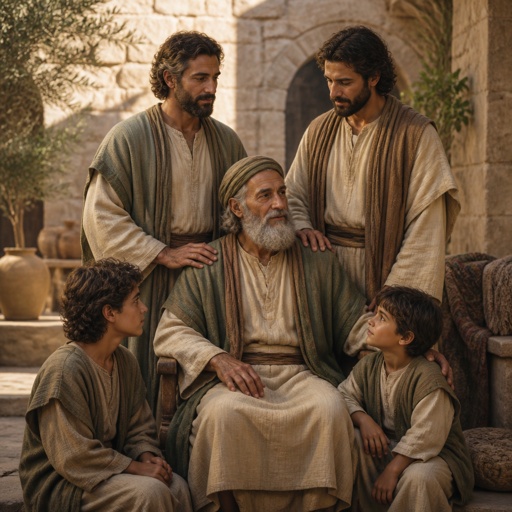
"¶ The sons of Merari; Mahli, and Mushi. The sons of Mahli; Eleazar, and Kish." - 1 Chronicles 23:21

2 Chronicles 23:21 - "And all the people of the land rejoiced: and the city was quiet, after that they had slain Athaliah with the sword."

1 Chronicles 23:23 - "The sons of Mushi; Mahli, and Eder, and Jeremoth, three."

Leviticus 23:21

Leviticus 23:21

Leviticus 23:21

Leviticus 23:21

Leviticus 23:21

Leviticus 23:21

Acts 1:21-23

1 Chronicles 1:21 - "Hadoram also, and Uzal, and Diklah,"

1 Chronicles 8:23 - "And Abdon, and Zichri, and Hanan,"

1 Chronicles 1:23 - "And Ophir, and Havilah, and Jobab. All these were the sons of Joktan."

1 Chronicles 23:7 - "¶ Of the Gershonites were, Laadan, and Shimei."

1 Chronicles 26:23 - "Of the Amramites, and the Izharites, the Hebronites, and the Uzzielites:"

1 Chronicles 23:18 - "Of the sons of Izhar; Shelomith the chief."

1 Chronicles 23:16 - "Of the sons of Gershom, Shebuel was the chief."

1 Chronicles 23:15 - "The sons of Moses were, Gershom, and Eliezer."

1 Chronicles 15:23 - "And Berechiah and Elkanah were doorkeepers for the ark."

1 Chronicles 8:21 - "And Adaiah, and Beraiah, and Shimrath, the sons of Shimhi;"

1 Chronicles 21:1 - "And Satan stood up against Israel, and provoked David to number Israel."

1 Chronicles 23:20 - "Of the sons of Uzziel; Michah the first, and Jesiah the second."

1 Chronicles 3:23 - "And the sons of Neariah; Elioenai, and Hezekiah, and Azrikam, three."

1 Chronicles 23:8 - "The sons of Laadan; the chief was Jehiel, and Zetham, and Joel, three."

1 Chronicles 24:21 - "Concerning Rehabiah: of the sons of Rehabiah, the first was Isshiah."

1 Chronicles 23:12 - "¶ The sons of Kohath; Amram, Izhar, Hebron, and Uzziel, four."

"The sons of Mushi; Mahli, and Eder, and Jeremoth, three." - 1 Chronicles 23:23