What does 1 Chronicles 29:14 mean?
“But who am I, and what is my people, that we should be able to offer so willingly after this sort? for all things come of thee, and of thine own have we given thee.” — 1 Chronicles 29:14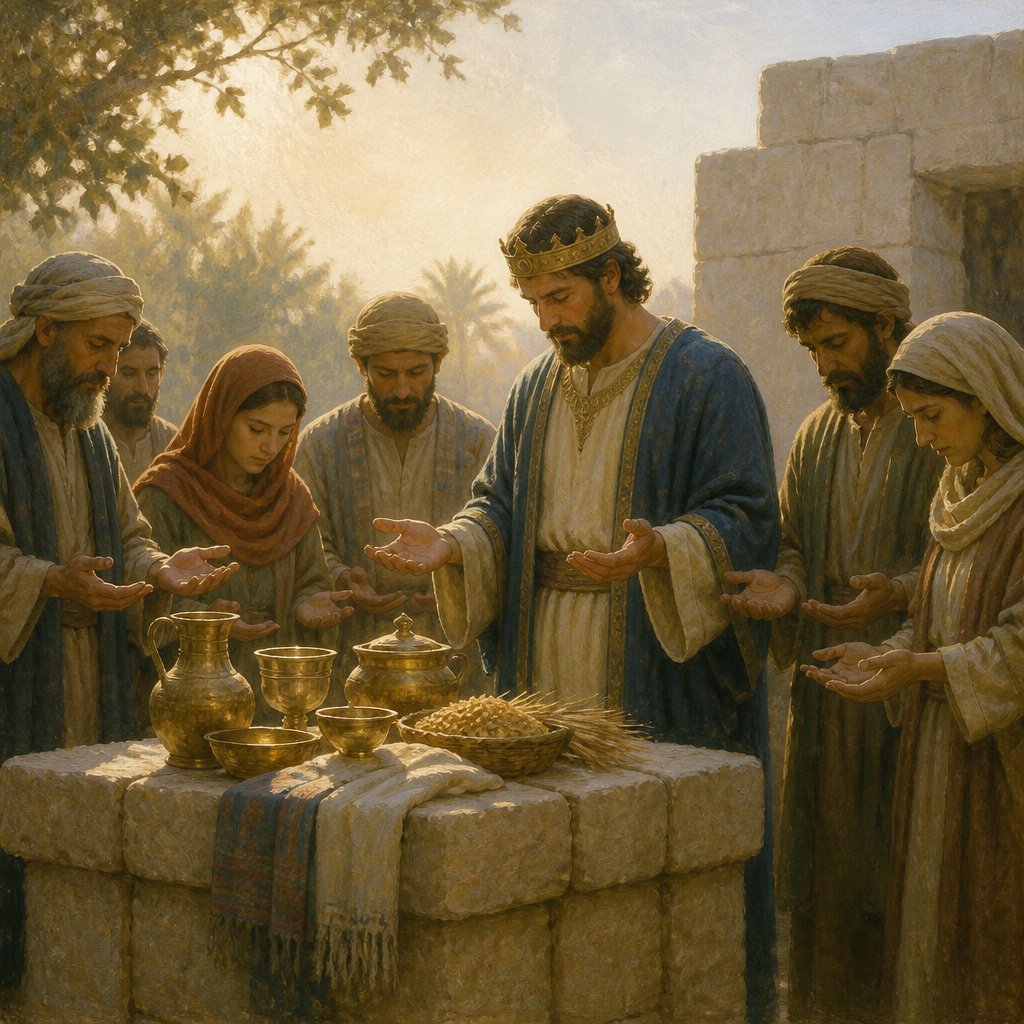
1 Chronicles 29:14 (KJV) reads: "But who am I, and what is my people, that we should be able to offer so willingly after this sort? for all things come of thee, and of thine own have we given thee."
In this verse, King David humbly acknowledges the greatness of God and expresses gratitude for the opportunity to give offerings for the building of the temple. The verse reflects themes of humility, gratitude, and stewardship, and it offers a powerful commentary on the nature of human existence in relation to divinity.
The context of this verse is important for understanding its significance. In this chapter, King David speaks to the assembly of Israel, as he prepares to pass the throne to his son Solomon. David has spent much of his reign amassing wealth and resources for the construction of the temple, and now he is calling on the people to contribute to this monumental project. In verses 1-9, David encourages the people to give generously and willingly, and he sets an example by making a significant personal contribution. In verse 14, he expresses his awe at the fact that he and his people are able to give so willingly, recognizing that everything they have comes from God.
The verse begins with the rhetorical question, "But who am I, and what is my people, that we should be able to offer so willingly after this sort?" This question reflects David's deep sense of humility. Despite his status as king and the wealth and power he possesses, he recognizes that he and his people are nothing compared to the greatness of God. This humility is a key characteristic of David's leadership and is a model for all believers. It is a reminder that no matter how successful or powerful we may become, we are ultimately dependent on God and should approach Him with humility and thanksgiving.
The verse continues with the acknowledgment that "all things come of thee, and of thine own have we given thee." This statement conveys a profound understanding of stewardship and gratitude. David recognizes that everything he and his people possess ultimately comes from God. Their ability to give is not due to their own merit or resources, but is ultimately derived from God's provision. This echoes the sentiment of Psalm 24:1, which declares, "The earth is the LORD's, and the fullness thereof; the world, and they that dwell therein." The acknowledgment of God's sovereignty over all things and His role as the ultimate provider is a powerful reminder for believers to approach their possessions and resources with an attitude of gratitude and stewardship.
The symbolism in this verse lies in the act of giving and the posture of the giver. David's willingness to give generously and his humble acknowledgment of God's sovereignty provide a model for believers. It serves as a reminder that our possessions and resources are ultimately gifts from God, and our willingness to give back to Him should be marked by gratitude, humility, and generosity. This verse also points to the larger biblical theme of God's faithfulness and provision for His people. It demonstrates that all we have comes from God and that we are called to use our resources in a manner that honors Him and furthers His kingdom.
In conclusion, 1 Chronicles 29:14 offers a profound commentary on the nature of human existence in relation to divinity. It highlights the themes of humility, gratitude, and stewardship, and it serves as a powerful reminder of God's sovereignty and provision. This verse challenges believers to approach their possessions and resources with an attitude of gratitude and generosity, recognizing that all that we have ultimately comes from God. It is a call to emulate King David's example of willingly giving back to God and acknowledging His providence in all things.
Get our apps


Artwork for 1 Chronicles 29:14

1 Chronicles 29:14 - "But who am I, and what is my people, that we should be able to offer so willingly after this sort? for all things come of thee, and of thine own have we given thee."
"But who am I, and what is my people, that we should be able to offer so willingly after this sort? for all things come of thee, and of thine own have we given thee." - 1 Chronicles 29:14

1 Kings 14:29 - "¶ Now the rest of the acts of Rehoboam, and all that he did, are they not written in the book of the chronicles of the kings of Judah?"

2 Chronicles 29:14 - "And of the sons of Heman; Jehiel, and Shimei: and of the sons of Jeduthun; Shemaiah, and Uzziel."

1 Chronicles 4:29 - "And at Bilhah, and at Ezem, and at Tolad,"

1 Chronicles 1:29 - "¶ These are their generations: The firstborn of Ishmael, Nebaioth; then Kedar, and Adbeel, and Mibsam,"

1 Chronicles 11:29 - "Sibbecai the Hushathite, Ilai the Ahohite,"

"¶ Now the rest of the acts of Rehoboam, and all that he did, are they not written in the book of the chronicles of the kings of Judah?" - 1 Kings 14:29

Jeremiah 29: 4-14

Jeremiah 29: 4-14

Jeremiah 29: 4-14

Jeremiah 29: 4-14

Jeremiah 29: 4-14

1 Chronicles 24:29 - "Concerning Kish: the son of Kish was Jerahmeel."

1 Chronicles 29:29 - "Now the acts of David the king, first and last, behold, they are written in the book of Samuel the seer, and in the book of Nathan the prophet, and in the book of Gad the seer,"

1 Chronicles 29:26 - "¶ Thus David the son of Jesse reigned over all Israel."

1 Chronicles 8:29 - "And at Gibeon dwelt the father of Gibeon; whose wife's name was Maachah:"

1 Chronicles 1:14 - "The Jebusite also, and the Amorite, and the Girgashite,"

1 Chronicles 2:29 - "And the name of the wife of Abishur was Abihail, and she bare him Ahban, and Molid."

"And at Bilhah, and at Ezem, and at Tolad," - 1 Chronicles 4:29

"And of the sons of Heman; Jehiel, and Shimei: and of the sons of Jeduthun; Shemaiah, and Uzziel." - 2 Chronicles 29:14

1 Chronicles 25:29 - "The two and twentieth to Giddalti, he, his sons, and his brethren, were twelve:"

1 Corinthians 14:29 - "Let the prophets speak two or three, and let the other judge."

1 Chronicles 14:7 - "And Elishama, and Beeliada, and Eliphalet."

1 Chronicles 14:6 - "And Nogah, and Nepheg, and Japhia,"

1 Chronicles 8:14 - "And Ahio, Shashak, and Jeremoth,"

1 Chronicles 14:5 - "And Ibhar, and Elishua, and Elpalet,"

1 Chronicles 16:29 – "Ascribe to the Lord the glory due his name; bring an offering and come before him."

1 Chronicles 29:13 - "Now therefore, our God, we thank thee, and praise thy glorious name."

1 Chronicles 26:29 - "¶ Of the Izharites, Chenaniah and his sons were for the outward business over Israel, for officers and judges."