What does 1 Chronicles 3:2 mean?
“The third, Absalom the son of Maachah the daughter of Talmai king of Geshur: the fourth, Adonijah the son of Haggith:” — 1 Chronicles 3:2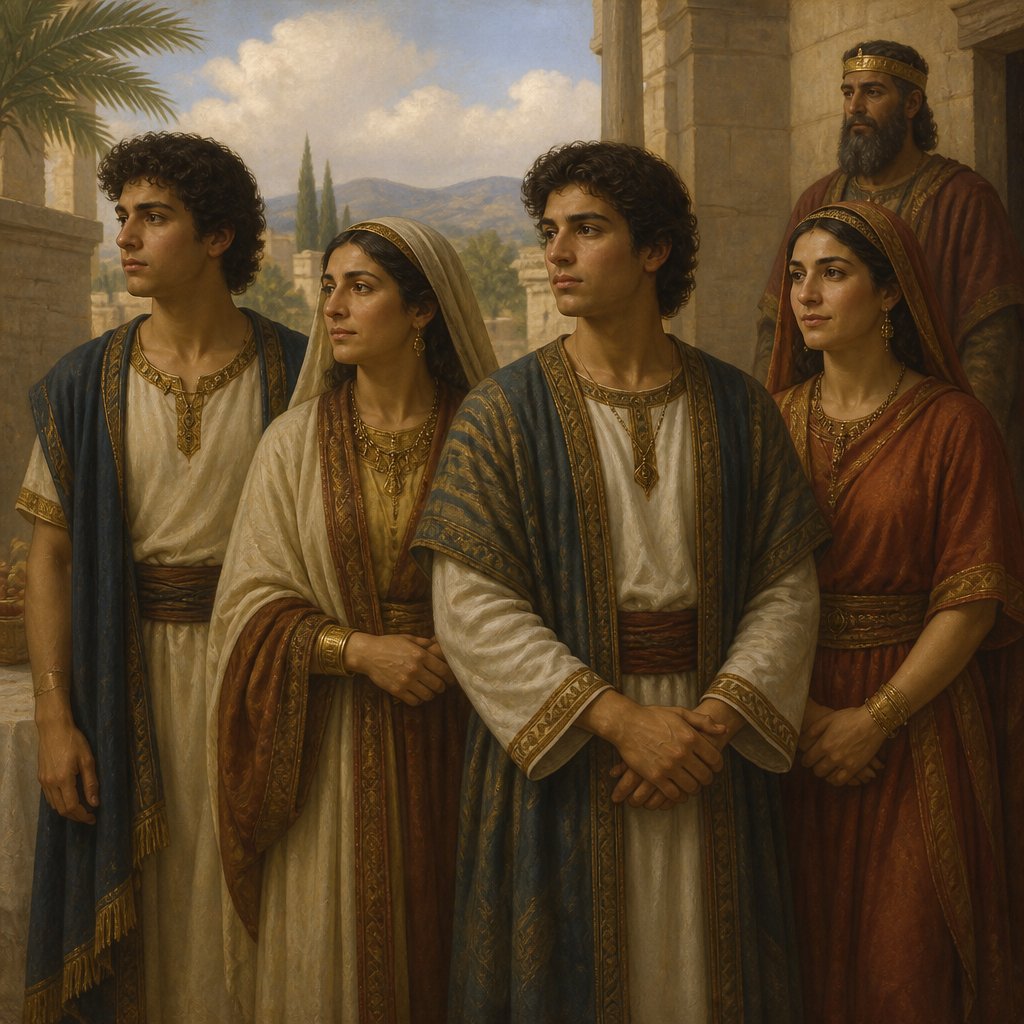
1 Chronicles 3:2 (KJV) reads: "The third, Absalom the son of Maachah the daughter of Talmai king of Geshur: the fourth, Adonijah the son of Haggith:"
This verse is a part of the genealogy of King David found in the Old Testament. The genealogy provided in 1 Chronicles is important because it traces the lineage of David, the great King of Israel, back to the tribe of Judah. This lineage is significant because it establishes David's rightful place as the chosen ruler of Israel, as promised by God to the patriarchs. The verse in question specifically mentions two of David's sons, Absalom and Adonijah, and their respective mothers.
Absalom is known for his revolt against his father David, which ultimately led to his death. He is depicted as a handsome and charismatic man who was beloved by many, but his sense of entitlement and desire for power led him to rebel against his father. Adonijah, on the other hand, also attempted to seize the throne for himself after the death of David, but he was ultimately unsuccessful, and Solomon, the son of David and Bathsheba, became king instead.
The mention of the mothers of Absalom and Adonijah is significant in understanding the complexities of King David's family life. Maachah, the mother of Absalom, was the daughter of Talmai, the king of Geshur. This marriage was of political significance, as it strengthened David's alliance with Geshur. However, Maachah's background also brought with it temptations that led Absalom astray, as he sought to avenge the violation of his sister, Tamar, by his half-brother Amnon. Haggith, the mother of Adonijah, was another of David's wives. Her son's attempt to usurp the throne was a reflection of the power struggles and conflicts within David's household.
This verse, therefore, sheds light on the complexities and challenges within David's family, as well as the political dynamics that influenced his relationships. It also serves as a reminder of the consequences of pride, ambition, and betrayal, as seen in the tragic stories of Absalom and Adonijah.
In a broader context, the genealogy in 1 Chronicles serves to connect King David to his forefathers and establish his rightful place as the ruler of Israel. It also highlights the fulfillment of God's promises to the patriarchs, particularly the covenant with Abraham, in which God promised that kings would come from his lineage (Genesis 17:6). The genealogy demonstrates God's faithfulness in preserving the line of David and ultimately bringing forth the Messiah, Jesus Christ, who was born from the house of David.
Symbolically, the mention of Absalom and Adonijah in this verse serves as a cautionary tale about the dangers of pride, ambition, and rebellion. It also highlights the impact of familial relationships and the consequences of sin within a family. Ultimately, the genealogy of David points to the redemptive work of God, who can bring purpose and restoration even in the midst of human failings and conflicts.
In conclusion, 1 Chronicles 3:2 is a verse that is rich in historical, political, and moral significance. It provides a glimpse into the complexities of King David's family and serves as a reminder of the consequences of pride and ambition. It also underscores the faithfulness of God in fulfilling his promises and ultimately points to the redemptive work of God through the line of David, leading to the birth of Jesus Christ, the ultimate King and Savior.
Get our apps


Artwork for 1 Chronicles 3:2

1 Chronicles 3:2 - "The third, Absalom the son of Maachah the daughter of Talmai king of Geshur: the fourth, Adonijah the son of Haggith:"
"The third, Absalom the son of Maachah the daughter of Talmai king of Geshur: the fourth, Adonijah the son of Haggith:" - 1 Chronicles 3:2

2 Chronicles 3:2 - "And he began to build in the second day of the second month, in the fourth year of his reign."

1 Chronicles 3:7 - "And Nogah, and Nepheg, and Japhia,"

1 Chronicles 3:6 - "Ibhar also, and Elishama, and Eliphelet,"

1 Chronicles 3:14 - "Amon his son, Josiah his son."

1 Chronicles 1:3 - "Henoch, Methuselah, Lamech,"

2 Chronicles 28:3

1 Chronicles 3:8 - "And Elishama, and Eliada, and Eliphelet, nine."

2 Chronicles 1:3 - "So Solomon, and all the congregation with him, went to the high place that was at Gibeon; for there was the tabernacle of the congregation of God, which Moses the servant of the LORD had made in the wilderness."

1 Chronicles 3:12 - "Amaziah his son, Azariah his son, Jotham his son,"

1 Chronicles 3:18 - "Malchiram also, and Pedaiah, and Shenazar, Jecamiah, Hoshama, and Nedabiah."

1 Chronicles 3:16 - "And the sons of Jehoiakim: Jeconiah his son, Zedekiah his son."

"Amon his son, Josiah his son." - 1 Chronicles 3:14

1 Chronicles 3:20 - "And Hashubah, and Ohel, and Berechiah, and Hasadiah, Jushab-hesed, five."

1 Chronicles 3:17 - "¶ And the sons of Jeconiah; Assir, Salathiel his son,"

1 Chronicles 3:3 - "The fifth, Shephatiah of Abital: the sixth, Ithream by Eglah his wife."

1 Chronicles 3:11 - "Joram his son, Ahaziah his son, Joash his son,"

1 Chronicles 3:13 - "Ahaz his son, Hezekiah his son, Manasseh his son,"

"And Elishama, and Eliada, and Eliphelet, nine." - 1 Chronicles 3:8

2 Chronicles 3:1 - "Then Solomon began to build the house of the LORD at Jerusalem in mount Moriah, where the LORD appeared unto David his father, in the place that David had prepared in the threshingfloor of Ornan the Jebusite."

"And Nogah, and Nepheg, and Japhia," - 1 Chronicles 3:7

"Ibhar also, and Elishama, and Eliphelet," - 1 Chronicles 3:6

1 Chronicles 3:23 - "And the sons of Neariah; Elioenai, and Hezekiah, and Azrikam, three."

2 Chronicles 8:3 - "And Solomon went to Hamath-zobah, and prevailed against it."

1 Chronicles 2:3 - "¶ The sons of Judah; Er, and Onan, and Shelah: which three were born unto him of the daughter of Shua the Canaanitess. And Er, the firstborn of Judah, was evil in the sight of the LORD; and he slew him."

"And he began to build in the second day of the second month, in the fourth year of his reign." - 2 Chronicles 3:2

"Henoch, Methuselah, Lamech," - 1 Chronicles 1:3

1 Chronicles 1:2 - "Kenan, Mahalaleel, Jered,"

1 Chronicles 8:3 - "And the sons of Bela were, Addar, and Gera, and Abihud,"