What does 1 Chronicles 4:3 mean?
“And these were of the father of Etam; Jezreel, and Ishma, and Idbash: and the name of their sister was Hazelelponi:” — 1 Chronicles 4:3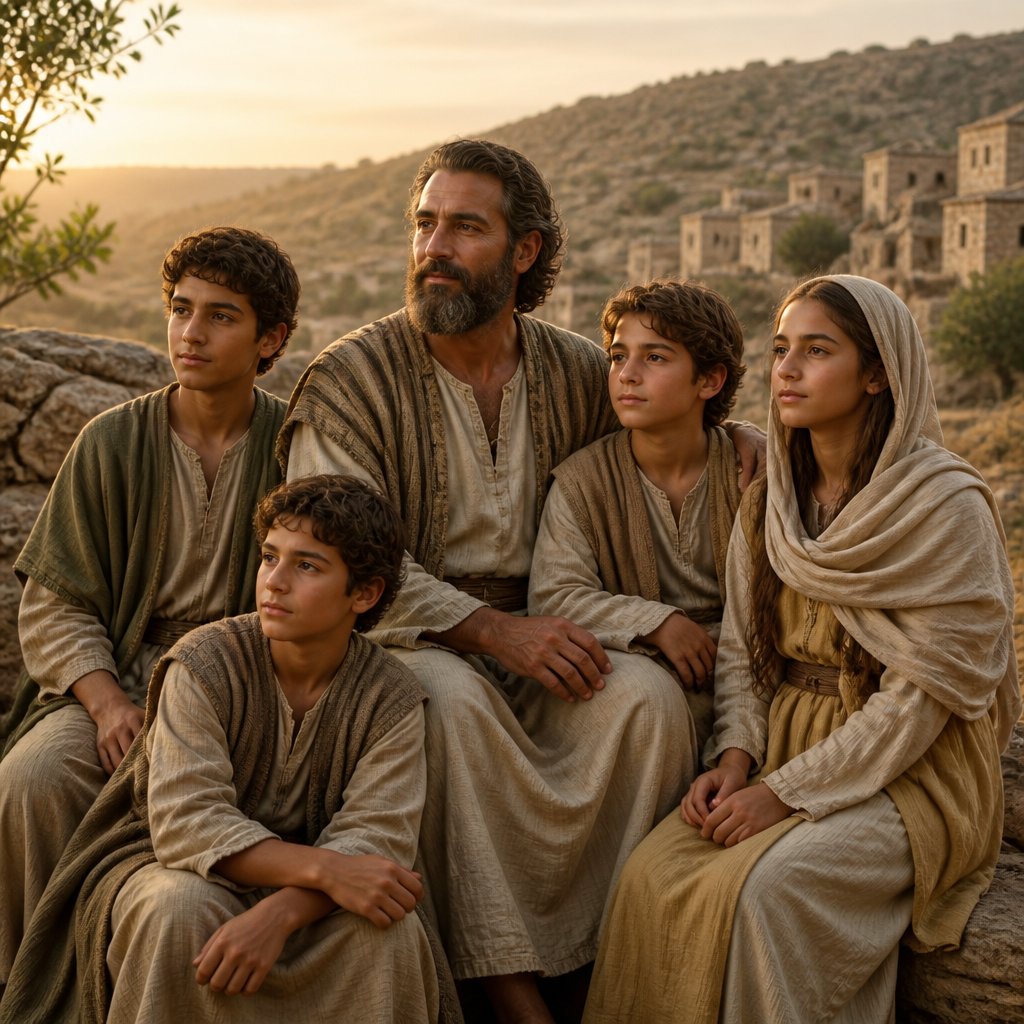
1 Chronicles 4:3 (KJV) states: "And these were of the father of Etam; Jezreel, and Ishma, and Idbash: and the name of their sister was Hazelelponi:"
The book of 1 Chronicles is a genealogical record, listing the descendants of the twelve tribes of Israel. This particular verse lists the offspring of a man named Etam, as well as his daughter, Hazelelponi. While this verse may seem insignificant at first glance, it offers important insights into the themes of family, identity, and the sovereignty of God.
From a historical context, the book of 1 Chronicles serves as a record of the Israelite nation's history, tracing their lineage back to their founding ancestors. This genealogical record was crucial for establishing and preserving the Israelites' national identity and heritage. It affirmed their connection to the promises and covenants made by God to their forefathers, such as Abraham, Isaac, and Jacob. In this sense, 1 Chronicles 4:3 contributes to the larger theme of preserving the lineage and identity of the Israelites as God's chosen people.
The mention of Etam's offspring and his daughter, Hazelelponi, also carries symbolic significance. In Hebrew culture, names often held deep meaning and significance. Jezreel, for example, means "God sows," which could symbolize the bountiful blessings and fruitfulness that God bestows upon His people. Ishma's name means "hearing," signifying the importance of listening to God's voice and obeying His commands. Idbash's name is less clear in meaning, but it is possible that it hints at the sweetness or goodness of God's provision.
Hazelelponi's name is a particularly interesting and unique one. It is derived from the Hebrew words "chazel," meaning "gazing," and "poni," meaning "face." Hazelelponi's name can be translated to "the one who looks to the face (of God)." This interpretation suggests a deep spiritual significance for Hazelelponi, who may have been known for her faith and devotion to God. Her name serves as a reminder for readers to fix their gaze upon the Lord and seek His presence continually.
Overall, 1 Chronicles 4:3 reflects the themes of family heritage, spiritual identity, and the faithfulness of God. It reminds believers of the importance of acknowledging and honoring their roots, as well as the need to remain steadfast in their devotion to God. The verse also emphasizes the significance of names and their underlying meanings, prompting readers to consider the symbolic power of language and the ways in which God communicates His truths through words and names.
In conclusion, while 1 Chronicles 4:3 may appear to be a simple listing of names, it carries deeper spiritual and symbolic meanings. It serves as a reminder of the importance of heritage, identity, and faith in God's sovereignty. Through the names of Etam's offspring and the unique name of Hazelelponi, this verse invites readers to contemplate the rich symbolic language of the Bible and the profound truths contained within seemingly mundane details.
Get our apps


Artwork for 1 Chronicles 4:3

1 Chronicles 4:3 - "And these were of the father of Etam; Jezreel, and Ishma, and Idbash: and the name of their sister was Hazelelponi:"
"And these were of the father of Etam; Jezreel, and Ishma, and Idbash: and the name of their sister was Hazelelponi:" - 1 Chronicles 4:3
1 Chronicles 3:4 - "These six were born unto him in Hebron; and there he reigned seven years and six months: and in Jerusalem he reigned thirty and three years."

1 Chronicles 4 : 10

1 Chronicles 1:3 - "Henoch, Methuselah, Lamech,"

1 Chronicles 1:4 - "Noah, Shem, Ham, and Japheth."

2 Chronicles 4:22

1 Chronicles 3:3 - "The fifth, Shephatiah of Abital: the sixth, Ithream by Eglah his wife."

1 Chronicles 4:29 - "And at Bilhah, and at Ezem, and at Tolad,"

1 Chronicles 4:30 - "And at Bethuel, and at Hormah, and at Ziklag,"

1 Chronicles 8:4 - "And Abishua, and Naaman, and Ahoah,"

1 Chronicles 3:7 - "And Nogah, and Nepheg, and Japhia,"

1 Chronicles 4:1 - "The sons of Judah; Pharez, Hezron, and Carmi, and Hur, and Shobal."

1 Chronicles 3:8 - "And Elishama, and Eliada, and Eliphelet, nine."

2 Chronicles 4:3 - "And under it was the similitude of oxen, which did compass it round about: ten in a cubit, compassing the sea round about. Two rows of oxen were cast, when it was cast."

1 Chronicles 3:6 - "Ibhar also, and Elishama, and Eliphelet,"

1 Chronicles 4:34 - "And Meshobab, and Jamlech, and Joshah the son of Amaziah,"

1 Chronicles 15:4 - "And David assembled the children of Aaron, and the Levites:"

"Henoch, Methuselah, Lamech," - 1 Chronicles 1:3

1 Chronicles 4:25 - "Shallum his son, Mibsam his son, Mishma his son."

1 Chronicles 8:3 - "And the sons of Bela were, Addar, and Gera, and Abihud,"

1 Chronicles 26:3 - "Elam the fifth, Jehohanan the sixth, Elioenai the seventh."

1 Chronicles 3:23 - "And the sons of Neariah; Elioenai, and Hezekiah, and Azrikam, three."

1 Chronicles 3:17 - "¶ And the sons of Jeconiah; Assir, Salathiel his son,"

1 Chronicles 4:28 - "And they dwelt at Beer-sheba, and Moladah, and Hazar-shual,"

1 Chronicles 4:7 - "And the sons of Helah were, Zereth, and Jezoar, and Ethnan."

1 Chronicles 4:16 - "And the sons of Jehaleleel; Ziph, and Ziphah, Tiria, and Asareel."

1 Chronicles 6:4 - "¶ Eleazar begat Phinehas, Phinehas begat Abishua,"

1 Chronicles 4:24 - "¶ The sons of Simeon were, Nemuel, and Jamin, Jarib, Zerah, and Shaul:"

1 Chronicles 3:14 - "Amon his son, Josiah his son."