What does 1 Chronicles 5:10 mean?
“And in the days of Saul they made war with the Hagarites, who fell by their hand: and they dwelt in their tents throughout all the east land of Gilead.” — 1 Chronicles 5:10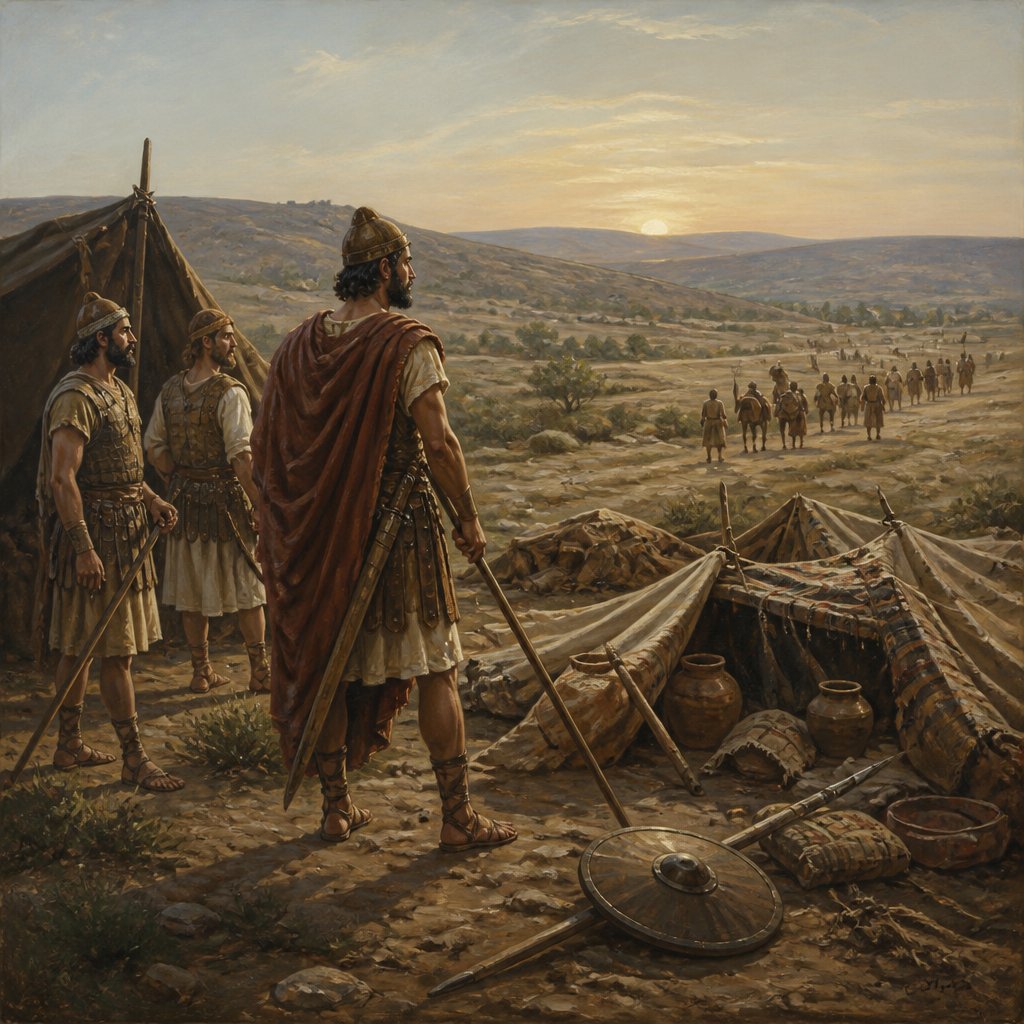
1 Chronicles 5:10 (KJV) states: "And in the days of Saul they made war with the Hagarites, who fell by their hand: and they dwelt in their tents throughout all the east land of Gilead."
This verse is a part of the genealogy of the Reubenites, one of the twelve tribes of Israel. In this particular verse, it is mentioned that during the reign of King Saul, the Reubenites engaged in warfare against the Hagarites and were successful in defeating them, enabling the Reubenites to occupy the east land of Gilead.
The book of 1 Chronicles is a historical narrative that traces the genealogy of the Israelites from Adam to the time when they were preparing to return to Jerusalem after the Babylonian exile. It serves as an important record of the lineage of the Israelites and their heritage, and also illustrates the importance of remaining faithful to God's covenant in order to receive His blessings.
The mention of war in this verse is symbolic of the constant battle between good and evil, a theme that runs throughout the Bible. The Reubenites' victory over the Hagarites can be seen as a representation of the triumph of righteousness over wickedness. It also serves as a reminder of the importance of remaining steadfast in the face of adversity and relying on God's strength and guidance to overcome challenges.
The location of the battle, the east land of Gilead, is also significant. Gilead was known for its fertile land and was often associated with prosperity and abundance. The fact that the Reubenites were able to dwell in this land after their victory over the Hagarites can be interpreted as a sign of God's favor and blessing. It serves as a reminder that God rewards faithfulness and obedience, and that His promises of prosperity and inheritance are fulfilled for those who trust in Him.
Furthermore, the mention of Saul, the first king of Israel, is notable. Despite Saul's initial successes as king, his disobedience to God ultimately led to his downfall. This verse can be seen as a reflection of the importance of remaining faithful to God's commands and relying on His guidance, rather than trusting in human strength and wisdom.
Another important theme in this verse is the idea of inheritance and possession. The east land of Gilead was a significant territory, and by occupying it, the Reubenites were able to establish themselves and secure a prosperous future for their descendants. This serves as a reminder of the importance of stewardship and the responsibility to pass on God's blessings to future generations.
In conclusion, 1 Chronicles 5:10 (KJV) is a verse that holds several important themes and lessons. It serves as a reminder of the constant battle between good and evil, the importance of remaining faithful to God's commands, and the promise of God's blessings and inheritance for those who trust in Him. It also highlights the significance of obedience, stewardship, and the faithfulness of God in fulfilling His promises. As part of the larger narrative of the Israelites' history, this verse holds valuable lessons for believers today, encouraging them to trust in God's faithfulness and rely on His strength to overcome adversity.
Get our apps


Artwork for 1 Chronicles 5:10
1 Chronicles 5:10 - "And in the days of Saul they made war with the Hagarites, who fell by their hand: and they dwelt in their tents throughout all the east land of Gilead."
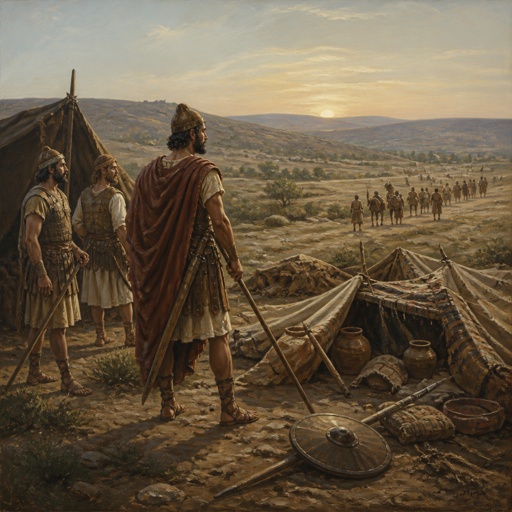
"And in the days of Saul they made war with the Hagarites, who fell by their hand: and they dwelt in their tents throughout all the east land of Gilead." - 1 Chronicles 5:10

1 Chronicles 10:5 - "And when his armourbearer saw that Saul was dead, he fell likewise on the sword, and died."

1 Chronicles 5:5 - "Micah his son, Reaia his son, Baal his son,"
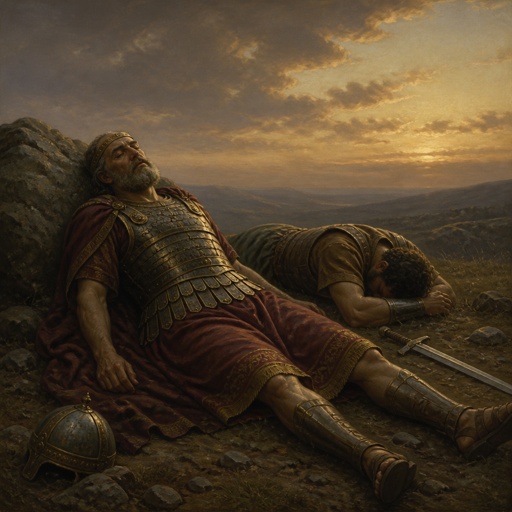
"And when his armourbearer saw that Saul was dead, he fell likewise on the sword, and died." - 1 Chronicles 10:5

1 Chronicles 4 : 10

2 Chronicles 5:10 - "There was nothing in the ark save the two tables which Moses put therein at Horeb, when the LORD made a covenant with the children of Israel, when they came out of Egypt."

1 Chronicles 10:10 - "And they put his armour in the house of their gods, and fastened his head in the temple of Dagon."

1 Chronicles 8:5 - "And Gera, and Shephuphan, and Huram."

1 Chronicles 14:5 - "And Ibhar, and Elishua, and Elpalet,"

1 Chronicles 9:10 - "¶ And of the priests; Jedaiah, and Jehoiarib, and Jachin,"

2 Chronicles 10:5 - "And he said unto them, Come again unto me after three days. And the people departed."

1 Chronicles 1:10 - "And Cush begat Nimrod: he began to be mighty upon the earth."

1 Chronicles 12:10 - "Mishmannah the fourth, Jeremiah the fifth,"

1 Chronicles 24:10 - "The seventh to Hakkoz, the eighth to Abijah,"

1 Chronicles 2:5 - "The sons of Pharez; Hezron, and Hamul."

1 Chronicles 5:19 - "And they made war with the Hagarites, with Jetur, and Nephish, and Nodab."

1 Chronicles 5:4 - "The sons of Joel; Shemaiah his son, Gog his son, Shimei his son,"

1 Chronicles 1:5 - "¶ The sons of Japheth; Gomer, and Magog, and Madai, and Javan, and Tubal, and Meshech, and Tiras."

1 Chronicles 9:5 - "And of the Shilonites; Asaiah the firstborn, and his sons."

1 Chronicles 12:5 - "Eluzai, and Jerimoth, and Bealiah, and Shemariah, and Shephatiah the Haruphite,"

1 Chronicles 6:5 - "And Abishua begat Bukki, and Bukki begat Uzzi,"

1 Chronicles 5:15 - "Ahi the son of Abdiel, the son of Guni, chief of the house of their fathers."

Revelation 5:1-10

1 Chronicles 5:12 - "Joel the chief, and Shapham the next, and Jaanai, and Shaphat in Bashan."

1 Chronicles 15:10 - "Of the sons of Uzziel; Amminadab the chief, and his brethren an hundred and twelve."

1 Chronicles 8:10 - "And Jeuz, and Shachia, and Mirma. These were his sons, heads of the fathers."

1 Chronicles 15:5 - "Of the sons of Kohath; Uriel the chief, and his brethren an hundred and twenty:"

1 Chronicles 4:5 - "¶ And Ashur the father of Tekoa had two wives, Helah and Naarah."

1 Chronicles 2:10 - "And Ram begat Amminadab; and Amminadab begat Nahshon, prince of the children of Judah;"