What does 1 Chronicles 9:4 mean?
“Uthai the son of Ammihud, the son of Omri, the son of Imri, the son of Bani, of the children of Pharez the son of Judah.” — 1 Chronicles 9:4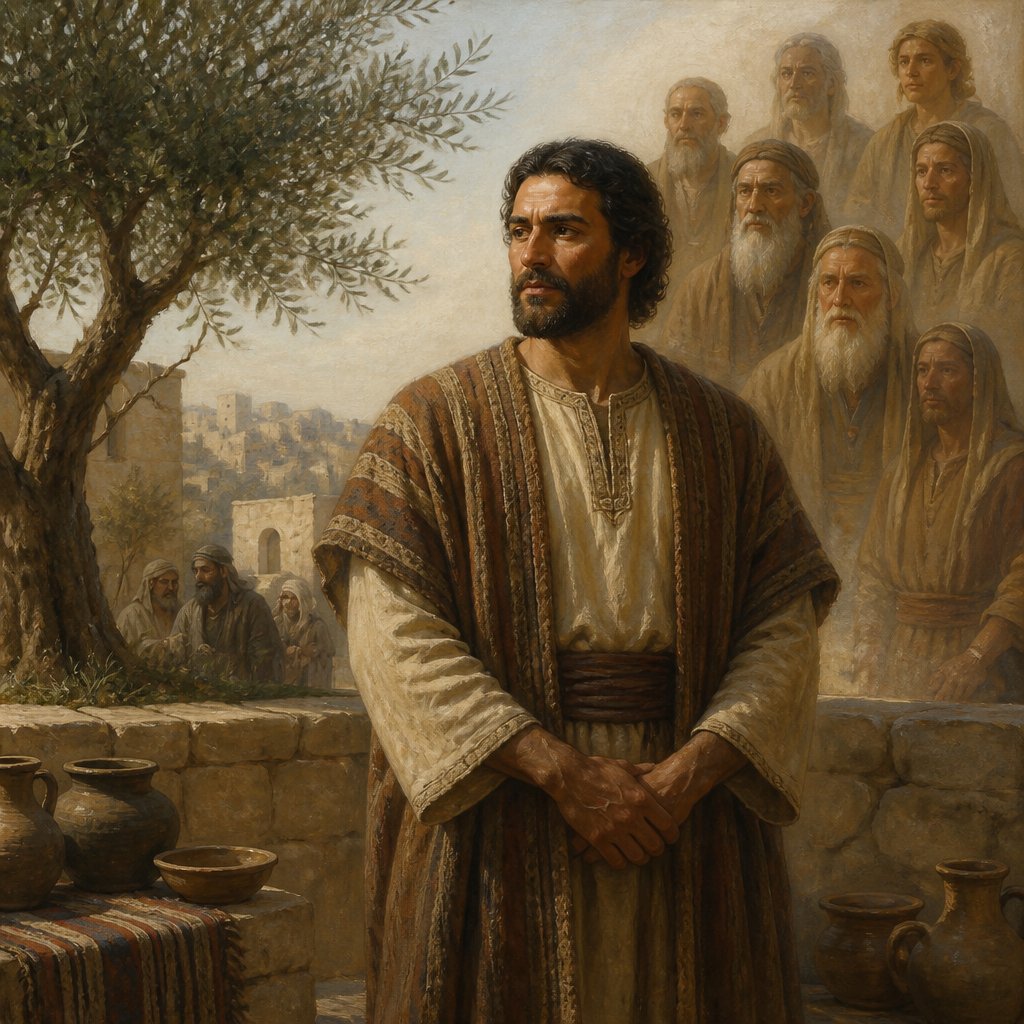
1 Chronicles 9:4 (KJV) - "And in Jerusalem dwelt of the children of Judah, and of the children of Benjamin, and of the children of Ephraim, and Manasseh"
Context:
The book of 1 Chronicles is a historical text that provides a detailed account of the genealogy of the Israelites, particularly focusing on the lineage of the twelve tribes of Israel. The passage in 1 Chronicles 9:4 comes in the midst of a list of the returning exiles to Jerusalem after the Babylonian captivity. This verse specifically highlights the tribes of Judah, Benjamin, Ephraim, and Manasseh, indicating their presence in the city of Jerusalem after their return from exile. This is a significant moment in Jewish history, as it marks the restoration and repopulation of Jerusalem after a period of exile and desolation.
Meaning:
The mention of these specific tribes in Jerusalem holds great significance in the context of biblical history. The tribe of Judah was the royal tribe, from which King David and ultimately Jesus Christ descended. The tribe of Benjamin was known for its warriors and was historically tied to the city of Jerusalem. The tribes of Ephraim and Manasseh were descendants of Joseph, who played a key role in the preservation of the Israelites during the famine in Egypt. By highlighting the presence of these tribes in Jerusalem, the passage emphasizes the fulfillment of God’s promise to restore His people to their land and reestablish their heritage. It also serves as a reminder of the faithfulness of God in preserving His chosen people despite the trials and tribulations they faced.
Symbolism:
The mention of Judah and Benjamin in Jerusalem carries deep symbolic significance. Jerusalem was not only the political and religious center of the Israelite nation but also represented the dwelling place of God among His people. The presence of the tribes of Judah and Benjamin in Jerusalem symbolizes the restoration of the monarchy and the reunification of the people of Israel under God’s divine authority. Additionally, the inclusion of the tribes of Ephraim and Manasseh demonstrates the reunification of the northern and southern kingdoms of Israel, signifying a return to wholeness and unity among the people of God.
Themes:
The themes present in 1 Chronicles 9:4 revolve around restoration, renewal, and fulfillment of God’s promises. The return of the exiles to Jerusalem signifies a new beginning for the Israelites, as they are restored to their homeland and heritage. This theme of restoration is pervasive throughout the Bible, as God continually demonstrates His faithfulness in bringing His people back to Himself and fulfilling His covenant promises. The verse also emphasizes the unity of God’s people, as the tribes of Judah, Benjamin, Ephraim, and Manasseh come together in Jerusalem, representing the reunification of the nation under God’s sovereignty.
In conclusion, 1 Chronicles 9:4 serves as a powerful reminder of God’s faithfulness in restoring His people and fulfilling His promises. The mention of the tribes of Judah, Benjamin, Ephraim, and Manasseh in Jerusalem carries deep symbolic significance and signifies a new beginning for the Israelites. This verse encourages believers to trust in God’s faithfulness and sovereignty, even in the midst of trials and exile. It also points to the ultimate restoration and reunification of God’s people under the reign of Jesus Christ.
Get our apps


Artwork for 1 Chronicles 9:4

1 Chronicles 9:4 - "Uthai the son of Ammihud, the son of Omri, the son of Imri, the son of Bani, of the children of Pharez the son of Judah."
"Uthai the son of Ammihud, the son of Omri, the son of Imri, the son of Bani, of the children of Pharez the son of Judah." - 1 Chronicles 9:4

1 Chronicles 4:9 - "¶ And Jabez was more honourable than his brethren: and his mother called his name Jabez, saying, Because I bare him with sorrow."

1 Chronicles 1:4 - "Noah, Shem, Ham, and Japheth."

1 Chronicles 9:37 - "And Gedor, and Ahio, and Zechariah, and Mikloth."

1 Chronicles 9:10 - "¶ And of the priests; Jedaiah, and Jehoiarib, and Jachin,"

2 Chronicles 4:22

1 Chronicles 24:9 - "The fifth to Malchijah, the sixth to Mijamin,"

1 Chronicles 9:5 - "And of the Shilonites; Asaiah the firstborn, and his sons."

1 Chronicles 4 : 10

2 Chronicles 4:9 - "¶ Furthermore he made the court of the priests, and the great court, and doors for the court, and overlaid the doors of them with brass."

1 Chronicles 4:29 - "And at Bilhah, and at Ezem, and at Tolad,"

1 Chronicles 4:30 - "And at Bethuel, and at Hormah, and at Ziklag,"

1 Chronicles 8:4 - "And Abishua, and Naaman, and Ahoah,"

1 Chronicles 4:1 - "The sons of Judah; Pharez, Hezron, and Carmi, and Hur, and Shobal."

1 Chronicles 9:30 - "And some of the sons of the priests made the ointment of the spices."

1 Chronicles 6:9 - "And Ahimaaz begat Azariah, and Azariah begat Johanan,"

1 Chronicles 12:9 - "Ezer the first, Obadiah the second, Eliab the third,"

1 Chronicles 14:9 - "And the Philistines came and spread themselves in the valley of Rephaim."

1 Chronicles 1:9 - "And the sons of Cush; Seba, and Havilah, and Sabta, and Raamah, and Sabtecha. And the sons of Raamah; Sheba, and Dedan."

1 Chronicles 26:9 - "And Meshelemiah had sons and brethren, strong men, eighteen."

1 Chronicles 9:41 - "And the sons of Micah were, Pithon, and Melech, and Tahrea, and Ahaz."

1 Chronicles 21:9 - "¶ And the LORD spake unto Gad, David's seer, saying,"

1 Chronicles 9:9 - "And their brethren, according to their generations, nine hundred and fifty and six. All these men were chief of the fathers in the house of their fathers."

1 Chronicles 9:6 - "And of the sons of Zerah; Jeuel, and their brethren, six hundred and ninety."

1 Chronicles 15:9 - "Of the sons of Hebron; Eliel the chief, and his brethren fourscore:"

1 Chronicles 9:21 - "And Zechariah the son of Meshelemiah was porter of the door of the tabernacle of the congregation."

1 Chronicles 15:4 - "And David assembled the children of Aaron, and the Levites:"

1 Chronicles 4:34 - "And Meshobab, and Jamlech, and Joshah the son of Amaziah,"

1 Chronicles 9:40 - "And the son of Jonathan was Merib-baal: and Merib-baal begat Micah."