What does 1 Chronicles 9:10 mean?
“And of the priests; Jedaiah, and Jehoiarib, and Jachin,” — 1 Chronicles 9:10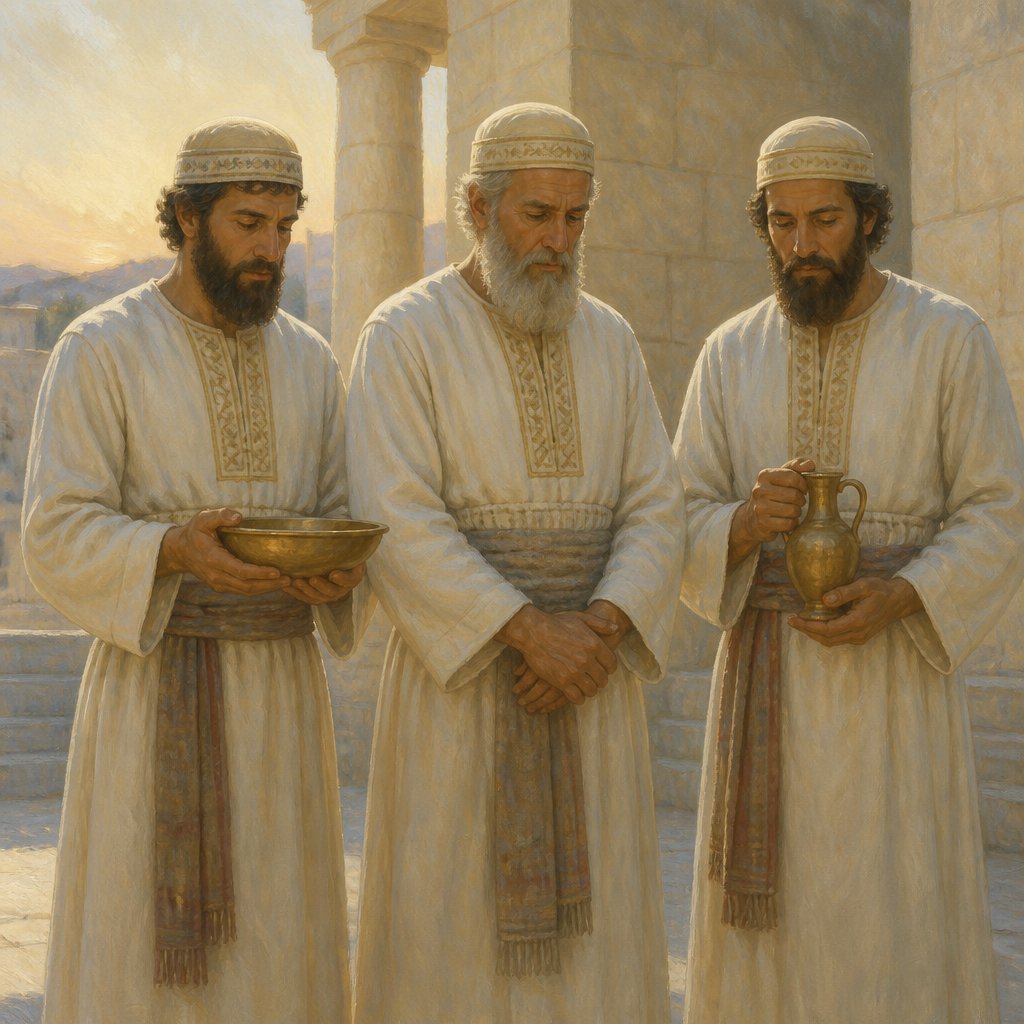
1 Chronicles 9:10 (KJV) states: "And of the priests; Jedaiah, and Jehoiarib, and Jachin."
This verse is part of a genealogical record found in the book of 1 Chronicles, which is a part of the Hebrew Bible. The book of 1 Chronicles is believed to have been written by Ezra the scribe, and it serves as a historical record of the genealogies of the people of Israel, as well as their worship and service in the temple. This verse specifically lists the names of three priests: Jedaiah, Jehoiarib, and Jachin.
The mention of these priests is significant within the larger context of the book of 1 Chronicles. The priests were responsible for carrying out the religious duties in the temple and maintaining the spiritual life of the people of Israel. The fact that their names are included in this genealogical record illustrates the importance of their role in the community and the value placed on their service to God.
The first priest mentioned in this verse is Jedaiah. The name "Jedaiah" means "Jehovah has known" or "Jehovah has cast a look upon." The significance of this name lies in the idea of divine knowledge and attention. This suggests that Jedaiah was recognized and chosen by God for his role as a priest.
The second priest listed is Jehoiarib. The name "Jehoiarib" means "Jehovah contends" or "whom Jehovah defends." This name conveys the idea of God as a protector and defender, which could indicate that Jehoiarib was seen as one who relied on God for strength and protection as he carried out his duties as a priest.
The third priest mentioned is Jachin. The name "Jachin" means "he establishes" or "Jehovah will establish." This name signifies the idea of God's faithfulness and stability. Jachin may have been known for his unwavering commitment to God and the establishment of his faith in the community.
These names not only serve as historical markers but also carry symbolic significance. They reflect the attributes and characteristics that were valued in the priesthood and were essential for the spiritual leadership of the people of Israel. The inclusion of these names in the genealogical record serves as a reminder of the faithfulness, dedication, and spiritual leadership that were present within the priesthood of Israel.
Furthermore, the mention of these priests can also be seen as a testament to the faithfulness of God in preserving and honoring the lineage of the priesthood. By recording these names, the text emphasizes the continuity and significance of the priesthood throughout Israel's history.
In a broader sense, this verse reflects the theme of faithfulness and God's providence. The inclusion of these priests' names in the genealogical record highlights God's faithfulness in maintaining the priesthood and preserving the spiritual heritage of the people of Israel. It also emphasizes the importance of faithfulness and dedication in the service of God, as exemplified by the priests mentioned in this verse.
In conclusion, 1 Chronicles 9:10 (KJV) may appear as a simple genealogical record at first glance, but upon closer examination, it reveals deep symbolic meanings and themes of faithfulness, spiritual leadership, and God's providence. The inclusion of the names of these priests serves as a reminder of the importance of these qualities in the service of God and the preservation of the spiritual heritage of the people of Israel.
Get our apps


Artwork for 1 Chronicles 9:10

1 Chronicles 9:10 - "¶ And of the priests; Jedaiah, and Jehoiarib, and Jachin,"
"¶ And of the priests; Jedaiah, and Jehoiarib, and Jachin," - 1 Chronicles 9:10

1 Chronicles 10:9 - "And when they had stripped him, they took his head, and his armour, and sent into the land of the Philistines round about, to carry tidings unto their idols, and to the people."

Psalm 10:9-10

2 Chronicles 9:10 - "And the servants also of Huram, and the servants of Solomon, which brought gold from Ophir, brought algum trees and precious stones."

1 Chronicles 4 : 10

1 Chronicles 10:10 - "And they put his armour in the house of their gods, and fastened his head in the temple of Dagon."

1 Chronicles 9:37 - "And Gedor, and Ahio, and Zechariah, and Mikloth."

1 Chronicles 24:9 - "The fifth to Malchijah, the sixth to Mijamin,"

1 Chronicles 1:10 - "And Cush begat Nimrod: he began to be mighty upon the earth."

1 Chronicles 12:10 - "Mishmannah the fourth, Jeremiah the fifth,"

1 Chronicles 24:10 - "The seventh to Hakkoz, the eighth to Abijah,"

John 10:9

1 Chronicles 9:5 - "And of the Shilonites; Asaiah the firstborn, and his sons."

1 Chronicles 9:30 - "And some of the sons of the priests made the ointment of the spices."

1 Chronicles 6:9 - "And Ahimaaz begat Azariah, and Azariah begat Johanan,"

1 Chronicles 12:9 - "Ezer the first, Obadiah the second, Eliab the third,"

1 Chronicles 14:9 - "And the Philistines came and spread themselves in the valley of Rephaim."

Daniel 7: 9-10

Daniel 7:9-10

Daniel 7:9-10

1 Chronicles 1:9 - "And the sons of Cush; Seba, and Havilah, and Sabta, and Raamah, and Sabtecha. And the sons of Raamah; Sheba, and Dedan."

Daniel 7:9-10

1 Chronicles 26:9 - "And Meshelemiah had sons and brethren, strong men, eighteen."

1 Chronicles 9:41 - "And the sons of Micah were, Pithon, and Melech, and Tahrea, and Ahaz."

1 Chronicles 21:9 - "¶ And the LORD spake unto Gad, David's seer, saying,"

1 Chronicles 9:9 - "And their brethren, according to their generations, nine hundred and fifty and six. All these men were chief of the fathers in the house of their fathers."

1 Chronicles 9:6 - "And of the sons of Zerah; Jeuel, and their brethren, six hundred and ninety."

1 Chronicles 15:9 - "Of the sons of Hebron; Eliel the chief, and his brethren fourscore:"

1 Chronicles 9:21 - "And Zechariah the son of Meshelemiah was porter of the door of the tabernacle of the congregation."