What does 1 Corinthians 1:9 mean?
“God is faithful, by whom ye were called unto the fellowship of his Son Jesus Christ our Lord.” — 1 Corinthians 1:9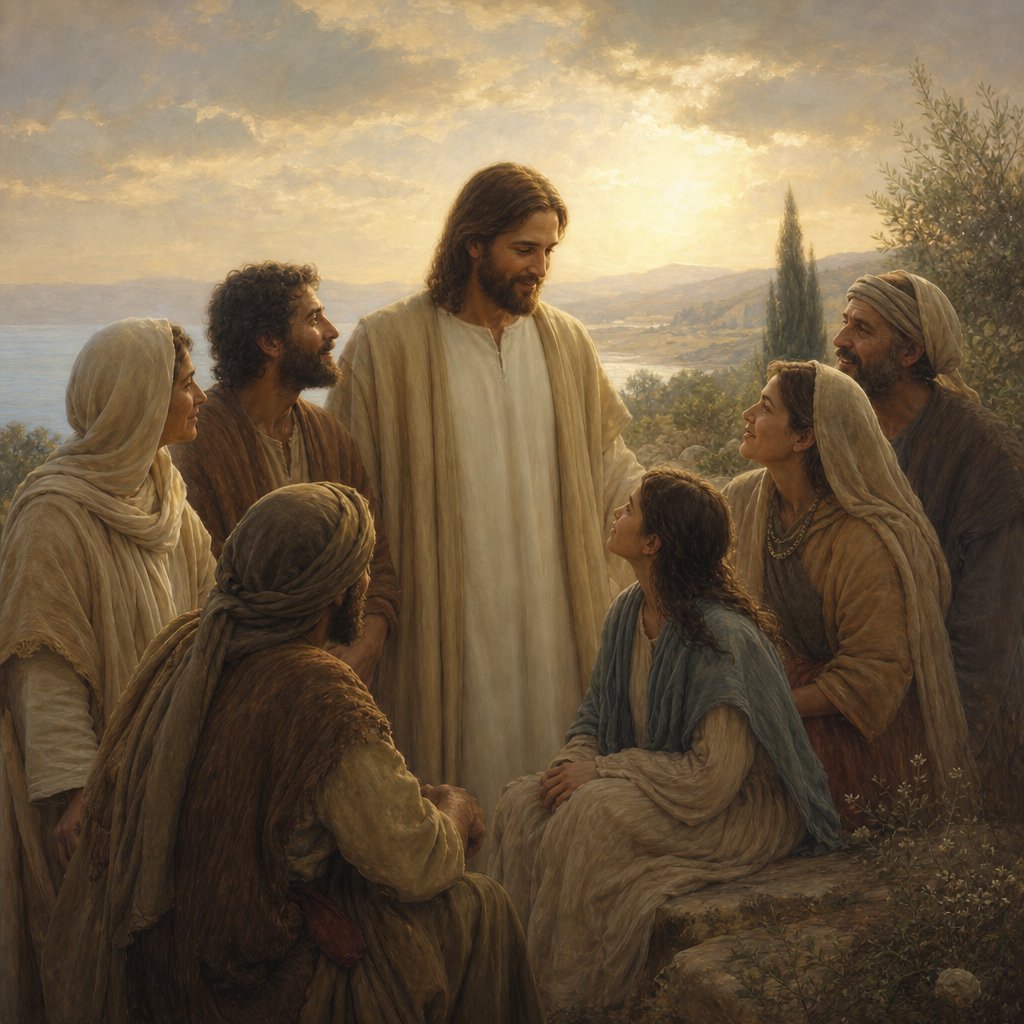
“God is faithful, by whom ye were called unto the fellowship of his Son Jesus Christ our Lord.” (1 Corinthians 1:9, KJV)
In this single sentence Paul gathers up the ground of the believer’s confidence and the remedy for the church’s disorders. The verse comes at the end of Paul’s opening thanksgiving (1 Corinthians 1:4–9), just before he turns to rebuke the Corinthians for divisions and party spirit (1 Corinthians 1:10 and following). The placement matters: before Paul corrects what is crooked in them, he anchors what is sure in God. The Corinthians were gifted, energetic, and yet fractured; Paul begins by pointing not to their steadiness but to God’s steadiness. The significance of the verse is that the church’s hope does not finally rest on the strength of its members, but on the character of the One who called them.
The first theme is the faithfulness of God. “God is faithful” is not a vague comfort but a covenant declaration. In the KJV sense, God’s faithfulness means He does not change, does not fail, and does not break His word. Paul has just spoken of Christ “confirm[ing] you unto the end” (1 Corinthians 1:8, KJV). Verse 9 explains why such confirmation is not wishful thinking: it is grounded in who God is. The Corinthians may be inconsistent, but the Lord who began the work will not abandon it. In context, that faithfulness is meant to steady a congregation tempted to define itself by human leaders, human wisdom, and human status. God’s loyalty to His own purpose is stronger than their instability.
The next theme is calling. “By whom ye were called” points to salvation as God’s initiative rather than man’s achievement. To be “called” in Paul’s thought is more than being invited; it is God summoning a people to Himself with effective purpose. This matters in Corinth, a city marked by social stratification and competitive identity. If God has called them, then their primary identity is not “of Paul,” “of Apollos,” “of Cephas,” or “of Christ” as rival slogans (1 Corinthians 1:12, KJV), but called ones belonging to God, gathered by His voice. Calling also implies obligation: a call creates a new allegiance. They were not called to continue in the old patterns of rivalry, boasting, and self-display, but into a shared life that reorders their loyalties.
What they were called into is “the fellowship of his Son Jesus Christ our Lord.” “Fellowship” here carries the weight of participation, communion, and shared life. It is not merely friendliness among believers, but a spiritual sharing in Christ Himself, and therefore a sharing with all who are in Him. The Corinthians were treating fellowship as something that could be fractured by preference and pride; Paul insists that fellowship is first with “his Son,” and only then with one another. This is a profound corrective: Christian unity is not manufactured by agreement of personalities; it flows from a common participation in one Lord. To be in fellowship with Christ is to be bound to the whole body that belongs to Him, because one cannot truly cling to the Head while despising the members.
The symbolism in the verse is relational and familial. God is named, then His Son, then the believers who are called, and the word “fellowship” becomes the bridge. It suggests an inclusion into a sacred relationship: the believers are brought into a shared communion that centers on the Son. The phrase “his Son Jesus Christ our Lord” is itself densely symbolic. “His Son” highlights divine sonship and the unique relationship between the Father and the Son; it implies that the fellowship offered is not a mere moral program but a participation in what God has accomplished through the One who belongs to Him in an eternal way. “Jesus” points to His saving mission, “Christ” to His anointed office and fulfillment of promise, and “our Lord” to His rightful authority over the church. Thus the fellowship is not casual; it is covenantal and lordly. They are called into communion with One who rules them, redeems them, and defines them.
The verse also carries a theme of assurance that is designed to produce humility rather than presumption. Because God is faithful and the calling is His, believers may have confidence that God will not discard them; yet because the fellowship is with Christ as “our Lord,” they are summoned to submit. In the flow of the chapter, Paul will soon contrast the pride of human wisdom with “the preaching of the cross” (1 Corinthians 1:18, KJV). Verse 9 quietly prepares for that contrast: if God’s faithfulness is the foundation, then boasting in men is exposed as both unnecessary and rebellious. The church’s life is meant to be a lived-out fellowship with the crucified and risen Lord, which necessarily undermines self-exaltation.
In sum, 1 Corinthians 1:9 teaches that the stability of the Christian life and the unity of the church rest on God’s faithful character, that believers exist as a called people rather than a self-formed club, and that the heart of their identity is communion with “his Son Jesus Christ our Lord.” In a letter that will confront chaos, pride, and division, this verse stands as a theological cornerstone: God gathers, God keeps, and God binds His people together by bringing them into living fellowship with Christ.
Get our apps


Artwork for 1 Corinthians 1:9

1 Corinthians 1:9 - "God is faithful, by whom ye were called unto the fellowship of his Son Jesus Christ our Lord."

"God is faithful, by whom ye were called unto the fellowship of his Son Jesus Christ our Lord." - 1 Corinthians 1:9
"God is faithful, by whom ye were called unto the fellowship of his Son Jesus Christ our Lord." - 1 Corinthians 1:9

1 Corinthians 9:25-27

1 Corinthians 9:25-27

1 Corinthians 9:25-27

1 Corinthians 9:25-27

1 Corinthians 9:4 - "Have we not power to eat and to drink?"

1 Corinthians 13:9 - "For we know in part, and we prophesy in part."

1 Corinthians 11:9 - "Neither was the man created for the woman; but the woman for the man."

1 Corinthians 9:3 - "Mine answer to them that do examine me is this,"

2 Corinthians 9:1 - "For as touching the ministering to the saints, it is superfluous for me to write to you:"

1 Corinthians 5:9 - "I wrote unto you in an epistle not to company with fornicators:"

1 Corinthians 16:9 - "For a great door and effectual is opened unto me, and there are many adversaries."

1 Corinthians 9:6 - "Or I only and Barnabas, have not we power to forbear working?"

1 Corinthians 9:8 - "Say I these things as a man? or saith not the law the same also?"

Eternal Victor's Crown: 1 Corinthians 9:25

1 Corinthians 9:23 - "And this I do for the gospel's sake, that I might be partaker thereof with you."

1 Corinthians 7:9 - "But if they cannot contain, let them marry: for it is better to marry than to burn."

1 Corinthians 12:9 - "To another faith by the same Spirit; to another the gifts of healing by the same Spirit;"

1 Corinthians 9:9 - "For it is written in the law of Moses, Thou shalt not muzzle the mouth of the ox that treadeth out the corn. Doth God take care for oxen?"

1 Corinthians 9:1 - "Am I not an apostle? am I not free? have I not seen Jesus Christ our Lord? are not ye my work in the Lord?"

1 Corinthians 3:9 - "For we are labourers together with God: ye are God's husbandry, ye are God's building."

1 Corinthians 9:14 - "Even so hath the Lord ordained that they which preach the gospel should live of the gospel."

1 Corinthians 8:9 - "But take heed lest by any means this liberty of your's become a stumblingblock to them that are weak."

1 Corinthians 9:26 - "I therefore so run, not as uncertainly; so fight I, not as one that beateth the air:"

1 Corinthians 10:9 - "Neither let us tempt Christ, as some of them also tempted, and were destroyed of serpents."

1 Corinthians 15:9 - "For I am the least of the apostles, that am not meet to be called an apostle, because I persecuted the church of God."

2 Corinthians 1:9 - "But we had the sentence of death in ourselves, that we should not trust in ourselves, but in God which raiseth the dead:"

"Have we not power to eat and to drink?" - 1 Corinthians 9:4