What does 1 Corinthians 11:22 mean?
“What? have ye not houses to eat and to drink in? or despise ye the church of God, and shame them that have not? What shall I say to you? shall I praise you in this? I praise you not.” — 1 Corinthians 11:22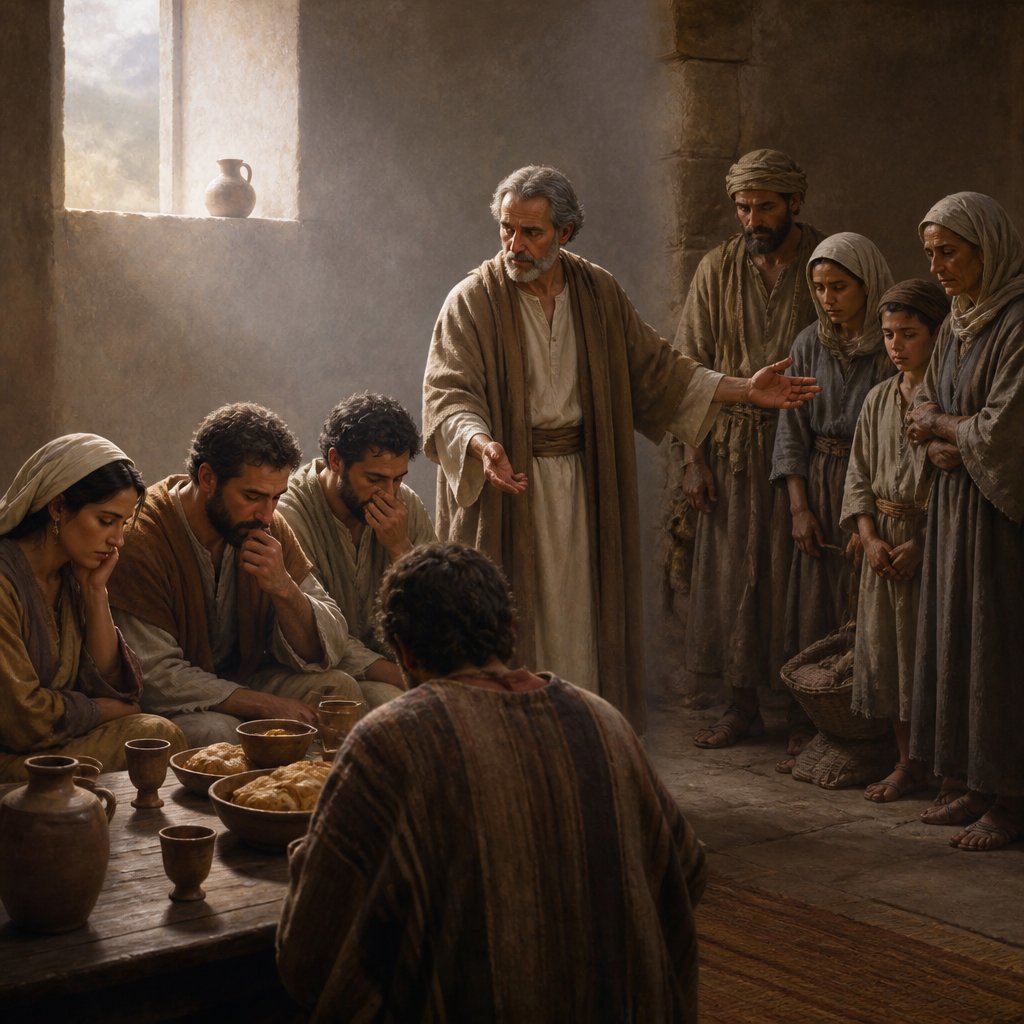
1 Corinthians 11:22 in the King James Version states, "What? have ye not houses to eat and to drink in? or despise ye the church of God, and shame them that have not? What shall I say to you? shall I praise you in this? I praise you not."
This passage from the first letter to the Corinthians is part of a larger discussion on the conduct of believers during corporate worship, specifically in the context of the Lord's Supper. In this verse, the apostle Paul is rebuking the Corinthian church for their disrespectful and disorderly behavior during the communal meal that accompanied the celebration of the Lord's Supper.
The verse begins with a rhetorical question, "What? have ye not houses to eat and to drink in?" This question highlights the improper behavior of the Corinthians, who were engaging in gluttony and drunkenness at the communal meal instead of approaching the Lord's Supper with reverence and humility. It suggests that these activities were more appropriate for private settings, such as their own homes, rather than within the sacred assembly of believers.
Paul then continues with another rhetorical question, "or despise ye the church of God, and shame them that have not?" Here, Paul confronts the Corinthians for their disregard of the sanctity of the church and their insensitivity towards their fellow believers' needs. By prioritizing their own indulgence over the spiritual significance of the communal meal and by flaunting their excesses in the presence of those who were less fortunate, the Corinthians were demonstrating a lack of love and unity within the body of Christ.
The passage concludes with Paul's unequivocal condemnation, "What shall I say to you? shall I praise you in this? I praise you not." Paul's disapproval of their behavior is clear, and he refuses to commend them for their misconduct. Instead, he seeks to correct their behavior and steer them back towards the proper observance of the Lord's Supper.
The overarching themes in this passage include the reverence for the sacred, the importance of communal unity, and the responsibility of believers to care for one another. The misconduct of the Corinthians serves as a cautionary example, reminding readers of the need for humility, self-discipline, and mutual respect within the church community.
In the broader context of the letter to the Corinthians, this passage is part of Paul's effort to address the various issues and divisions that were plaguing the church in Corinth. Throughout the letter, Paul addresses issues such as factionalism, immorality, disputes, and improper conduct during worship. In this particular passage, Paul is emphasizing the significance of the Lord's Supper as a sacred and solemn occasion that should be approached with reverence and dignity.
Symbolically, the Corinthian church's behavior serves as a warning against the dangers of selfishness, indulgence, and neglect of the spiritual needs of others. The communal meal and the Lord's Supper represent the unity and fellowship of believers in the body of Christ, and the Corinthians' behavior illustrates the failure to recognize and honor this spiritual reality.
In conclusion, 1 Corinthians 11:22 in the King James Version serves as a powerful reminder of the need for reverence, humility, and mutual care within the church community. It challenges believers to approach communal worship with sincerity and respect for the sacred, and it admonishes against behavior that disregards the needs and dignity of fellow believers. Ultimately, this passage urges readers to uphold the values of love, unity, and spiritual integrity within the body of Christ.
Get our apps


Artwork for 1 Corinthians 11:22

1 Corinthians 11:22 - "What? have ye not houses to eat and to drink in? or despise ye the church of God, and shame them that have not? What shall I say to you? shall I praise you in this? I praise you not."
"What? have ye not houses to eat and to drink in? or despise ye the church of God, and shame them that have not? What shall I say to you? shall I praise you in this? I praise you not." - 1 Corinthians 11:22

1 Corinthians 1:22 - "For the Jews require a sign, and the Greeks seek after wisdom:"

2 Corinthians 11:22 - "Are they Hebrews? so am I. Are they Israelites? so am I. Are they the seed of Abraham? so am I."

1 Corinthians 12:12-22

1 Corinthians 11:26-29

1 Corinthians 11:26-29

1 Corinthians 11:8 - "For the man is not of the woman; but the woman of the man."

1 Corinthians 11:1 - "Be ye followers of me, even as I also am of Christ."

1 Corinthians 11:11 - "Nevertheless neither is the man without the woman, neither the woman without the man, in the Lord."

1 Corinthians 15:8-11

1 Corinthians 10:22 - "Do we provoke the Lord to jealousy? are we stronger than he?"

1 Corinthians 16:22 - "If any man love not the Lord Jesus Christ, let him be Anathema Maranatha."

1 Corinthians 11:9 - "Neither was the man created for the woman; but the woman for the man."

1 Corinthians 11:31 - "For if we would judge ourselves, we should not be judged."

2 Corinthians 1:22 - "Who hath also sealed us, and given the earnest of the Spirit in our hearts."

1 Corinthians 15:22 - "For as in Adam all die, even so in Christ shall all be made alive."

1 Corinthians 11:30 - "For this cause many are weak and sickly among you, and many sleep."

1 Corinthians 12:22 - "Nay, much more those members of the body, which seem to be more feeble, are necessary:"

1 Corinthians 11:13 - "Judge in yourselves: is it comely that a woman pray unto God uncovered?"

1 Corinthians 11:10 - "For this cause ought the woman to have power on her head because of the angels."

1 Corinthians 3:22 - "Whether Paul, or Apollos, or Cephas, or the world, or life, or death, or things present, or things to come; all are your's;"

1 Corinthians 11:20 - "When ye come together therefore into one place, this is not to eat the Lord's supper."
"For the Jews require a sign, and the Greeks seek after wisdom:" - 1 Corinthians 1:22

1 Corinthians 1:11 - "For it hath been declared unto me of you, my brethren, by them which are of the house of Chloe, that there are contentions among you."

1 Samuel 22:11-13

1 Corinthians 11:32 - "But when we are judged, we are chastened of the Lord, that we should not be condemned with the world."

1 Corinthians 11:16 - "But if any man seem to be contentious, we have no such custom, neither the churches of God."

1 Corinthians 8:11 - "And through thy knowledge shall the weak brother perish, for whom Christ died?"

1 Corinthians 12:11 - "But all these worketh that one and the selfsame Spirit, dividing to every man severally as he will."