What does 1 Corinthians 7:10-11 mean?
“And unto the married I command, yet not I, but the Lord, Let not the wife depart from her husband: But and if she depart, let her remain unmarried, or be reconciled to her husband: and let not the husband put away his wife.” — 1 Corinthians 7:10-11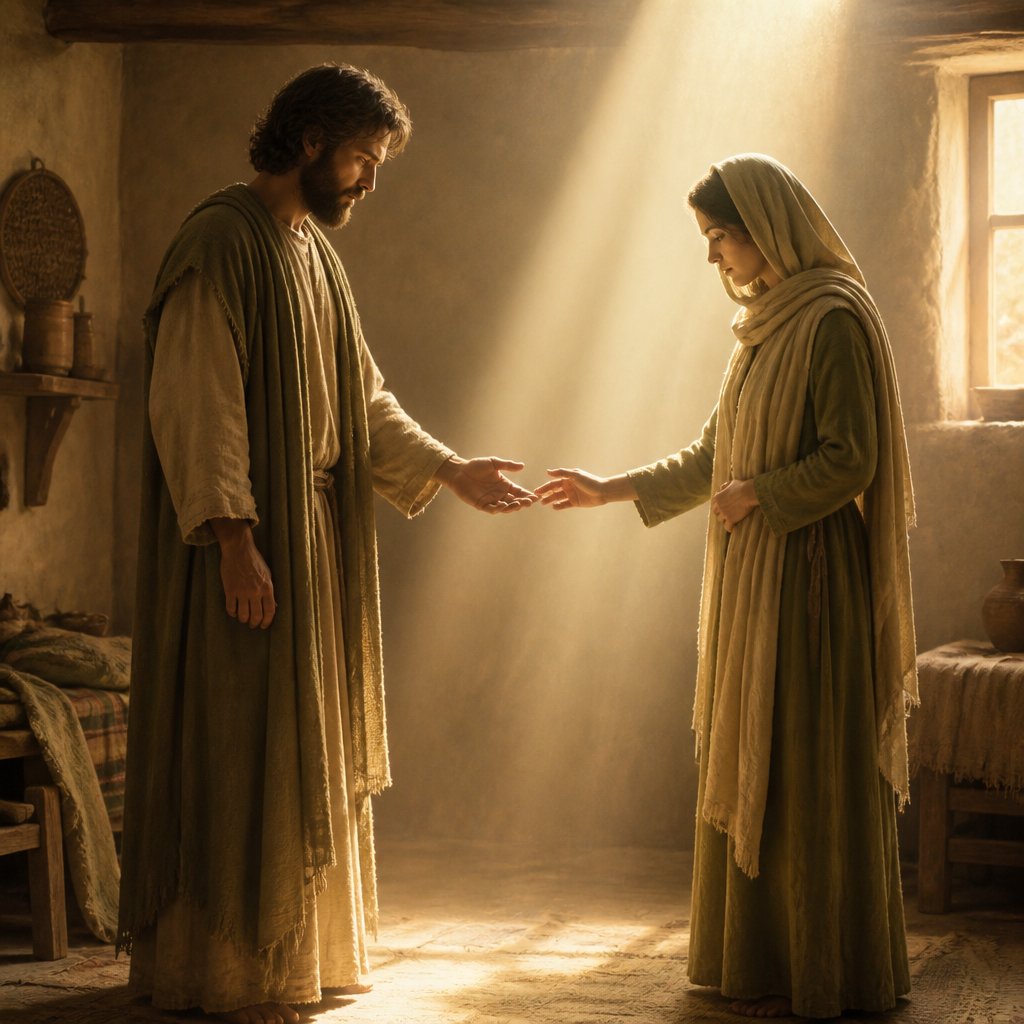
1 Corinthians 7:10-11 from the King James Version of the Bible reads, "And unto the married I command, yet not I, but the Lord, Let not the wife depart from her husband: But and if she depart, let her remain unmarried or be reconciled to her husband: and let not the husband put away his wife."
This passage is part of a larger section in Paul's first letter to the Corinthians in which he addresses various issues concerning marriage, singleness, and the Christian's relationship with the world. In these verses, he offers instruction to married couples, emphasizing the importance of maintaining the sanctity of the marriage vow.
Paul begins by emphasizing that his words are not his own, but rather a command from the Lord. This underscores the seriousness and divine authority behind his instructions. He then instructs wives not to separate from their husbands, but if they do, to either remain unmarried or be reconciled to their husbands.
The passage highlights the permanence and sanctity of marriage according to Christian teachings. Marriage is not to be taken lightly, and divorce should not be the first course of action. The language of the passage indicates the gravity of the decision to separate and the importance of seeking reconciliation if possible. This reflects the biblical view of marriage as a sacred covenant that is meant to be honored and preserved.
The passage also addresses the issue of divorce from the perspective of gender equality. In the society in which Paul wrote, women had little agency or legal protection in marriage. Paul's instruction for wives not to leave their husbands affirms the equal moral responsibility of both partners within the marriage. This passage reflects a radical and counter-cultural view of marriage in its time, affirming the dignity and agency of both spouses.
The passage also emphasizes the importance of reconciliation in cases where separation has occurred. While acknowledging the reality of marital conflict and the potential need for separation in extreme circumstances, Paul urges couples to seek reconciliation and restoration of their marriage. This reflects the biblical theme of forgiveness, grace, and the restoration of broken relationships, which is central to the Christian faith.
Furthermore, this passage speaks to the broader biblical theme of God's design for marriage as a reflection of Christ's covenantal love for his people. The commitment and fidelity inherent in marriage is a reflection of Christ's faithfulness to the church. This passage serves to remind Christians of the sacred nature of marriage and the importance of upholding its integrity as a covenant before God.
In terms of context, it is important to understand the cultural and historical background of the Corinthians to fully appreciate the significance of Paul's instructions. In the ancient world, marriage was often treated as a contract that could be easily dissolved, particularly for men. Women had very little autonomy and were often at the mercy of their husbands. Paul's instructions to the Corinthians elevate the status of marriage as a divine institution and call for mutual respect and commitment between husband and wife.
In terms of symbolism, this passage symbolizes the enduring and sacrificial love that mirrors Christ's love for the church. It underscores the importance of faithfulness, forgiveness, and reconciliation within the context of marriage. The passage also symbolizes the equal moral responsibility of both partners within the marriage, as well as the call to honor the sanctity of the marriage covenant.
In conclusion, 1 Corinthians 7:10-11 offers timeless wisdom and guidance on the sanctity of marriage, highlighting the divine responsibility and mutual commitment required of both spouses. It reaffirms the biblical teaching on marriage as a sacred covenant that reflects Christ's love for the church and emphasizes the importance of forgiveness, reconciliation, and honoring the marriage vow. This passage continues to serve as a source of moral and spiritual guidance for Christians today, encouraging them to uphold the dignity and sanctity of marriage as a reflection of God's love and faithfulness.
Get our apps


Artwork for 1 Corinthians 7:10-11

1 Corinthians 7:10-11 - "To the married I give this command (not I, but the Lord): A wife must not separate from her husband. But if she does, she must remain unmarried or else be reconciled to her husband. And a husband must not divorce his wife."
"To the married I give this command (not I, but the Lord): A wife must not separate from her husband. But if she does, she must remain unmarried or else be reconciled to her husband. And a husband must not divorce his wife." - 1 Corinthians 7:10-11

1 Corinthians 7:10 - "And unto the married I command, yet not I, but the Lord, Let not the wife depart from her husband:"

2 Corinthians 7:10

1 Corinthians 11:10 - "For this cause ought the woman to have power on her head because of the angels."

1 Corinthians 11:7 - "For a man indeed ought not to cover his head, forasmuch as he is the image and glory of God: but the woman is the glory of the man."

1 Corinthians 7:11 - "But and if she depart, let her remain unmarried, or be reconciled to her husband: and let not the husband put away his wife."

1 Corinthians 10:11 - "Now all these things happened unto them for ensamples: and they are written for our admonition, upon whom the ends of the world are come."

1 Corinthians 10:7 - "Neither be ye idolaters, as were some of them; as it is written, The people sat down to eat and drink, and rose up to play."

"And unto the married I command, yet not I, but the Lord, Let not the wife depart from her husband:" - 1 Corinthians 7:10
"For this cause ought the woman to have power on her head because of the angels." - 1 Corinthians 11:10

2 Corinthians 11:10 - "As the truth of Christ is in me, no man shall stop me of this boasting in the regions of Achaia."

2 Corinthians 7:10 - "For godly sorrow worketh repentance to salvation not to be repented of: but the sorrow of the world worketh death."

1 Corinthians 10:13

1 Corinthians 10:13

1 Corinthians 10:13

1 Corinthians 11:8 - "For the man is not of the woman; but the woman of the man."

1 Corinthians 11:1 - "Be ye followers of me, even as I also am of Christ."

1 Corinthians 10:26 - "For the earth is the Lord's, and the fulness thereof."

1 Corinthians 10:10 - "Neither murmur ye, as some of them also murmured, and were destroyed of the destroyer."

1 Corinthians 11:11 - "Nevertheless neither is the man without the woman, neither the woman without the man, in the Lord."

1 Corinthians 15:8-11

1 Corinthians 11:26-29

1 Corinthians 11:26-29

1 Corinthians 7:6 - "But I speak this by permission, and not of commandment."

2 Corinthians 10:11 - "Let such an one think this, that, such as we are in word by letters when we are absent, such will we be also in deed when we are present."

1 Corinthians 13:4-7

1 Corinthians 13:4-7

1 Corinthians 13:4-7

1 Corinthians 13:4-7