What does 1 Corinthians 9:7 mean?
“Who goeth a warfare any time at his own charges? who planteth a vineyard, and eateth not of the fruit thereof? or who feedeth a flock, and eateth not of the milk of the flock?” — 1 Corinthians 9:7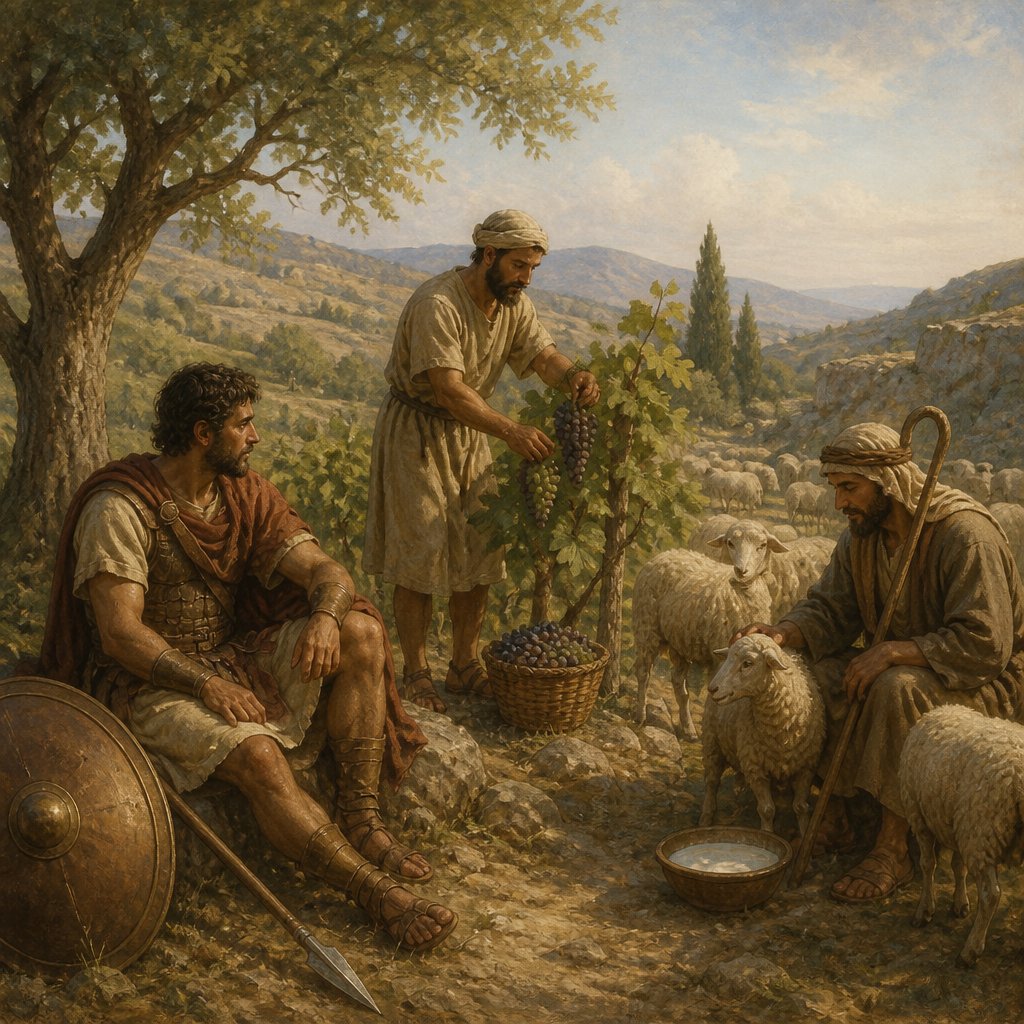
The Bible verse 1 Corinthians 9:7 from the King James Version (KJV) states, "Who goeth a warfare any time at his own charges? who planteth a vineyard, and eateth not of the fruit thereof? or who feedeth a flock, and eateth not of the milk of the flock?" This verse is part of a larger passage in which the apostle Paul addresses the Corinthians regarding his rights as an apostle and his decision to forego those rights for the sake of the gospel. In this specific verse, Paul uses three analogies to illustrate his point and to emphasize the principle of fair compensation for those who labor in the service of the gospel.
The first analogy of "Who goeth a warfare any time at his own charges?" draws upon the concept of a soldier who is sent to war and is expected to be supplied with the necessary provisions by the government or the army he serves. In the same way, Paul is highlighting the fact that those who labor in the ministry of the gospel should not be expected to bear the financial burden of their work alone. This is an important principle to consider, as ministers and missionaries often face financial hardships and depend on the support of the church and its members in order to carry out their work effectively.
The second analogy of "who planteth a vineyard, and eateth not of the fruit thereof" emphasizes the idea of reaping the benefits of one's labor. In the context of Christian ministry, this analogy speaks to the fact that those who invest their time, energy, and resources in spreading the gospel and nurturing the spiritual growth of others should be able to partake in the spiritual blessings and fruits that result from their efforts. This does not necessarily mean material gain, but rather the spiritual fulfillment and joy that comes from seeing lives transformed and communities impacted by the message of the gospel.
The third analogy of "who feedeth a flock, and eateth not of the milk of the flock" draws a comparison to a shepherd who tends to his flock and is entitled to benefit from the produce of his labor. This imagery of a shepherd caring for his flock is used throughout the Bible to represent God's relationship with His people and the responsibility of leaders within the church to care for and nurture the spiritual well-being of its members. Through this analogy, Paul emphasizes the mutual relationship between ministers and the church, highlighting the need for mutual support and care between leaders and their congregations.
In a broader sense, this verse highlights the principle of fair compensation and support for those who labor in the service of the gospel. It speaks to the importance of recognizing and valuing the contributions of those who dedicate their lives to spreading the message of Christ and building up the body of believers. This principle is echoed in other parts of the Bible, such as in 1 Timothy 5:18 which states, "For the scripture saith, Thou shalt not muzzle the ox that treadeth out the corn. And, The labourer is worthy of his reward." This verse reinforces the idea that those who work in the ministry should be provided for and supported by the church and its members.
The context of 1 Corinthians 9:7 is important to understanding its significance. In the preceding verses, Paul defends his right to receive material support for his work as an apostle, citing the examples of other apostles who were provided for by the churches they served. However, he goes on to explain that he has chosen to forego this right in order to avoid being a stumbling block to the gospel and to make himself more accessible to a wider audience. This displays Paul's selflessness and his willingness to prioritize the advancement of the gospel over his own personal comfort or gain.
Furthermore, the symbolism in this verse can be seen in the analogies used by Paul. The imagery of a soldier, a vineyard worker, and a shepherd all serve to paint a vivid picture of the labor and sacrifice involved in the ministry of the gospel. It also reflects the spiritual significance of these roles, as soldiers of Christ, workers in the vineyard of the Lord, and shepherds caring for His flock. These analogies serve to remind us of the spiritual nature of our labor and the importance of being supported and sustained in our work by the body of Christ.
In conclusion, 1 Corinthians 9:7 from the King James Version carries important themes of fair compensation, mutual support, and the spiritual significance of the labor involved in the service of the gospel. It serves as a reminder to value and honor those who work tirelessly to spread the message of Christ and to care for the spiritual well-being of others. The analogies used by Paul create a powerful and relatable imagery that underscores the importance of these principles and emphasizes the sacrificial nature of Christian ministry. Overall, this verse encourages us to support and care for those who labor in the service of the gospel, recognizing their contributions and sharing in their spiritual blessings.
Get our apps


Artwork for 1 Corinthians 9:7

1 Corinthians 9:7 - "Who goeth a warfare any time at his own charges? who planteth a vineyard, and eateth not of the fruit thereof? or who feedeth a flock, and eateth not of the milk of the flock?"

1 Corinthians 9:7-14 - "Who serves as a soldier at his own expense? Who plants a vineyard and does not eat its grapes? Who tends a flock and does not drink the milk? Do I say this merely on human authority? Doesn’t the Law say the same thing? For it is written in the Law of Moses: “Do not muzzle an ox while it is treading out the grain.” Is it about oxen that God is concerned? Surely he says this for us, doesn’t he? Yes, this was written for us, because whoever plows and threshes should be able to do so in the hope of sharing in the harvest. If we have sown spiritual seed among you, is it too much if we reap a material harvest from you? If others have this right of support from you, shouldn’t we have it all the more? But we did not use this right. On the contrary, we put up with anything rather than hinder the gospel of Christ. Don’t you know that those who serve in the temple get their food from the temple, and that those who serve at the altar share in what is offered on the altar? In the same way, the Lord has commanded that those who preach the gospel should receive their living from the gospel."
"Who goeth a warfare any time at his own charges? who planteth a vineyard, and eateth not of the fruit thereof? or who feedeth a flock, and eateth not of the milk of the flock?" - 1 Corinthians 9:7
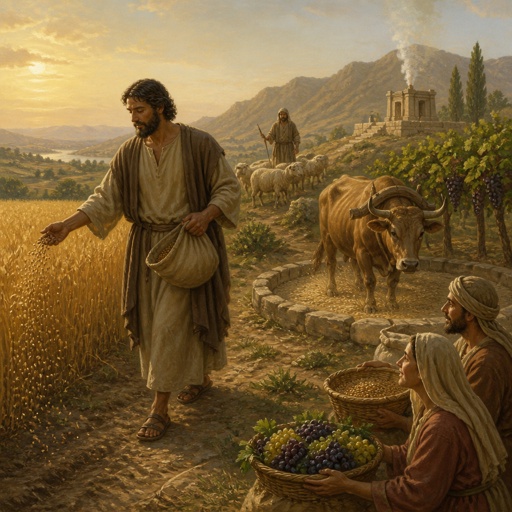
"Who serves as a soldier at his own expense? Who plants a vineyard and does not eat its grapes? Who tends a flock and does not drink the milk? Do I say this merely on human authority? Doesn’t the Law say the same thing? For it is written in the Law of Moses: “Do not muzzle an ox while it is treading out the grain.” Is it about oxen that God is concerned? Surely he says this for us, doesn’t he? Yes, this was written for us, because whoever plows and threshes should be able to do so in the hope of sharing in the harvest. If we have sown spiritual seed among you, is it too much if we reap a material harvest from you? If others have this right of support from you, shouldn’t we have it all the more? But we did not use this right. On the contrary, we put up with anything rather than hinder the gospel of Christ. Don’t you know that those who serve in the temple get their food from the temple, and that those who serve at the altar share in what is offered on the altar? In the same way, the Lord has commanded that those who preach the gospel should receive their living from the gospel." - 1 Corinthians 9:7-14
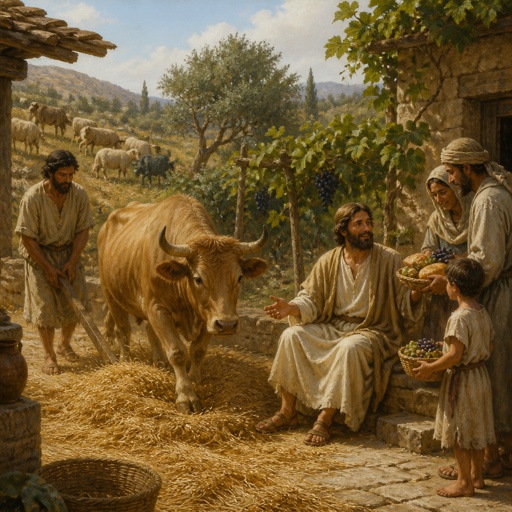
"Who serves as a soldier at his own expense? Who plants a vineyard and does not eat its grapes? Who tends a flock and does not drink the milk? Do I say this merely on human authority? Doesn’t the Law say the same thing? For it is written in the Law of Moses: “Do not muzzle an ox while it is treading out the grain.” Is it about oxen that God is concerned? Surely he says this for us, doesn’t he? Yes, this was written for us, because whoever plows and threshes should be able to do so in the hope of sharing in the harvest. If we have sown spiritual seed among you, is it too much if we reap a material harvest from you? If others have this right of support from you, shouldn’t we have it all the more? But we did not use this right. On the contrary, we put up with anything rather than hinder the gospel of Christ. Don’t you know that those who serve in the temple get their food from the temple, and that those who serve at the altar share in what is offered on the altar? In the same way, the Lord has commanded that those who preach the gospel should receive their living from the gospel." - 1 Corinthians 9:7-14

1 Corinthians 7:9 - "But if they cannot contain, let them marry: for it is better to marry than to burn."

Corinthians 9:6-7

1 Corinthians 9:25-27

1 Corinthians 9:25-27

"But if they cannot contain, let them marry: for it is better to marry than to burn." - 1 Corinthians 7:9

1 Corinthians 9:25-27

1 Corinthians 9:25-27

Corinthians 9:6-7 for Christmas card with little kids.

2 Corinthians 9:7 - "Every man according as he purposeth in his heart, so let him give; not grudgingly, or of necessity: for God loveth a cheerful giver."

Eternal Victor's Crown: 1 Corinthians 9:25

1 Corinthians 9:4 - "Have we not power to eat and to drink?"

1 Corinthians 7:6 - "But I speak this by permission, and not of commandment."

1 Corinthians 13:4-7

1 Corinthians 13:9 - "For we know in part, and we prophesy in part."

1 Corinthians 13:4-7

1 Corinthians 13:4-7

1 Corinthians 13:4-7

1 Corinthians 11:9 - "Neither was the man created for the woman; but the woman for the man."

1 Corinthians 9:3 - "Mine answer to them that do examine me is this,"

1 Corinthians 15:7 - "After that, he was seen of James; then of all the apostles."

1 Corinthians 7:23 - "Ye are bought with a price; be not ye the servants of men."

2 Corinthians 9:1 - "For as touching the ministering to the saints, it is superfluous for me to write to you:"

1 Corinthians 5:9 - "I wrote unto you in an epistle not to company with fornicators:"

A heartfelt Christmas card scene inspired by Corinthians 9:6-7, drawn by a 7 year old kid with color pencil, crayons and watercolour.

A heartfelt Christmas card scene inspired by Corinthians 9:6-7, drawn by a 7 year old kid with color pencil, crayons and watercolour.