What does 1 John 3:1 mean?
“Behold, what manner of love the Father hath bestowed upon us, that we should be called the sons of God: therefore the world knoweth us not, because it knew him not.” — 1 John 3:1
“Behold, what manner of love the Father hath bestowed upon us, that we should be called the sons of God: therefore the world knoweth us not, because it knew him not.” (1 John 3:1, KJV)
In its immediate context, this verse is a summons to stop and look steadily at something so great it can be missed through familiarity: the astonishing kind of love God has given. The word “Behold” is not a decoration; it functions like a holy interruption. John is pressing the reader to consider not only that God loves, but what “manner” of love this is—love of such a quality and origin that it does not fit ordinary human categories. In 1 John, love is never presented as mere sentiment. It is action and gift, grounded in what God has done and who God is, and it carries consequences for identity, conduct, and separation from the world’s values.
The central theme is adoption and identity: “that we should be called the sons of God.” John sets this naming as a bestowed status, not an achieved rank. The verb “hath bestowed” emphasizes that this sonship is conferred freely by the Father’s initiative. In the flow of 1 John, this declaration stands on the foundation of the earlier teaching that believers are brought into fellowship with God through His Son, and that genuine relationship with God is evidenced by righteousness and love. The verse directly precedes John’s development that those who are “born of God” do not continue in the practice of sin and that God’s children are manifested in their righteousness and love. Thus, being “called the sons of God” is not only a title but a new reality that is meant to show itself.
The language also carries the tenderness of family. John does not say merely that believers are subjects in God’s kingdom, though that is true elsewhere; he says they are God’s sons. This is intimate, relational, and permanent in a way that other metaphors are not. It implies belonging, inheritance, likeness, and Fatherly care. The love John describes is therefore not primarily the love that overlooks from a distance, but the love that brings near, gives a name, and makes a home. The Father’s love is shown as a love that places people within His family and openly identifies them as His own.
At the same time, the verse immediately introduces a sober contrast: “therefore the world knoweth us not, because it knew him not.” The “therefore” is crucial. John connects the gift of sonship to the experience of alienation: because believers are now marked by a heavenly identity, the world does not “know” them. In John’s writings, to “know” often means more than recognition; it is understanding, receiving, and acknowledging in truth. The world’s failure to know believers is not merely social misunderstanding; it is spiritual nonrecognition. And John anchors that in the world’s prior rejection of Christ: “because it knew him not.” Believers share in Christ’s pattern. As the Son was not truly recognized by a world opposed to God, so God’s sons will be similarly misread, dismissed, or resisted.
This carries a symbolic weight. “The Father” stands as the source of life, authority, and love; “sons of God” symbolizes new birth, family likeness, and belonging; “the world” symbolizes the order of life organized apart from God—its assumptions, loves, and blindness; “knew him not” symbolizes a moral and spiritual darkness that cannot appraise divine love rightly. John’s symbolism is not abstract; it is pastoral. He prepares believers to interpret their experience. If the world does not understand them, that is not proof that their faith has failed; it may be evidence that their identity is real, because it matches the world’s treatment of Christ.
The verse also carries an implicit call to holiness and perseverance, not by threat but by wonder. John points first to love—God’s bestowed love—as the engine of the Christian life. The believer’s obedience and separation from the world’s ways are not meant to be driven by mere fear or pride, but by amazement at the Father’s love that has named them His sons. The significance, then, is twofold and inseparable: 1 John 3:1 is a proclamation of grace that grants a new name and a new family, and it is an explanation of why that new identity will often be misunderstood by the world. John is teaching that the Christian life is lived under a Father’s love that confers sonship, and within a world that cannot truly recognize that sonship because it did not recognize the Son Himself.
Get our apps


Artwork for 1 John 3:1

1 John 3:1-3

1 John 3:1 - "Behold, what manner of love the Father hath bestowed upon us, that we should be called the sons of God: therefore the world knoweth us not, because it knew him not."

"Behold, what manner of love the Father hath bestowed upon us, that we should be called the sons of God: therefore the world knoweth us not, because it knew him not." - 1 John 3:1

"Behold, what manner of love the Father hath bestowed upon us, that we should be called the sons of God: therefore the world knoweth us not, because it knew him not." - 1 John 3:1
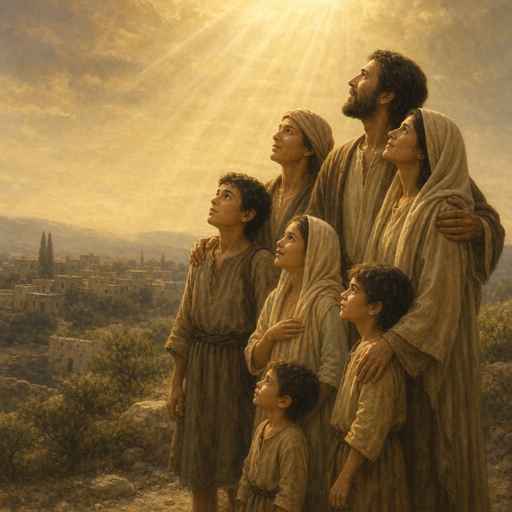
"Behold, what manner of love the Father hath bestowed upon us, that we should be called the sons of God: therefore the world knoweth us not, because it knew him not." - 1 John 3:1

John 3:3

John 3:3-8

John 3:14

John 3:16

John 3:16

John 1:3

John 1:3

John 3:16

John 3:16

John 3-16

John 3:16

John 3:16

John 12:3

BORN AGAIN JOHN 3:1-13

3 John 1:1 - "The elder unto the wellbeloved Gaius, whom I love in the truth."

John 9:1-3

John 19:1-3

Born again. John 3

1 John 3:3 - "And every man that hath this hope in him purifieth himself, even as he is pure."

John 3:1 - "There was a man of the Pharisees, named Nicodemus, a ruler of the Jews:"

1 John 3:13 - "Marvel not, my brethren, if the world hate you."

Matthew 3:1 - "In those days came John the Baptist, preaching in the wilderness of Judaea,"

3 John 1:3 - "For I rejoiced greatly, when the brethren came and testified of the truth that is in thee, even as thou walkest in the truth."

3 John 1:8 - "We therefore ought to receive such, that we might be fellowhelpers to the truth."

3 John 1:5 - "Beloved, thou doest faithfully whatsoever thou doest to the brethren, and to strangers;"