What does 1 Kings 10:29 mean?
“And a chariot came up and went out of Egypt for six hundred shekels of silver, and an horse for an hundred and fifty: and so for all the kings of the Hittites, and for the kings of Syria, did they bring them out by their means.” — 1 Kings 10:29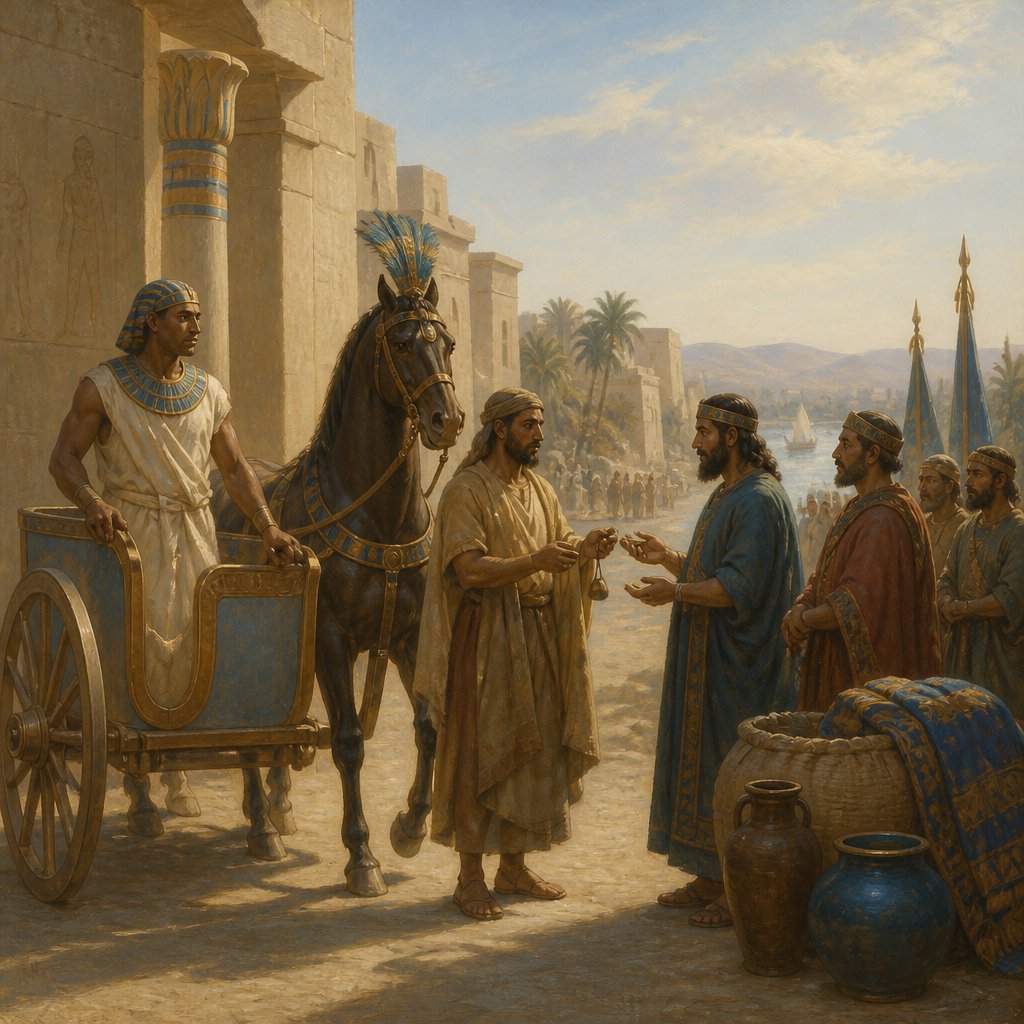
1 Kings 10:29 (KJV) says, "And a chariot came up and went out of Egypt for six hundred shekels of silver, and a horse for an hundred and fifty: and so for all the kings of the Hittites, and for the kings of Syria, did they bring them out by their means."
This verse is found in the Old Testament of the Bible and comes at the end of the chapter which describes the wealth and splendor of King Solomon. In this particular verse, the focus is on the wealth and resources that Solomon acquired during his reign as king.
In order to fully understand the significance and meaning of this verse, it is important to examine its context within the broader narrative of 1 Kings. Prior to this verse, the chapter describes the visit of the Queen of Sheba to Solomon. She has heard of Solomon's great wisdom and prosperity and comes to see for herself. The chapter describes the wealth and abundance that Solomon possessed, as well as the respect and admiration he received from other nations. This verse, then, is a continuation of the depiction of Solomon's wealth and the resources at his disposal.
The verse begins by mentioning the arrival of chariots from Egypt, which were purchased for six hundred shekels of silver. This speaks to the opulence and extravagance of Solomon's kingdom. Chariots were a symbol of military power and wealth in the ancient world, and the fact that Solomon was able to acquire them from Egypt at such a high cost further demonstrates his wealth and influence. Additionally, the mention of Egypt as the source of these chariots is significant, as Egypt was a powerful and influential nation at the time. The fact that Solomon was able to make such significant acquisitions from a nation like Egypt speaks to his political savvy and ability to navigate international relations.
The verse also mentions the acquisition of horses, at a cost of one hundred and fifty shekels. Horses were also a symbol of wealth and power in ancient times, and the fact that Solomon was able to acquire them from foreign nations speaks to his status as a powerful and influential king. Additionally, the mention of the kings of the Hittites and Syria indicates that Solomon's reach and influence extended beyond the borders of his own kingdom. He was able to establish trade and diplomatic relations with neighboring nations, and this verse serves as a testament to his ability to expand his kingdom's resources and influence.
In addition to the literal meaning of the verse, there are also symbolic and thematic implications that can be drawn from it. One of the overarching themes of this verse is the portrayal of Solomon as a wealthy and powerful king. The extravagant prices paid for the chariots and horses reflect Solomon's opulence and the abundance of resources at his disposal. This serves to highlight the idea of Solomon as a ruler of unprecedented wealth and influence, which was a key aspect of his legacy.
Furthermore, the verse can also be interpreted as a demonstration of Solomon's wisdom and strategic prowess. The fact that he was able to negotiate and secure such valuable resources from foreign nations reflects his ability to navigate complex political dynamics and establish beneficial relationships with other kingdoms. This highlights another aspect of Solomon's legacy – his reputation as a wise and diplomatic ruler.
Overall, 1 Kings 10:29 serves as a testament to the wealth, power, and influence of King Solomon. It highlights his ability to acquire valuable resources from foreign nations and demonstrates his status as a wealthy and influential ruler. The verse also carries symbolic and thematic significance, underscoring Solomon's opulence and political acumen. As a part of the larger narrative of 1 Kings, it contributes to the overall portrayal of Solomon as a wise and influential king whose reign was marked by prosperity and abundance.
Get our apps


Artwork for 1 Kings 10:29

1 Kings 10:29 - "And a chariot came up and went out of Egypt for six hundred shekels of silver, and an horse for an hundred and fifty: and so for all the kings of the Hittites, and for the kings of Syria, did they bring them out by their means."
"And a chariot came up and went out of Egypt for six hundred shekels of silver, and an horse for an hundred and fifty: and so for all the kings of the Hittites, and for the kings of Syria, did they bring them out by their means." - 1 Kings 10:29

1 Kings 11:29-32

1 Kings 10:1

1 Kings 14:29 - "¶ Now the rest of the acts of Rehoboam, and all that he did, are they not written in the book of the chronicles of the kings of Judah?"

1 Kings 10:1

1 kings 10:1

1 Kings 1:29 - "And the king sware, and said, As the LORD liveth, that hath redeemed my soul out of all distress,"

1 Kings 22:29 - "So the king of Israel and Jehoshaphat the king of Judah went up to Ramoth-gilead."

1 Kings 12:29 - "And he set the one in Beth-el, and the other put he in Dan."

1 Kings 10:23 - "So king Solomon exceeded all the kings of the earth for riches and for wisdom."

2 Kings 10:29 - "¶ Howbeit from the sins of Jeroboam the son of Nebat, who made Israel to sin, Jehu departed not from after them, to wit, the golden calves that were in Beth-el, and that were in Dan."

1 Kings 8:10

1 Kings 12:10

1 Kings 12:10

1 Kings 8:10

1 Kings 8:10

1 Kings 12:10

1 Kings 8:10

1 Kings 8:10

1 Kings 12:10

1 Kings 8:10

1 Kings 8:10

1 Kings 4:29 - "¶ And God gave Solomon wisdom and understanding exceeding much, and largeness of heart, even as the sand that is on the sea shore."

1 Kings 10:15 - "Beside that he had of the merchantmen, and of the traffick of the spice merchants, and of all the kings of Arabia, and of the governors of the country."

1 Kings 1:10 - "But Nathan the prophet, and Benaiah, and the mighty men, and Solomon his brother, he called not."

1 Corinthians 10:29 - "Conscience, I say, not thine own, but of the other: for why is my liberty judged of another man's conscience?"

1 Kings 6:29 - "And he carved all the walls of the house round about with carved figures of cherubims and palm trees and open flowers, within and without."

1 Kings 3:10 - "And the speech pleased the Lord, that Solomon had asked this thing."

"¶ Now the rest of the acts of Rehoboam, and all that he did, are they not written in the book of the chronicles of the kings of Judah?" - 1 Kings 14:29