What does 1 Kings 11:1 mean?
“But king Solomon loved many strange women, together with the daughter of Pharaoh, women of the Moabites, Ammonites, Edomites, Zidonians, and Hittites;” — 1 Kings 11:1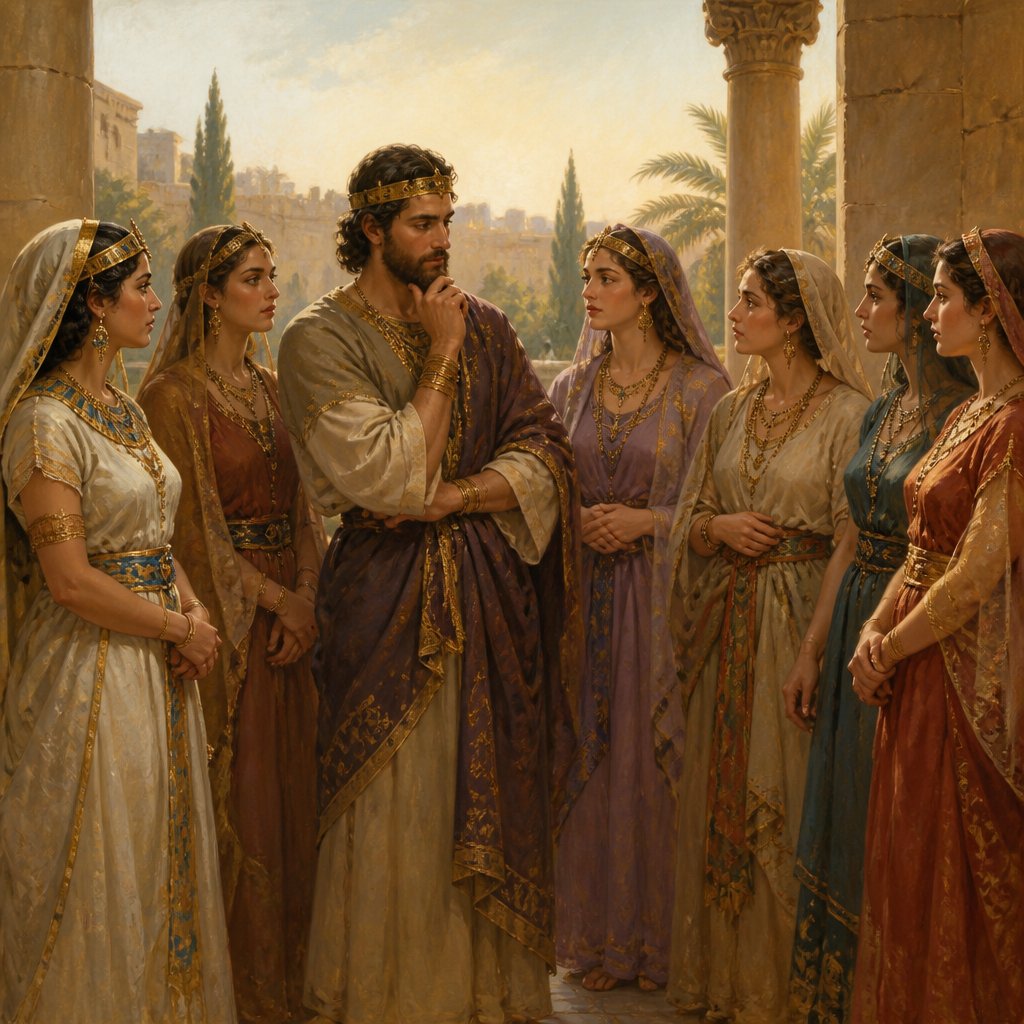
1 Kings 11:1 (KJV) states, "But king Solomon loved many strange women, together with the daughter of Pharaoh, women of the Moabites, Ammonites, Edomites, Zidonians, and Hittites."
This verse comes from the Old Testament book of 1 Kings, which documents the reign of King Solomon, the son of David, and continues to tell the story of the Kings of Israel after the death of David. This particular verse focuses on Solomon's love for foreign women, a decision that ultimately led to his downfall.
The verse opens with the phrase, "But king Solomon loved many strange women". This sets the tone for the passage, signaling a turning point in Solomon's life. The word "strange" in this context refers to women who were not Israelites. These foreign women were from diverse backgrounds, including the daughter of Pharaoh, the Moabites, Ammonites, Edomites, Zidonians, and Hittites, representing different cultures and nationalities.
Solomon's love for these foreign women had a significant impact on his reign and personal life. In the ancient near eastern culture, marriages were not only about personal relationships but also about political alliances and power. Marrying foreign women could have provided Solomon with political advantages, but it also led to spiritual and moral compromise.
This verse illustrates a clear departure from God's commandment in Deuteronomy 7:3-4, which warned against intermarriage with the inhabitants of the land. It was an act of disobedience to God's law, which ultimately led to spiritual compromise and idolatry. The foreign women introduced their foreign gods, which led Solomon astray from his faithfulness to the God of Israel.
The consequences of Solomon's actions are narrated in the following verses, where it is stated that Solomon's heart was turned away from the Lord, and he began to worship and build high places for the foreign gods of his wives. This marked the decline of Solomon's reign and the beginning of a period of internal strife and external threats for the kingdom of Israel.
The passage raises important themes relating to fidelity to God, the consequences of disobedience, and the danger of ungodly influences. It serves as a cautionary tale to the Israelites about the dangers of straying from God's commands and the impact of compromise on their faith and national identity.
Furthermore, the verse also carries a symbolic significance. Solomon's love for foreign women can be interpreted as a metaphor for the temptation of worldly pleasures and the allure of foreign gods. It serves as a warning against the seduction of idolatry and the spiritual compromise that comes with it. The foreign women represent the enticement of earthly desires and the potential for turning away from the one true God.
In conclusion, 1 Kings 11:1 offers a profound insight into the consequences of Solomon's decision to love foreign women. It provides a sobering reminder of the importance of remaining faithful to God's commands and the dangers of allowing worldly influences to lead us astray. The passage also serves as a timeless warning about the impact of compromise and the need for steadfast devotion to the Lord.
Get our apps


Artwork for 1 Kings 11:1

1 Kings 11:1-5

1 Kings 11:1 - "But king Solomon loved many strange women, together with the daughter of Pharaoh, women of the Moabites, Ammonites, Edomites, Zidonians, and Hittites;"
"But king Solomon loved many strange women, together with the daughter of Pharaoh, women of the Moabites, Ammonites, Edomites, Zidonians, and Hittites;" - 1 Kings 11:1

1 Kings 11:11

1 Kings 11:11

1 Kings 11:11

1 Kings 11:11

1 Kings 11:11

1 kings 11:11-13

1 Kings 11:11-13

1 Kings 11:11-13

1 Kings 12:11

1 Kings 11:13

1 Kings 12:11

1 Kings 11:5

1 Kings 11:13

1 Kings 12:11

1 Kings 12:11

1 Kings 12:11

1 Kings 6:11-13

1 Kings 11:29-32

1 Kings 6:11-13

1 Kings 11:30-31

1 Kings 11:30-31

1 Kings 11:30-31

1 Kings 6:11-13

1 Kings 6:11-13

1 Kings 6:11-13

1 Kings 6:11 - "¶ And the word of the LORD came to Solomon, saying,"

1 Kings 11:39 - "And I will for this afflict the seed of David, but not for ever."