What does 1 Kings 11:43 mean?
“And Solomon slept with his fathers, and was buried in the city of David his father: and Rehoboam his son reigned in his stead.” — 1 Kings 11:43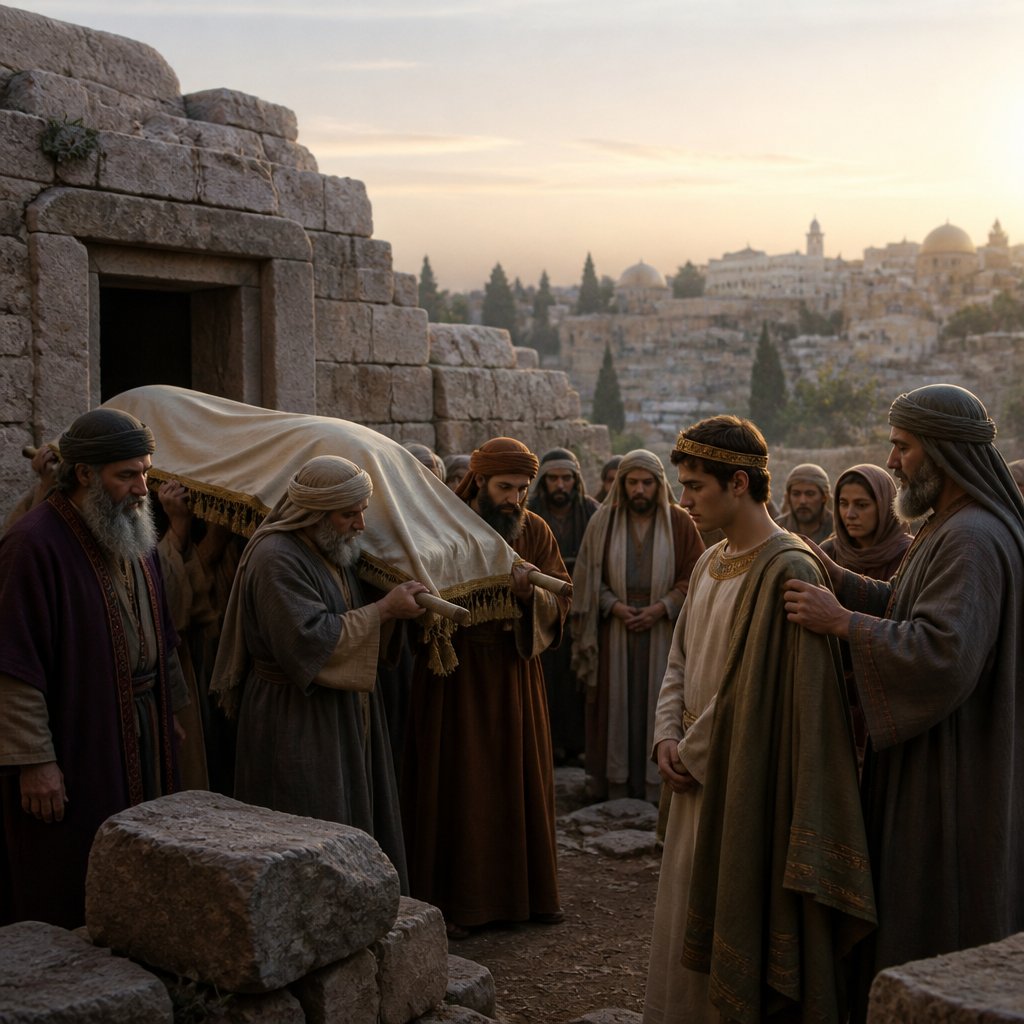
1 Kings 11:43 (KJV) "And Solomon slept with his fathers, and was buried in the city of David his father: and Rehoboam his son reigned in his stead."
The book of 1 Kings is filled with the story of the rise and fall of King Solomon, the son of David, and the third king of Israel. The verse 1 Kings 11:43 marks the end of an era, as it describes the death of the great king Solomon and the passing of the throne to his son Rehoboam.
The verse begins with the phrase "And Solomon slept with his fathers," which is a common biblical euphemism for death. This phrase denotes the end of Solomon's earthly life and the beginning of his reign with the Lord in the afterlife. The use of the term "fathers" indicates that Solomon has joined his ancestors in death, emphasizing the continuity of the royal lineage.
The verse goes on to say that Solomon "was buried in the city of David his father." This details the physical end of Solomon's life, as he is laid to rest in the same city where his father David was buried. This act of burying Solomon in the city of David signifies the continuation of David's legacy and the continuity of the royal line. It also reinforces the importance of honoring one's ancestors and preserving their memory.
The verse concludes with the statement "and Rehoboam his son reigned in his stead." This marks the transition of power from Solomon to his son Rehoboam, signifying the continuation of the Davidic dynasty. This succession of power was crucial in maintaining the stability and sovereignty of the kingdom of Israel.
The verse encapsulates several key themes found throughout the book of 1 Kings. One significant theme is the idea of succession and legacy. The passing of the throne from Solomon to Rehoboam highlights the importance of maintaining the royal lineage and preserving the continuity of leadership. This theme is further emphasized by the reference to Solomon being buried in the city of David, highlighting the interconnectedness of generations and the significance of ancestral heritage.
Another important theme in this verse is the idea of mortality and the transient nature of human life. The phrase "Solomon slept with his fathers" serves as a reminder of the inevitability of death and the fleeting nature of earthly power. This theme is a recurring motif throughout the book of Kings, as it grapples with the mortality of even the most powerful and influential figures.
Symbolism also plays a significant role in this verse. The mention of Solomon being buried in the city of David symbolizes the preservation of the royal lineage and the eternal legacy of David's reign. This act of burying Solomon in the same city as his father also serves as a symbolic link between past and present, emphasizing the continuity of the royal line and the enduring influence of previous rulers.
In conclusion, 1 Kings 11:43 marks a significant turning point in the narrative of the book of Kings, as it details the death of Solomon and the passing of the throne to his son Rehoboam. The verse encapsulates several key themes and utilizes powerful symbolism to convey the importance of succession, legacy, and the transient nature of human life. It serves as a poignant reminder of the enduring legacy of the Davidic dynasty and the inevitable passage of time.
Get our apps


Artwork for 1 Kings 11:43

1 Kings 11:43 - "And Solomon slept with his fathers, and was buried in the city of David his father: and Rehoboam his son reigned in his stead."
"And Solomon slept with his fathers, and was buried in the city of David his father: and Rehoboam his son reigned in his stead." - 1 Kings 11:43

1 Kings 7:43 - "And the ten bases, and ten lavers on the bases;"

1 Chronicles 11:43 - "Hanan the son of Maachah, and Joshaphat the Mithnite,"

1 Kings 20:43 - "And the king of Israel went to his house heavy and displeased, and came to Samaria."

1 Kings 1:43 - "And Jonathan answered and said to Adonijah, Verily our lord king David hath made Solomon king."

1 Kings 2:43 - "Why then hast thou not kept the oath of the LORD, and the commandment that I have charged thee with?"

"And the ten bases, and ten lavers on the bases;" - 1 Kings 7:43

1 Chronicles 1:43 - "¶ Now these are the kings that reigned in the land of Edom before any king reigned over the children of Israel; Bela the son of Beor: and the name of his city was Dinhabah."

"Hanan the son of Maachah, and Joshaphat the Mithnite," - 1 Chronicles 11:43

1 Kings 11:11

1 Kings 11:11

1 Kings 11:11

1 Kings 11:11

1 Kings 11:13

1 Kings 11:5

1 Kings 11:13

1 Kings 11:11

1 kings 11:11-13

1 Kings 11:11-13

1 Kings 11:29-32

1 Kings 11:11-13

1 Kings 11:1-5

"And the king of Israel went to his house heavy and displeased, and came to Samaria." - 1 Kings 20:43

1 Kings 11:30-31

1 Kings 11:30-31

1 Kings 11:30-31

1 Kings 18:43 - "And said to his servant, Go up now, look toward the sea. And he went up, and looked, and said, There is nothing. And he said, Go again seven times."

1 Kings 12:11

1 Kings 12:11