What does 1 Kings 13:33 mean?
“After this thing Jeroboam returned not from his evil way, but made again of the lowest of the people priests of the high places: whosoever would, he consecrated him, and he became one of the priests of the high places.” — 1 Kings 13:33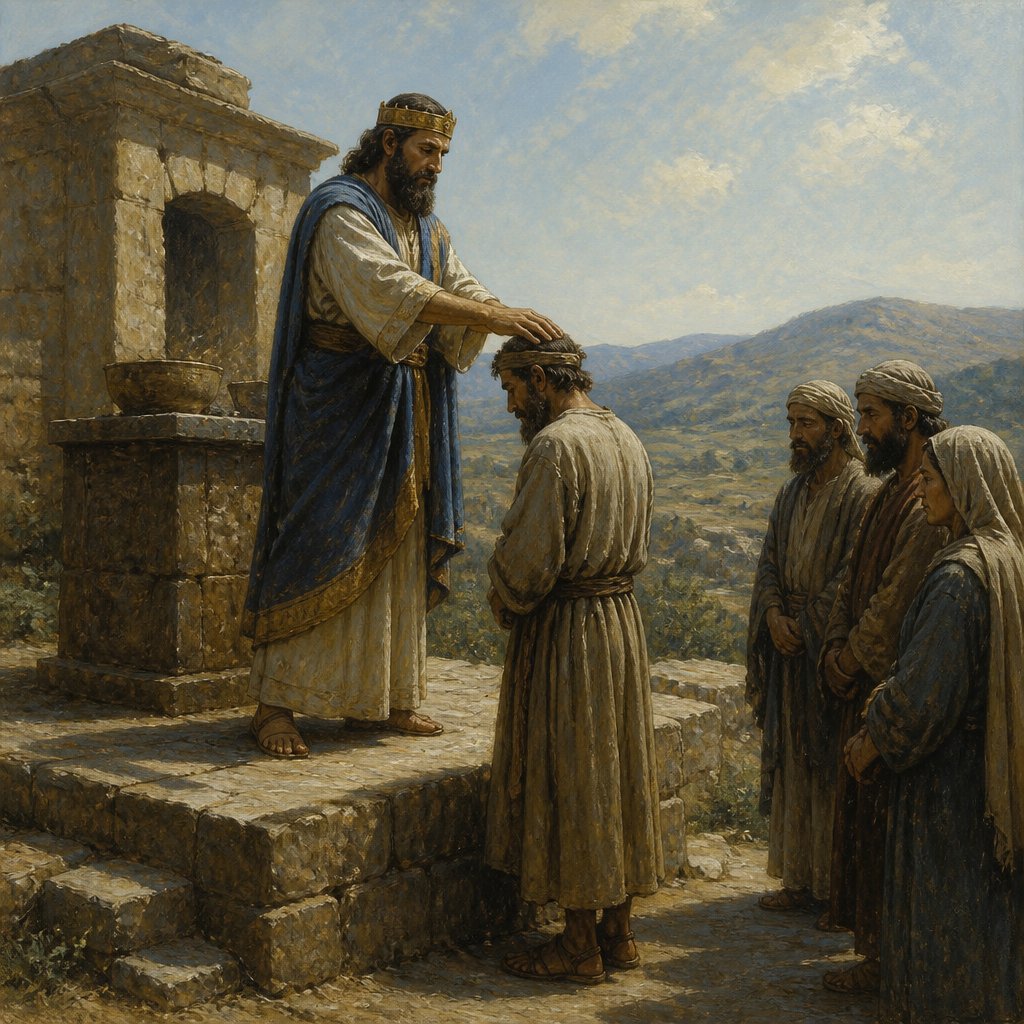
1 Kings 13:33 (KJV) says, "After this thing Jeroboam returned not from his evil way, but made again of the lowest of the people priests of the high places: whosoever would, he consecrated him, and he became one of the priests of the high places."
This verse is located in the Old Testament, within the historical books of the Bible. It comes at the end of a narrative in which a man of God confronts King Jeroboam, who had set up idols in Bethel. The man of God predicts that a son named Josiah will arise to destroy the altars and idols, foreshadowing the fulfillment of that prophecy many years later in 2 Kings 23. However, in this verse, it is noted that Jeroboam did not heed the man of God's warning. Instead, he continued in his evil ways and even went as far as to appoint priests from the lowest of the people to serve at the high places.
The historical context of this verse is important for understanding its significance. Jeroboam was the first king of the northern kingdom of Israel after it split from the southern kingdom of Judah. Jeroboam was afraid that if his people continued to go to Jerusalem to worship at the temple, they would eventually turn against him and reunite with the southern kingdom. To prevent this, he set up golden calves in Bethel and Dan and established his own priesthood, in direct violation of God's commandments. This act of apostasy, setting up ungodly worship practices, is what the man of God had rebuked him for.
The themes present in this passage include idolatry, false worship, and the consequences of disobedience. Jeroboam's actions are an example of the dangers of turning away from God and creating one's own religious practices. This act of defiance and choosing to follow his own ways rather than God's would eventually lead to the downfall of his kingdom.
The symbolism in this verse is important as it highlights the corruption and degradation of true worship. Jeroboam's decision to make anyone, regardless of their qualifications, a priest of the high places cheapened the role of the priesthood and dishonored God. It symbolizes the degradation of worship when human desires and ambitions take precedence over obedience to God's commands. This symbolism serves as a warning to all generations about the dangers of compromising in matters of faith and worship.
The verse also points to the faithfulness of God in sending a prophet to confront Jeroboam and warn him of the consequences of his actions. Despite Jeroboam's stubbornness and refusal to repent, God continued to reach out to him and provide opportunities for him to turn back to the right path.
In conclusion, 1 Kings 13:33 is a powerful reminder of the dangers of idolatry, disobedience, and the corruption of true worship. It serves as a warning to all believers to remain faithful to God's commands and to guard against the temptation to create our own versions of worship that deviate from God's word. The passage also highlights the faithfulness of God in confronting His people when they go astray, and His desire for them to turn back to Him. Ultimately, this verse challenges us to examine our own hearts and worship practices, ensuring that they are in line with God's will and not our own desires.
Get our apps


Artwork for 1 Kings 13:33

1 Kings 13:33 - "¶ After this thing Jeroboam returned not from his evil way, but made again of the lowest of the people priests of the high places: whosoever would, he consecrated him, and he became one of the priests of the high places."
"¶ After this thing Jeroboam returned not from his evil way, but made again of the lowest of the people priests of the high places: whosoever would, he consecrated him, and he became one of the priests of the high places." - 1 Kings 13:33

1 Kings 16:33 - "And Ahab made a grove; and Ahab did more to provoke the LORD God of Israel to anger than all the kings of Israel that were before him."

1 Kings 22:33 - "And it came to pass, when the captains of the chariots perceived that it was not the king of Israel, that they turned back from pursuing him."

1 Kings 6:33 - "So also made he for the door of the temple posts of olive tree, a fourth part of the wall."

1 Kings 7:33 - "And the work of the wheels was like the work of a chariot wheel: their axletrees, and their naves, and their felloes, and their spokes, were all molten."

1 Kings 11:13

1 Kings 11:13

1 Kings 15:33 - "In the third year of Asa king of Judah began Baasha the son of Ahijah to reign over all Israel in Tirzah, twenty and four years."

1 Kings 6:11-13

1 kings 11:11-13

1 Kings 11:11-13

1 Kings 1:33 - "The king also said unto them, Take with you the servants of your lord, and cause Solomon my son to ride upon mine own mule, and bring him down to Gihon:"

1 Kings 6:11-13

1 Kings 6:11-13

1 Kings 6:11-13

1 Kings 6:11-13

1 Kings 11:11-13

1 Kings 7:13 - "¶ And king Solomon sent and fetched Hiram out of Tyre."

1 Kings 18:33 - "And he put the wood in order, and cut the bullock in pieces, and laid him on the wood, and said, Fill four barrels with water, and pour it on the burnt sacrifice, and on the wood."

1 Kings 13:13 - "And he said unto his sons, Saddle me the ass. So they saddled him the ass: and he rode thereon,"

1 Kings 12:13 - "And the king answered the people roughly, and forsook the old men's counsel that they gave him;"

1 Kings 4:33 - "And he spake of trees, from the cedar tree that is in Lebanon even unto the hyssop that springeth out of the wall: he spake also of beasts, and of fowl, and of creeping things, and of fishes."

1 Kings 13:15 - "Then he said unto him, Come home with me, and eat bread."

1 Kings 6:13 - "And I will dwell among the children of Israel, and will not forsake my people Israel."

1 Kings 5:13 - "¶ And king Solomon raised a levy out of all Israel; and the levy was thirty thousand men."

1 Kings 13:27 - "And he spake to his sons, saying, Saddle me the ass. And they saddled him."

Numbers 33:13 - "And they departed from Dophkah, and encamped in Alush."

1 Kings 13:1 - "And, behold, there came a man of God out of Judah by the word of the LORD unto Beth-el: and Jeroboam stood by the altar to burn incense."

Mark 13:33 watch and pray