What does 1 Kings 14:5 mean?
“And the LORD said unto Ahijah, Behold, the wife of Jeroboam cometh to ask a thing of thee for her son; for he is sick: thus and thus shalt thou say unto her: for it shall be, when she cometh in, that she shall feign herself to be another woman.” — 1 Kings 14:5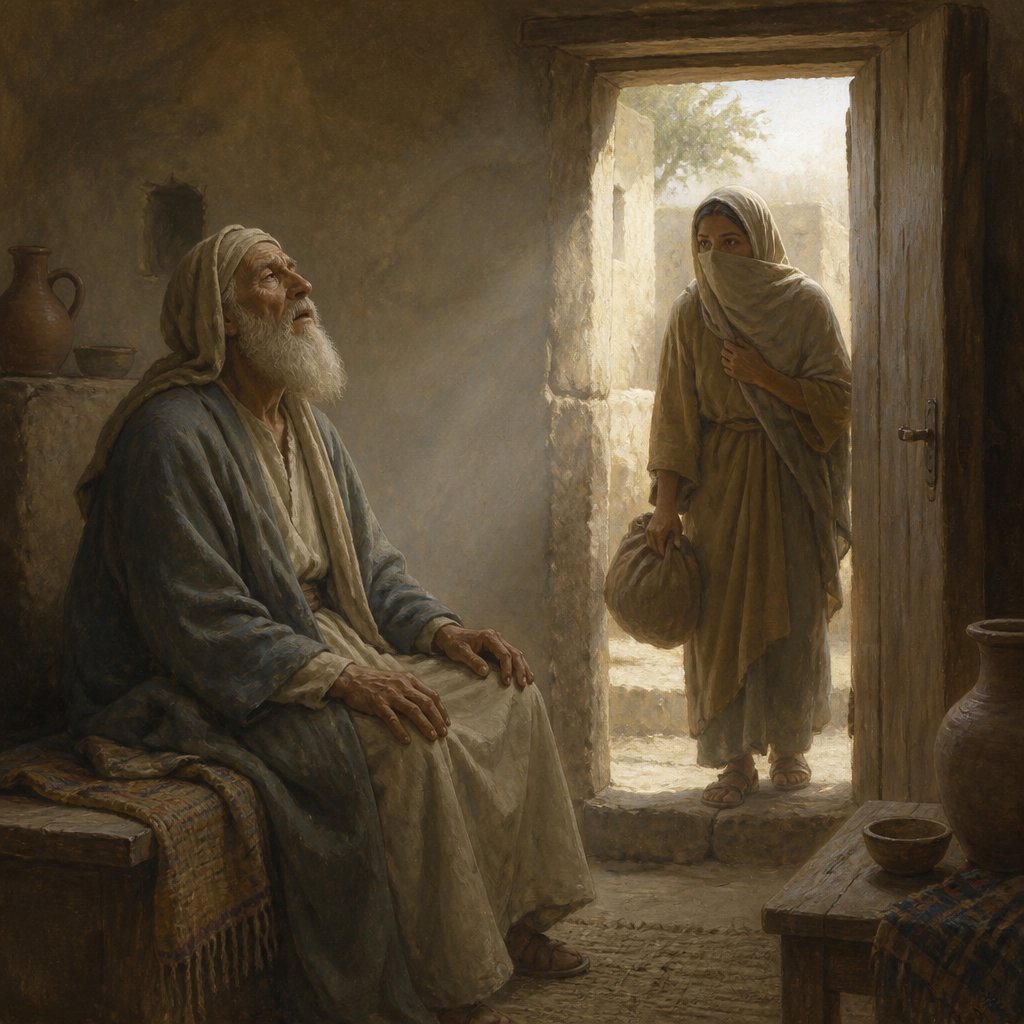
1 Kings 14:5 (KJV)
"And the Lord said unto Ahijah, Behold, the wife of Jeroboam cometh to ask a thing of thee for her son; for he is sick: thus and thus shalt thou say unto her: for it shall be, when she cometh in, that she shall feign herself to be another woman."
The passage from 1 Kings 14:5 captures a specific moment in the narrative of the Old Testament. To fully understand the meaning and the context of this verse, it is essential to dive into the background and the themes surrounding this passage.
The Book of 1 Kings is a historical account of the reign of King Solomon and the division of the United Kingdom of Israel into the northern kingdom of Israel and the southern kingdom of Judah after his death. This particular verse takes place during the reign of Jeroboam, the first king of the northern kingdom of Israel. Jeroboam's reign was marked by idolatry, disobedience to God, and ongoing conflict with the southern kingdom of Judah.
In the preceding verses, we learn that Jeroboam's son is ill, and his wife seeks guidance and help from the prophet Ahijah. But instead of openly revealing her identity, she disguises herself, as instructed by the Lord. This sets the stage for a crucial interaction between Ahijah and Jeroboam's wife, in which Ahijah delivers a message from God regarding the impending judgment upon Jeroboam's house.
This passage reflects several significant themes that run throughout the Old Testament. Firstly, it highlights the consequences of disobedience and idolatry. Jeroboam's reign was characterized by the establishment of golden calves as objects of worship, a direct violation of God's commandments. The sickness of Jeroboam's son and the subsequent judgment on his household are portrayed as a result of this disobedience, serving as a stark warning about the repercussions of turning away from God.
Secondly, the passage reveals the complex and sometimes deceptive nature of human interactions. Jeroboam's wife disguising herself to seek a blessing from the prophet can be seen as a demonstration of her desperation and her willingness to go to great lengths for the well-being of her son. However, it also underscores the themes of honesty and authenticity in relationships, as God sees through the disguise and reveals the truth to Ahijah.
From a symbolic perspective, this passage can be interpreted as a representation of the spiritual condition of Israel during this period. The hidden identity of Jeroboam's wife mirrors the spiritual veil that shrouded the hearts of the people, as they turned away from the true worship of God. The sickness of Jeroboam's son can be seen as a metaphor for the spiritual sickness and moral decay that plagued the nation as a result of their rebellion against God.
In addition to these overarching themes, this passage also sheds light on the character of God. Despite the disobedience and idolatry of the people, God demonstrates compassion and concern for the well-being of Jeroboam's son. He orchestrates the encounter between Ahijah and Jeroboam's wife, ensuring that His message is communicated accordingly. This emphasizes the sovereignty and omniscience of God, as well as His willingness to extend grace and mercy even in the midst of judgment.
In conclusion, 1 Kings 14:5 holds significant meaning within the larger biblical narrative. It serves as a poignant reminder of the consequences of disobedience, the complexity of human interactions, and the character of God. This passage continues to offer valuable insights and lessons for readers, prompting reflection on the themes of faith, obedience, and the enduring nature of God's love and justice.
Get our apps


Artwork for 1 Kings 14:5

1 Kings 14:5 - "¶ And the LORD said unto Ahijah, Behold, the wife of Jeroboam cometh to ask a thing of thee for her son; for he is sick: thus and thus shalt thou say unto her: for it shall be, when she cometh in, that she shall feign herself to be another woman."
"¶ And the LORD said unto Ahijah, Behold, the wife of Jeroboam cometh to ask a thing of thee for her son; for he is sick: thus and thus shalt thou say unto her: for it shall be, when she cometh in, that she shall feign herself to be another woman." - 1 Kings 14:5

1 Kings 5:14 - "And he sent them to Lebanon, ten thousand a month by courses: a month they were in Lebanon, and two months at home: and Adoniram was over the levy."

1 Kings 14:1-20

1 Kings 14:26
1 Kings 14:26

1 Kings 12:14

1 Kings 12:14

1 Kings 14:1 - "At that time Abijah the son of Jeroboam fell sick."

1 Kings 11:1-5

1 Kings 11:5

Matthew 5:14

Matthew 5:14

1 Kings 9:14 - "And Hiram sent to the king sixscore talents of gold."

1 Kings 14:29 - "¶ Now the rest of the acts of Rehoboam, and all that he did, are they not written in the book of the chronicles of the kings of Judah?"

2 Kings 14:5 - "¶ And it came to pass, as soon as the kingdom was confirmed in his hand, that he slew his servants which had slain the king his father."

1 Kings 16:14 - "Now the rest of the acts of Elah, and all that he did, are they not written in the book of the chronicles of the kings of Israel?"

1 Kings 6:14 - "So Solomon built the house, and finished it."

1 Kings 4:14 - "Ahinadab the son of Iddo had Mahanaim:"

1 Kings 5:2 - "And Solomon sent to Hiram, saying,"

Genesis 14:5 - "And in the fourteenth year came Chedorlaomer, and the kings that were with him, and smote the Rephaims in Ashteroth Karnaim, and the Zuzims in Ham, and the Emims in Shaveh Kiriathaim,"

1 Kings 21:14 - "Then they sent to Jezebel, saying, Naboth is stoned, and is dead."

1 Kings 14:30 - "And there was war between Rehoboam and Jeroboam all their days."

1 Chronicles 14:5 - "And Ibhar, and Elishua, and Elpalet,"

1 Kings 14:19 - "And the rest of the acts of Jeroboam, how he warred, and how he reigned, behold, they are written in the book of the chronicles of the kings of Israel."

1 Kings 1:14 - "Behold, while thou yet talkest there with the king, I also will come in after thee, and confirm thy words."

1 Kings 16:5 - "Now the rest of the acts of Baasha, and what he did, and his might, are they not written in the book of the chronicles of the kings of Israel?"

1 Kings 14:14 - "Moreover the LORD shall raise him up a king over Israel, who shall cut off the house of Jeroboam that day: but what? even now."

1 Kings 11:14 - "¶ And the LORD stirred up an adversary unto Solomon, Hadad the Edomite: he was of the king's seed in Edom."

"At that time Abijah the son of Jeroboam fell sick." - 1 Kings 14:1