What does 1 Kings 15:21 mean?
“And it came to pass, when Baasha heard thereof, that he left off building of Ramah, and dwelt in Tirzah.” — 1 Kings 15:21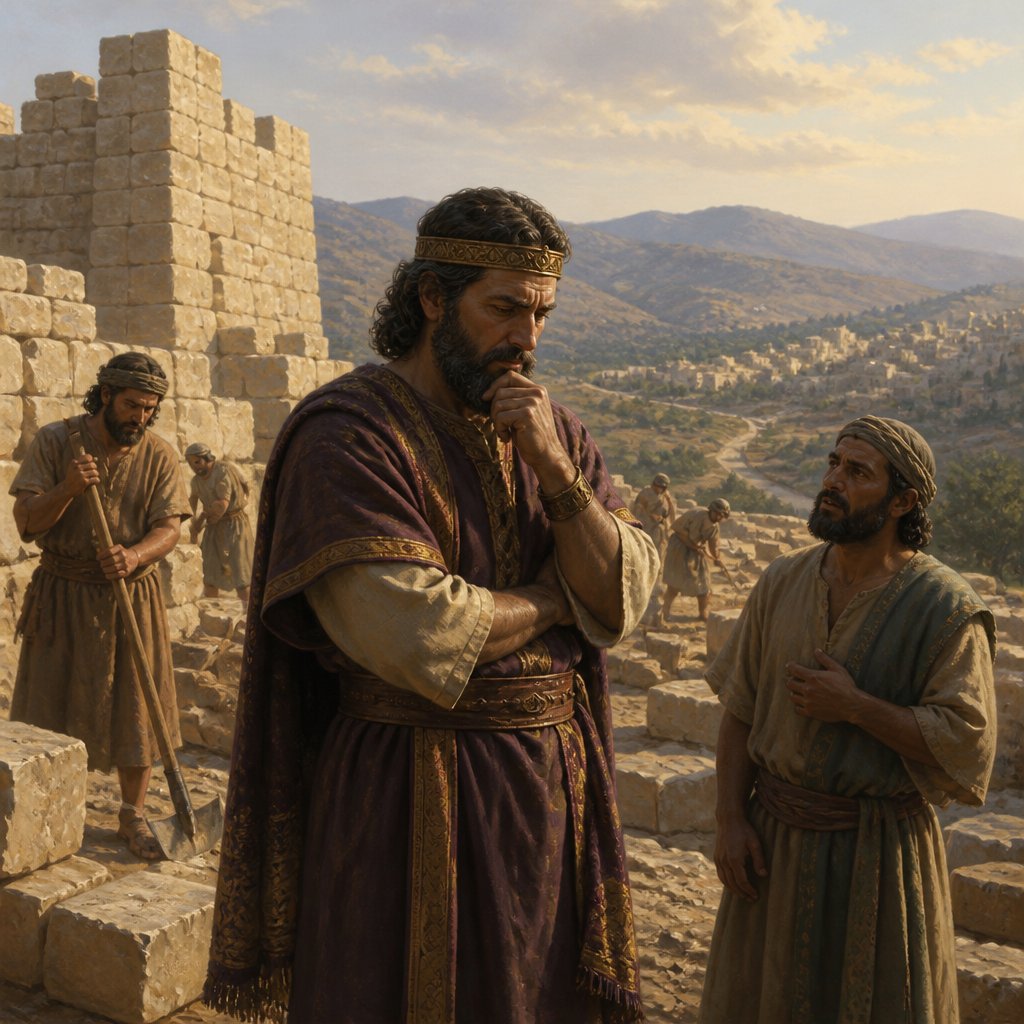
1 Kings 15:21 (KJV) reads, "And it came to pass, when Baasha heard thereof, that he left off building of Ramah, and dwelt in Tirzah."
This verse is part of a larger narrative in the book of 1 Kings, which chronicles the events surrounding the reigns of various kings in Israel. In this specific verse, we are introduced to Baasha, who is the ruler of the northern kingdom of Israel. Baasha has been depicted as a king who is known for his cruelty and unfaithfulness to God. The verse mentions that Baasha stops the construction of the city of Ramah and dwells in Tirzah. This decision by Baasha has significant implications and sets the stage for further conflict and turmoil in the region.
The theme of this verse is the consequences of disobedience and the sovereignty of God. Baasha's decision to leave off building Ramah signifies a turning away from God's plan and purposes. The construction of Ramah was likely part of God's plan for the region, and by ceasing this work, Baasha is going against God's will. This disobedience ultimately leads to his downfall and the downfall of his kingdom.
The context of this verse is important for understanding its significance. At this point in the biblical narrative, the northern kingdom of Israel is in a state of political instability and moral decay. The rulers of the northern kingdom have repeatedly turned away from God and embraced idolatry and immorality. Baasha's decision to stop building Ramah and dwell in Tirzah is just one example of the disobedience and unfaithfulness that characterizes the leadership of Israel during this time.
The symbolism in this verse can be seen in the locations mentioned – Ramah and Tirzah. Ramah, a city in the territory of Benjamin, holds significance as a strategic location for the defense and security of Israel. By stopping the construction of Ramah, Baasha is jeopardizing the safety and stability of his kingdom. Tirzah, on the other hand, is described as a place of beauty and luxury in the biblical narrative. Baasha's choice to dwell in Tirzah instead of prioritizing the security of his kingdom reflects his misplaced priorities and self-indulgence.
Overall, 1 Kings 15:21 serves as a cautionary tale about the consequences of disobedience and the importance of aligning with God's will. Baasha's decision to forsake God's plan for his own selfish desires leads to his ultimate downfall. This verse also highlights the sovereignty of God and His ability to work out His purposes despite the actions of disobedient rulers. The themes of obedience, consequences, and God's sovereignty are central to this verse and offer valuable lessons for readers today.
Get our apps


Artwork for 1 Kings 15:21

1 Kings 15:21 - "And it came to pass, when Baasha heard thereof, that he left off building of Ramah, and dwelt in Tirzah."
"And it came to pass, when Baasha heard thereof, that he left off building of Ramah, and dwelt in Tirzah." - 1 Kings 15:21

2 Kings 15:21 - "¶ And the rest of the acts of Menahem, and all that he did, are they not written in the book of the chronicles of the kings of Israel?"

1 Kings 21:15 - "¶ And it came to pass, when Jezebel heard that Naboth was stoned, and was dead, that Jezebel said to Ahab, Arise, take possession of the vineyard of Naboth the Jezreelite, which he refused to give thee for money: for Naboth is not alive, but dead."

1 Kings 8:21

1 Kings 8:21

1 Kings 8:21

1 Kings 8:21

John 14:15-21

Luke 21:15-19

1 kings 3:15

1 kings 3:15

1 Samuel 21:10-15

"¶ And the rest of the acts of Menahem, and all that he did, are they not written in the book of the chronicles of the kings of Israel?" - 2 Kings 15:21

1 Kings 21:14 - "Then they sent to Jezebel, saying, Naboth is stoned, and is dead."

1 Kings 21:28 - "And the word of the LORD came to Elijah the Tishbite, saying,"

1 Kings 21:17 - "¶ And the word of the LORD came to Elijah the Tishbite, saying,"

Philippians 3:15-21 mature spirituality

1 Kings 15:31 - "¶ Now the rest of the acts of Nadab, and all that he did, are they not written in the book of the chronicles of the kings of Israel?"

1 Kings 10:15 - "Beside that he had of the merchantmen, and of the traffick of the spice merchants, and of all the kings of Arabia, and of the governors of the country."

1 Kings 15:1 - "Now in the eighteenth year of king Jeroboam the son of Nebat reigned Abijam over Judah."

1 Kings 21:12 - "They proclaimed a fast, and set Naboth on high among the people."

1 Kings 11:1-5

1 Timothy 6:15-16 – "God, the blessed and only Ruler, the King of kings and Lord of lords."

1 Kings 15:32 - "And there was war between Asa and Baasha king of Israel all their days."

1 Kings 15:16 - "¶ And there was war between Asa and Baasha king of Israel all their days."

1 Timothy 6:15-16 – "God, the blessed and only Ruler, the King of kings and Lord of lords."

1 Timothy 6:15-16 – "God, the blessed and only Ruler, the King of kings and Lord of lords."
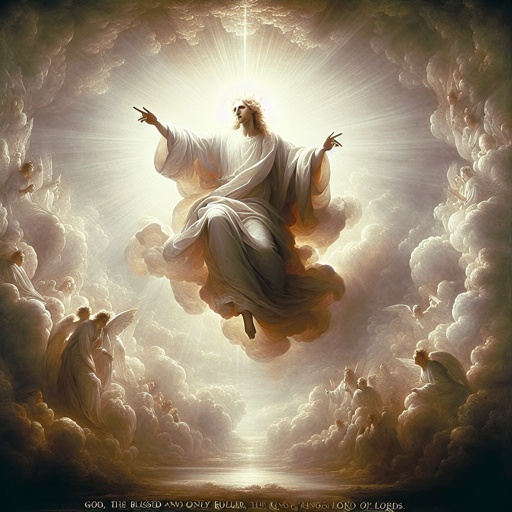
1 Timothy 6:15-16 – "God, the blessed and only Ruler, the King of kings and Lord of lords."

1 Kings 21:1 - "And it came to pass after these things, that Naboth the Jezreelite had a vineyard, which was in Jezreel, hard by the palace of Ahab king of Samaria."