What does 1 Kings 16:19 mean?
“For his sins which he sinned in doing evil in the sight of the LORD, in walking in the way of Jeroboam, and in his sin which he did, to make Israel to sin.” — 1 Kings 16:19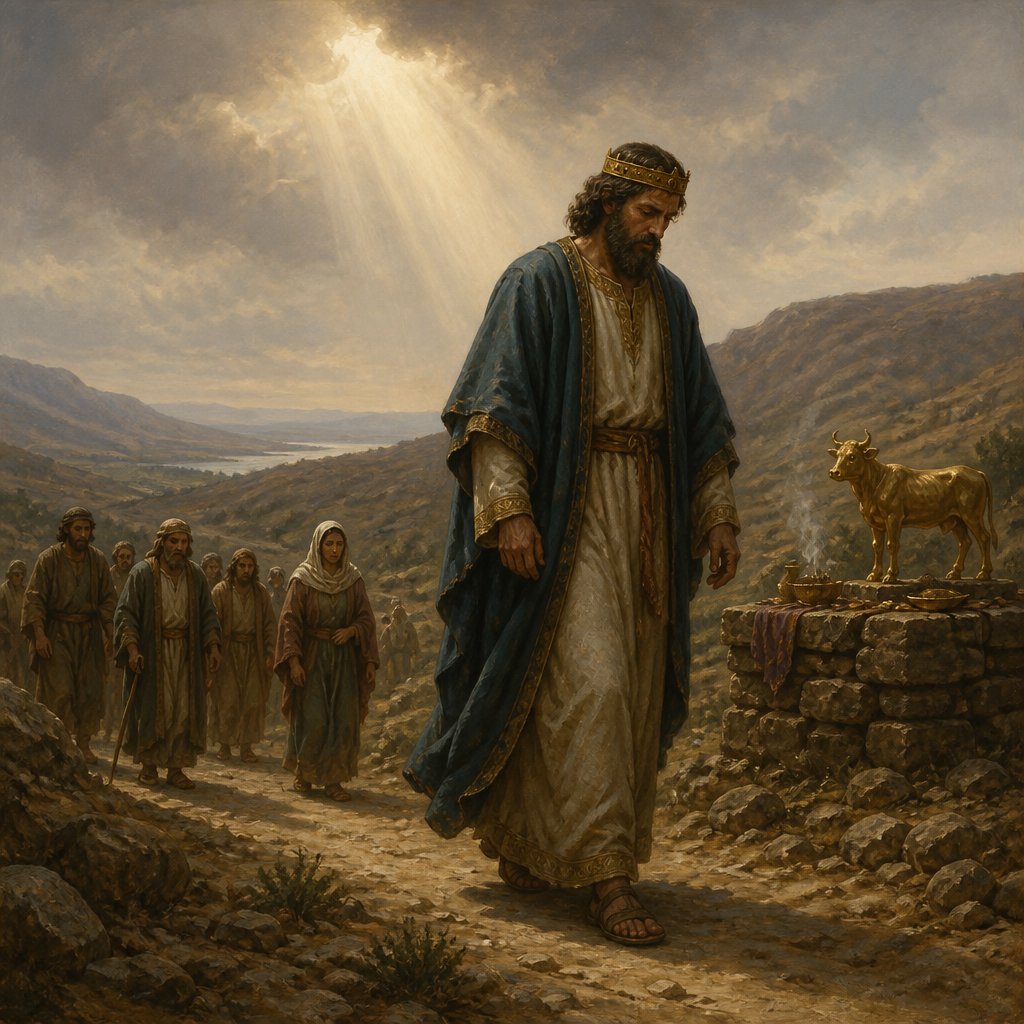
1 Kings 16:19 (KJV) states, "For his sins which he sinned in doing evil in the sight of the Lord, in walking in the way of Jeroboam, and in his sin which he did, to make Israel to sin."
This verse is part of a larger narrative in the book of 1 Kings that details the reign of various kings in Israel and Judah. In this particular verse, the focus is on King Elah, the son of Baasha, who reigned over Israel in Tirzah for two years. The verse highlights Elah's sinful actions, specifically his adherence to the wickedness introduced by Jeroboam, who led the Israelites into idolatry and away from the true worship of God. The narrative conveys a sense of divine judgement and the consequences of Elah's actions.
The themes present in this verse are sin, judgement, and the consequences of unfaithfulness. The verse emphasizes the significance of obedience to God and the dire repercussions of straying from His commandments. The narrative serves as a cautionary tale, warning against the dangers of following in the footsteps of those who lead others astray from the path of righteousness.
The context of this verse is important for understanding its significance within the larger narrative of 1 Kings. At this point in the biblical story, the kingdom of Israel is plagued by a series of wicked rulers who lead the people into idolatry and spiritual corruption. King Elah's reign is marked by his alignment with the sinful practices initiated by Jeroboam, which further perpetuates the moral decay of the nation. The verse serves as a commentary on the state of Israel during this period, highlighting the dire need for a righteous leader to guide the people back to God.
Symbolism plays a significant role in this verse, particularly in the reference to Jeroboam and his influence on Elah's actions. Jeroboam symbolizes the epitome of unfaithfulness and rebellion against God, as he not only led the Israelites into idolatry but also established false worship practices that deviated from the true faith. By aligning himself with Jeroboam, Elah becomes a symbol of the perpetuation of sinful traditions and the failure to break free from the cycle of disobedience.
Furthermore, the mention of making Israel to sin symbolizes the destructive impact of leadership on the spiritual welfare of a nation. Throughout the Bible, the concept of national sin is prevalent, emphasizing the collective responsibility of leaders to guide their people in accordance with God's will. The verse serves as a reminder of the far-reaching consequences of unfaithfulness, as the actions of a king can lead an entire nation astray.
In conclusion, 1 Kings 16:19 (KJV) conveys a powerful message about the significance of obedience to God and the consequences of straying from His commandments. The verse serves as a warning against the influence of unrighteous leaders and the destructive impact of unfaithfulness on a nation. Through its themes of sin, judgement, and consequences, as well as its symbolism of unfaithful leadership, the verse provides valuable insights into the spiritual and moral challenges faced by both individuals and nations. It ultimately emphasizes the need for righteous leadership and unwavering devotion to God's will.
Get our apps


Artwork for 1 Kings 16:19

1 Kings 16:19 - "For his sins which he sinned in doing evil in the sight of the LORD, in walking in the way of Jeroboam, and in his sin which he did, to make Israel to sin."
"For his sins which he sinned in doing evil in the sight of the LORD, in walking in the way of Jeroboam, and in his sin which he did, to make Israel to sin." - 1 Kings 16:19

Soothing the Soul: The Gospel of Gentle Care 1 Kings 19:3-8; 1 Samuel 16:14-23

2 Kings 3:16-19

Soothing the Soul: The Gospel of Gentle Care 1 Kings 19:3-8; 1 Samuel 16:14-23

1 Kings 19:16 - "And Jehu the son of Nimshi shalt thou anoint to be king over Israel: and Elisha the son of Shaphat of Abelmeholah shalt thou anoint to be prophet in thy room."

2 Kings 16:19 - "¶ Now the rest of the acts of Ahaz which he did, are they not written in the book of the chronicles of the kings of Judah?"

Revelation 19:16 - "And he hath on his vesture and on his thigh a name written, KING OF KINGS, AND LORD OF LORDS."

1 Kings 19:1-18

2 Kings 19:2

2 Kings 19:2

1 kings 22:19

2 Kings 19:2

Exodus 19:16-20

"¶ Now the rest of the acts of Ahaz which he did, are they not written in the book of the chronicles of the kings of Judah?" - 2 Kings 16:19

1 Kings 20:16 - "And they went out at noon. But Ben-hadad was drinking himself drunk in the pavilions, he and the kings, the thirty and two kings that helped him."

1 Kings 16:14 - "Now the rest of the acts of Elah, and all that he did, are they not written in the book of the chronicles of the kings of Israel?"

1 Kings 1:16 - "And Bath-sheba bowed, and did obeisance unto the king. And the king said, What wouldest thou?"

1 Kings 3:19 - "And this woman's child died in the night; because she overlaid it."

1 Kings 14:19 - "And the rest of the acts of Jeroboam, how he warred, and how he reigned, behold, they are written in the book of the chronicles of the kings of Israel."

1 Kings 4:16 - "Baanah the son of Hushai was in Asher and in Aloth:"

1 Kings 16:1 - "Then the word of the LORD came to Jehu the son of Hanani against Baasha, saying,"

1 Chronicles 16:19 - "When ye were but few, even a few, and strangers in it."

1 Kings 16:20 - "Now the rest of the acts of Zimri, and his treason that he wrought, are they not written in the book of the chronicles of the kings of Israel?"

1 Kings 16:5 - "Now the rest of the acts of Baasha, and what he did, and his might, are they not written in the book of the chronicles of the kings of Israel?"

1 Timothy 6:15-16 – "God, the blessed and only Ruler, the King of kings and Lord of lords."

1 Timothy 6:15-16 – "God, the blessed and only Ruler, the King of kings and Lord of lords."
1 Timothy 6:15-16 – "God, the blessed and only Ruler, the King of kings and Lord of lords."

1 Kings 12:19 - "So Israel rebelled against the house of David unto this day."

1 Timothy 6:15-16 – "God, the blessed and only Ruler, the King of kings and Lord of lords."